
Skip to content
May 5:Battle of Puebla: Cinco de Mayo164yr ago

October 4 in Military History

Share:

This Day in Military History: October 4

Go to Today
Soviet R-7 rocket preparing for the launch of Sputnik 1 at Baikonur Cosmodrome, October 4, 1957
Defining Moment69 years ago

Soviet Union Launches Sputnik, The Space Age Begins

Air Force· 1957

The Soviet Union launched Sputnik 1, the first artificial satellite, into Earth orbit from the Baikonur Cosmodrome in Kazakhstan. The 184-pound polished metal sphere, broadcasting a simple radio beep audible to anyone with a shortwave radio, circled the Earth every 96 minutes. The launch stunned the world, demonstrated Soviet intercontinental ballistic missile capability, and ignited the Space Race that would reshape military technology and Cold War competition for decades.

10 events, 2 notable births, 1 notable deaths, and 5 military quotes10events2births1deaths5quotes

1700s

1777RevolutionaryContinental249 years ago

George Washington launched a bold but overly complex surprise attack on the British garrison at Germantown, Pennsylvania, two weeks after his defeat at Brandywine. The four-column assault, conducted in dense fog, initially drove back the British defenders but descended into confusion when American units fired on each other and one column became bogged down attacking a stone house occupied by British troops. The attack failed, but its audacity impressed France and helped convince Louis XVI to enter the war on America's side.

1800s

1861Civil WarArmy165 years ago

President Abraham Lincoln observed a demonstration of Professor Thaddeus Lowe's balloon reconnaissance capabilities at the Army of the Potomac's camps near Washington. Lowe's hydrogen balloons, capable of ascending to 1,000 feet with a telegraph wire, represented the first systematic use of aerial observation in American military history. Lincoln authorized the creation of the Union Army Balloon Corps, a precursor to military aviation.

1900s

1918WWIArmy108 years ago

Combined British, Australian, and American forces completed the breaching of the Hindenburg Line, Germany's last and strongest prepared defensive position on the Western Front. The breakthrough at the St. Quentin Canal, where the 46th (North Midland) Division crossed the canal using life belts and rafts in one of the war's most dramatic assaults, shattered German confidence and confirmed that the war could not be won. Germany sought an armistice within days.

1943WWIIArmy83 years ago

Heinrich Himmler delivered a secret speech to SS leaders in Posen (Poznań), Poland, explicitly acknowledging the extermination of the Jewish people. The speech, one of the clearest recordings of a senior Nazi leader openly discussing the Holocaust, described the mass murder as a "glorious page in our history that has never been written and is never to be written." The recordings became crucial evidence at the Nuremberg Trials.

1944WWIINavy82 years ago

USS Tang (SS-306), the most successful American submarine of World War II, was destroyed in the Formosa Strait when her final torpedo made a circular run and struck her own stern. Of the 87 men aboard, nine survived, including Commander Richard O'Kane, who had received the Medal of Honor. Tang sank 33 Japanese ships totaling over 116,000 tons in just five war patrols.

1957Cold WarAir Force69 years agoDefining Moment

The Soviet Union launched Sputnik 1, the first artificial satellite, into Earth orbit from the Baikonur Cosmodrome in Kazakhstan. The launch demonstrated Soviet ICBM capability and ignited the Space Race.

1957Cold WarAir Force69 years ago

The Soviet Union launched Sputnik 1 from the Tyuratam test range in Kazakhstan, placing the first artificial satellite in Earth orbit. The 184-pound aluminum sphere carried two radio transmitters broadcasting on 20.005 and 40.002 MHz. Its launch by a modified R-7 Semyorka intercontinental ballistic missile demonstrated that Soviet rockets could reach any target on Earth, triggering the Sputnik crisis and the space race.

1993ModernArmy33 years ago

Russian Army tanks and assault troops of the Taman and Kantemirovskaya divisions stormed the Russian White House in Moscow on orders from President Boris Yeltsin, ending a ten-day armed standoff with lawmakers who had refused to accept his dissolution of parliament. Tank main guns fired into the building's upper floors, killing an estimated 187 people. The assault cemented the post-Soviet presidential system in Russia.

2000s

2001ModernArmyNavyAir Force25 years ago

NATO Secretary General Lord Robertson confirmed that the September 11 attacks met the threshold for invoking Article 5 of the North Atlantic Treaty, the collective defense clause declaring that an attack on one member is an attack on all. It was the first and only time in NATO's history that Article 5 has been invoked, leading to allied contributions to the War in Afghanistan.

2004ModernAir Force22 years ago

Scaled Composites test pilot Brian Binnie flew SpaceShipOne to an altitude of 367,442 feet on October 4, 2004, winning the $10 million Ansari X Prize and validating the commercial space access architecture that the U.S. Space Force would later rely on for responsive launch and suborbital test operations.

Enjoyed this page? Share it with someone who loves military history.

Share:

Never Miss a Day in Military History

Get daily military history, analysis, and technology delivered to your inbox.

Born on This Day

Rutherford B. Hayes

Rutherford B. Hayes

Brevet Major General

b. 1822
Army

Future 19th President of the United States who served with distinction in the Civil War, rising from major to brevet major general. Wounded five times in combat, including seriously at the Battle of South Mountain, Hayes led his regiment at the battles of Cloyd's Mountain and Cedar Creek. He was one of the most combat-experienced presidents in American history.

Frederic Bartlett

Frederic Bartlett

Lieutenant Colonel

b. 1886
Army

British psychologist who served in World War I and later pioneered research on memory and perception that influenced military training, intelligence analysis, and propaganda techniques. His concept of "schema" transformed understanding of how soldiers process information under stress.

Died on This Day

Rembrandt van Rijn

Rembrandt van Rijn

d. 1669

Dutch Golden Age master painter whose masterwork "The Night Watch" (1642) depicts a militia company of the Amsterdam civic guard. The painting, one of the most famous military-themed artworks in history, captured the civic military tradition of the Dutch Republic and revolutionized group portraiture.

Military Quotes

As a result of Sputnik, it would soon be raining down upon us from the sky. I did not overly dramatize the situation.

Lyndon B. Johnson

U.S. Senate Majority Leader

Johnson's reaction to Sputnik, which he used to push for dramatically increased defense and space spending., 1957

We have been caught napping.

Styles Bridges

U.S. Senator, Ranking Republican on Appropriations

Bridges' blunt assessment of America's failure to beat the Soviets into space, reflecting widespread alarm in Congress., 1957

In war there is no substitute for victory.

Douglas MacArthur

General of the Army

From MacArthur's address to Congress after his dismissal by President Truman., 1951

The United States will never again be caught flatfooted in scientific and technological competition.

Dwight D. Eisenhower

President of the United States

Eisenhower's statement upon signing the National Defense Education Act, a direct response to the Sputnik shock., 1958

Fortune favors the brave, and abandons the timid.

George Washington

Commander-in-Chief, Continental Army

Washington's philosophy that drove his decision to attack at Germantown despite the risk, impressing European observers with American resolve., 1777

Frequently Asked Questions

What military events happened on October 4?

10 military events occurred on October 4, spanning multiple centuries. Key events include: Soviet Union Launches Sputnik, The Space Age Begins (1957), Battle of Germantown (1777), Allies Breach the Hindenburg Line (1918), Sputnik 1 Launched by Soviet Union (1957).

What is the most significant military event on October 4?

The most significant military event on October 4 is Soviet Union Launches Sputnik, The Space Age Begins (1957). The Soviet Union launched Sputnik 1, the first artificial satellite, into Earth orbit from the Baikonur Cosmodrome in Kazakhstan. The 184-pound polished metal sphere, broadcasting a simple radio beep audible to anyone with a shortwave radio, circled the Earth every 96 minutes. The launch stunned the world, demonstrated Soviet intercontinental ballistic missile capability, and ignited the Space Race that would reshape military technology and Cold War competition for decades.

What famous military figures were born on October 4?

Notable military figures born on October 4 include Rutherford B. Hayes (1822–1893), Frederic Bartlett (1886–1969).

What wars are represented in October 4's military timeline?

Events on October 4 span the Cold War, the Colonial & Revolutionary era, World War II, the Civil War, World War I, the Modern Era, covering 10 events across 4 centuries of military history.

How many military branches are represented on October 4?

Events on October 4 involve 4 branches of the U.S. and allied armed forces, reflecting the global scope of military operations throughout history.

What Happened on Your Birthday?

Explore military history from the day you were born.

Related Days by Era

Explore More Days

Related Articles

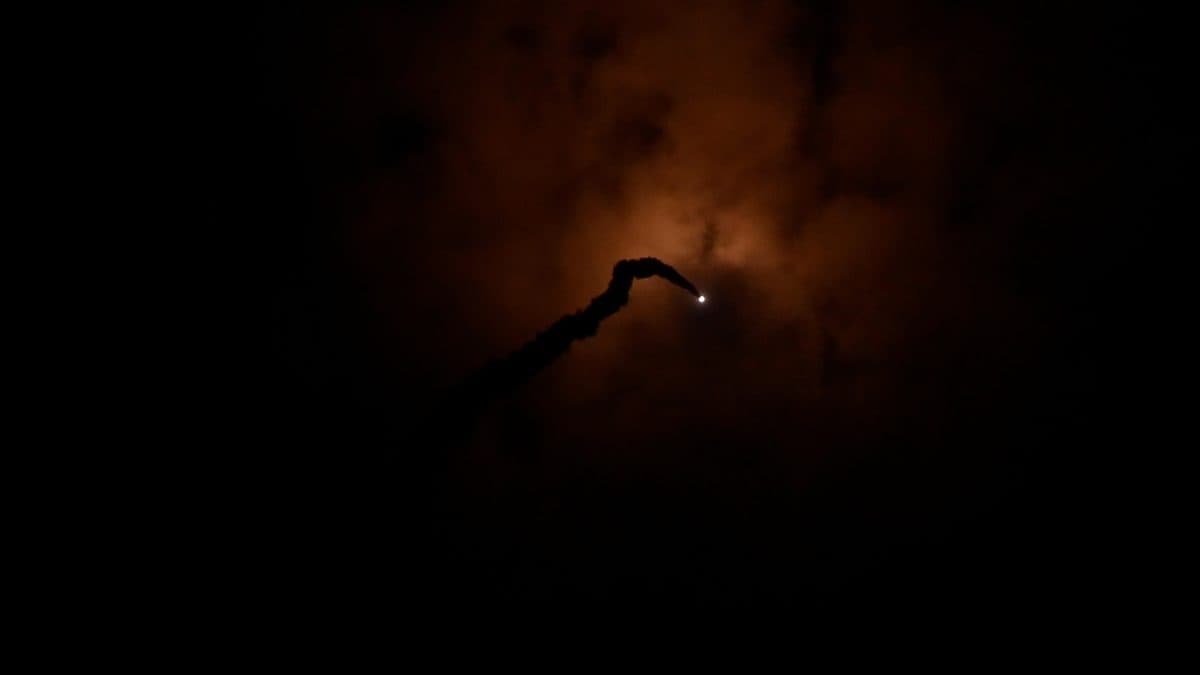
Minuteman III ICBM launching from its silo at Vandenberg Air Force Base with a trail of flame and smoke against a dark sky

10 Cold War Weapons That Were Designed for World War III and Never Fired

These weapons were built to fight a war that everyone prayed would never happen. The Minuteman III has been on alert since 1970. The Typhoon-class carried enough nuclear warheads to destroy a continent. The Davy Crockett could be fired by three soldiers. Most of them have been waiting for 40 years. Here are 10 Cold War weapons built exclusively for World War III.

daniel-mercer··13 min read
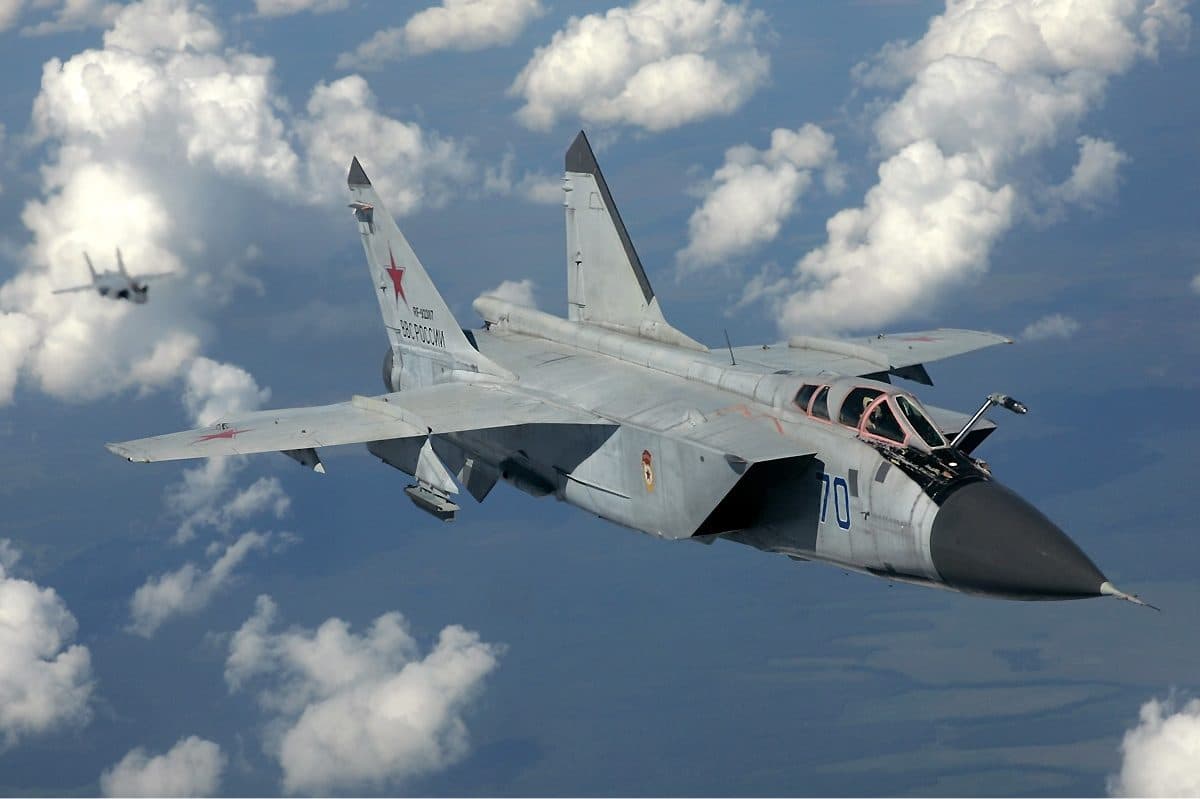
Russian Air Force MiG-31 Foxhound interceptor in flight showing its twin-engine configuration and large airframe

The MiG-31 Foxhound Can Fly Mach 2.83 and Fire Missiles at Targets 200 Miles Away

The MiG-31 was designed to catch the SR-71 Blackbird. It is still the fastest fighter in any air force. The Foxhound's Zaslon phased-array radar, the first ever installed in a fighter, can track 10 targets and engage 4 simultaneously at ranges exceeding 200 miles. Here is why Russia still flies a 1980s interceptor, and why the MiG-31BM carrying a Kinzhal hypersonic missile has changed what the aircraft means to modern warfare.

michael-trent··10 min read