

50 Military Decisions That Quietly Shaped Modern Warfare
Decisions that shaped modern military power across history.
ryan-caldwell··45 min read

Seven hundred Soviet special forces troops in Afghan uniforms stormed the Tajbeg Palace in Kabul, assassinating President Hafizullah Amin and installing a puppet government, launching the Soviet-Afghan War that would last a decade and help bring down the Soviet Union.
In the aftermath of the stunning victory at Trenton, the Continental Congress granted General Washington expanded powers to raise troops, appoint officers, and requisition supplies, effectively making him a military dictator for six months to save the Revolution.
Decisions that shaped warfareHMS Beagle, a 90-foot Royal Navy sloop, sailed from Plymouth Sound on her second survey voyage with the 22-year-old naturalist Charles Darwin aboard as the captain's gentleman companion. The five-year hydrographic survey produced charts that guided Royal Navy operations in the South Atlantic and Pacific for the remainder of the nineteenth century, and Darwin's specimen collections from the voyage produced the theory of natural selection that reshaped biological and eventually military medical thinking for the following century.
The Texas Annexation Ordinance was formally proclaimed, and the Republic of Texas became the 28th state of the Union. The annexation had been opposed by Mexico, which had never recognized Texan independence after the 1836 Texan Revolution. Mexican rejection of annexation became the immediate cause of the Mexican-American War that began four months later and produced American territorial gains reshaping the continent.
General William T. Sherman launched an assault on the Chickasaw Bluffs north of Vicksburg, Mississippi, in the first major attempt to capture the Confederate fortress controlling the Mississippi River, a bloody failure that would cost over 1,700 Union casualties.
Military mistakes that changed historyGeneral Douglas MacArthur declared Manila an open city to spare the Philippine capital from destruction as Japanese forces advanced on Luzon, withdrawing American and Filipino forces to the Bataan Peninsula for a desperate last stand.
WWII facts you may not knowThe German battleship Scharnhorst was sunk in the Barents Sea north of Norway by a Royal Navy force centered on the battleship Duke of York in the last big-gun surface action in European waters. Radar-directed gunfire and torpedo attacks from cruisers and destroyers overwhelmed Scharnhorst after a running engagement in polar darkness, killing 1,932 German sailors. Only 36 of her crew of 1,968 survived.
The 37th Tank Battalion of the 4th Armored Division, commanded by Lieutenant Colonel Creighton Abrams, punched through the final German resistance ring and made contact with the 101st Airborne Division at Bastogne, ending the siege of the town on the ninth day of the Battle of the Bulge. The relief completed a 100-mile drive from the Saar sector that Patton's Third Army had executed in the 72 hours following his December 19 pivot orders.
Soviet special forces stormed the Tajbeg Palace in Kabul, assassinating President Amin and launching a decade-long war that killed over 15,000 Soviet soldiers and helped bring down the USSR.
Four Abu Nidal Organization gunmen attacked ticket counters at Fiumicino Airport in Rome, and a simultaneous three-man attack struck Schwechat Airport in Vienna. The attacks killed 19 people, including five Americans, and wounded 140 more before being stopped by airport security and Italian Carabinieri. The attacks were traced to Libyan support and became one of the triggers for the United States Air Force and Navy strikes against Libya in April 1986 under Operation El Dorado Canyon.
Former Pakistani Prime Minister Benazir Bhutto was assassinated at a campaign rally in Rawalpindi, destabilizing the nuclear-armed nation and complicating the U.S. war effort in neighboring Afghanistan during a critical period of the conflict.
Decisions that shaped warfare
German-born American actress who became one of the most important entertainers of the Allied war effort during World War II. An outspoken anti-Nazi who renounced her German citizenship, Dietrich traveled extensively to entertain troops on the front lines in North Africa, Italy, and France, often within range of enemy fire. She was awarded the U.S. Medal of Freedom and the French Légion d'honneur for her wartime service. General Patton called her "the only woman with guts in this war."

French chemist and microbiologist whose discoveries revolutionized military medicine and saved millions of soldiers' lives. Pasteur's germ theory of disease transformed battlefield wound treatment, and his development of pasteurization improved the safety of food and water supplies for armies. His work on vaccines, including anthrax and rabies, laid the foundation for the military vaccination programs that would protect soldiers from epidemic diseases that had historically killed far more troops than enemy weapons.

General
U.S. Army four-star general who commanded Coalition forces during Operation Desert Storm in 1991, leading the liberation of Kuwait from Iraqi occupation in a 100-hour ground campaign that became a model of modern combined-arms warfare. Schwarzkopf's "left hook" flanking maneuver through the Iraqi desert outmaneuvered Saddam Hussein's Republican Guard, and his televised press briefings made him a household name. A Vietnam veteran with two tours, he was known as "Stormin' Norman" for his aggressive battlefield leadership.
Wear the Timeline
10 military events occurred on December 27, spanning multiple centuries. Key events include: Soviet Invasion of Afghanistan, Operation Storm-333 (1979), Continental Congress Grants Washington Expanded War Powers (1776), Manila Declared an Open City (1941), Scharnhorst Sunk at Battle of North Cape (1943), 4th Armored Division Relieves Bastogne (1944).
The most significant military event on December 27 is Soviet Invasion of Afghanistan, Operation Storm-333 (1979). Seven hundred Soviet special forces troops in Afghan uniforms stormed the Tajbeg Palace in Kabul, assassinating President Hafizullah Amin and installing a puppet government, launching the Soviet-Afghan War that would last a decade and help bring down the Soviet Union.
Notable military figures born on December 27 include Marlene Dietrich (1901–1992), Louis Pasteur (1822–1895).
Events on December 27 span the Cold War, the Colonial & Revolutionary era, the Civil War, World War II, the Modern Era, covering 10 events across 4 centuries of military history.
Events on December 27 involve 4 branches of the U.S. and allied armed forces, reflecting the global scope of military operations throughout history.
Explore military history from the day you were born.
February 6
1952
February 11
1990
February 20
1962
February 28
1953
June 6
The Allied invasion of Normandy, the largest amphibious assault in history.
December 7
Japan attacks the U.S. Pacific Fleet, bringing America into World War II.
September 11
The deadliest terrorist attack in history transforms U.S. national security.
August 6
The first atomic bomb is dropped on a city, ushering in the nuclear age.
May 8
Nazi Germany surrenders unconditionally, ending World War II in Europe.
November 11
Armistice Day marks the end of World War I and honors all who served.
June 4
The turning point of the Pacific War as the U.S. Navy destroys four Japanese carriers.
July 4
The Declaration of Independence is adopted, sparking the American Revolution.
Decisions that shaped modern military power across history.

From wrong turns to unlocked gates - real mistakes that shaped the course of history.
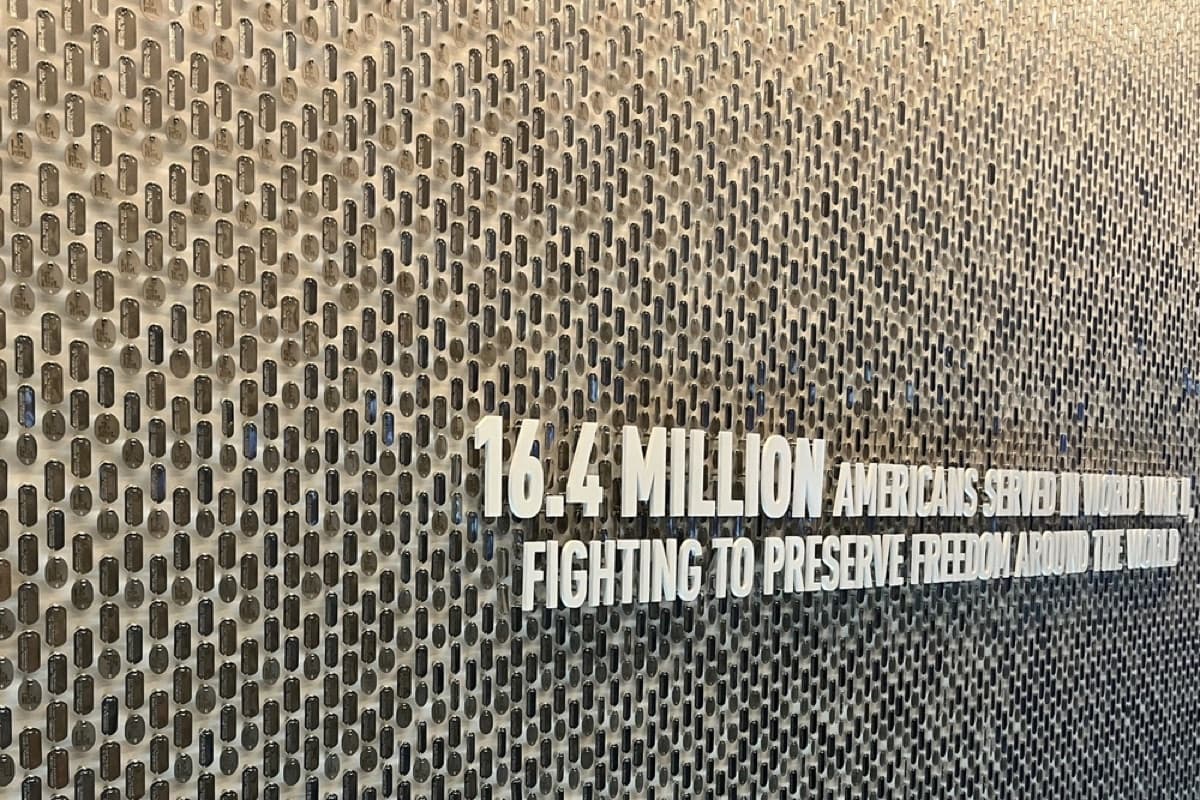
Calvin Graham Was Youngest Decorated US Soldier at 12 Pearl Harbor Visitors Bureau “Green Boys” was a term given to soldiers who…
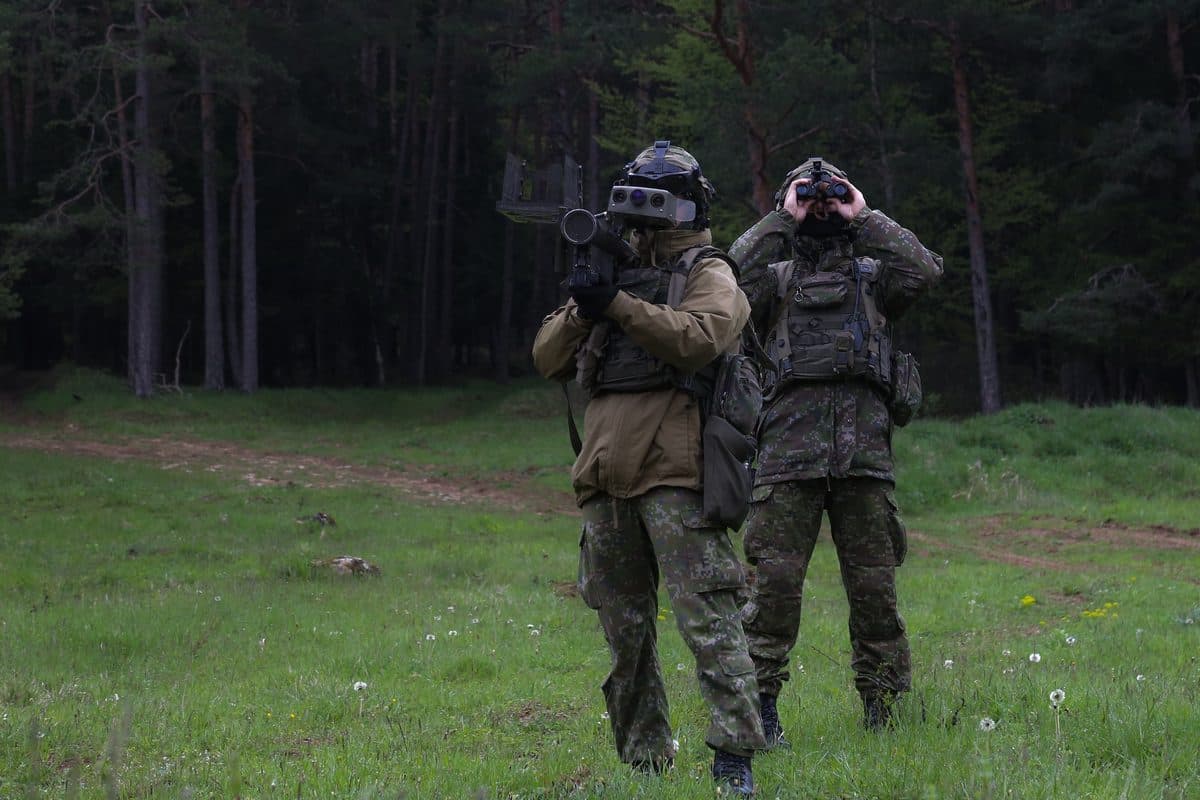
The FIM-92 Stinger helped win the Cold War by turning Afghan mujahideen into a credible anti-aircraft threat. By 2023, the United States almost ran out of them, because Raytheon stopped making them for 13 years, and the first 10 months of Ukraine support burned through the remaining stockpile.