


Why Bigger Militaries Don't Automatically Win Wars
Why military size doesn't guarantee victory in modern warfare.
james-holloway··32 min read

Seminole warriors ambushed and nearly annihilated a column of 110 U.S. Army soldiers under Major Francis Dade in central Florida, killing 107 of 110 men and triggering the Second Seminole War, the longest and most costly of the Indian Wars.
John C. Calhoun resigned as Vice President of the United States, the first vice president to resign the office, to take his elected seat in the Senate as a representative of South Carolina during the Nullification Crisis. The resignation came three weeks after President Andrew Jackson had issued his proclamation against nullification and had begun positioning federal troops and warships to enforce federal tariff law in Charleston.
Seminole warriors ambushed and killed 107 of 110 U.S. soldiers under Major Francis Dade in central Florida, triggering the longest and most costly of the Indian Wars.
On the same day as the Dade Massacre, Seminole war leader Osceola and a band of warriors ambushed and killed Indian Agent Wiley Thompson and four companions outside Fort King, a coordinated double strike that launched the Second Seminole War.
When bigger militaries don't winIowa became the 29th state of the Union, extending federal territory onto the upper Mississippi River plains and opening the ground that would become the logistical and manpower base of the Western Theater during the Civil War fifteen years later. The admission expanded the free-state column in the Senate and intensified the sectional struggle over the expansion of slavery into new western territories.
Auguste and Louis Lumiere projected ten short films to a paying audience at the Salon Indien du Grand Cafe in Paris, the first commercial screening of motion pictures. The technology the brothers developed would within two decades become the foundation of military training films, combat documentation, aerial reconnaissance photography, and strategic propaganda, reshaping every major military's approach to information, morale, and instruction.
The U.S. Army Quartermaster Department adopted the M1903 infantry pack, an improved canvas load-carrying system that separated ammunition pouches, haversack, canteen, and bayonet into a modular belt and suspender configuration. The new pack was one of the earliest modern load-bearing equipment sets, and its modular approach to infantry kit influenced pack design across most Western militaries for the following half century.
Polish insurgents in the city of Poznań rose against German rule, launching the Greater Poland Uprising that would liberate the region and help establish the borders of the newly reborn Polish state after World War I.
When bigger militaries don't winCanadian forces of the 1st Infantry Division captured the Italian port town of Ortona after eight days of brutal house-to-house fighting against German paratroopers of the 1st Parachute Division, earning Ortona the nickname "the Stalingrad of Italy."
WWII facts you may not knowGerman Luftwaffe staff completed final planning for Operation Bodenplatte, a mass surprise attack on Allied tactical airfields in Belgium, the Netherlands, and northern France scheduled for New Year's Day 1945. The operation, intended to destroy Allied air power on the ground in support of the faltering Ardennes offensive, would commit approximately 900 German fighters in what became the largest single-day air operation the Luftwaffe conducted after 1943.
NATO officially ended its International Security Assistance Force (ISAF) mission in Afghanistan after thirteen years, transitioning to a smaller advisory role and marking the conclusion of the longest war in American history.
How logistics decide wars
The 28th President of the United States who led the nation through World War I after campaigning on a platform of neutrality. Wilson's decision to enter the war in April 1917 sent two million American troops to France, tipping the balance decisively against the Central Powers. His Fourteen Points and advocacy for the League of Nations attempted to reshape the postwar world order, though the Senate rejected the treaty. Wilson's wartime presidency also saw the Espionage and Sedition Acts, the military draft, and the creation of a massive war production apparatus.

Legendary comic book creator who served in the U.S. Army Signal Corps during World War II, writing training manuals, propaganda scripts, and educational films alongside luminaries like Theodor Geisel (Dr. Seuss) and Frank Capra. Lee's wartime service shaped his storytelling, and the military themes he absorbed influenced decades of Marvel Comics characters, from Captain America to the Punisher, that defined how American popular culture portrayed soldiers, veterans, and military heroism.

Major
U.S. Army officer killed on this date when Seminole warriors ambushed his column of 110 soldiers in central Florida, sparking the Second Seminole War. A veteran of the War of 1812 and the First Seminole War, Dade was leading a reinforcement march through hostile territory when his force was nearly annihilated. His death galvanized American public opinion and led to seven years of brutal warfare in the Florida swamps. Dade County, Florida (later renamed Miami-Dade) was named in his honor.
Wear the Timeline
10 military events occurred on December 28, spanning multiple centuries. Key events include: The Dade Massacre, Start of the Second Seminole War (1835), Osceola Kills Indian Agent Wiley Thompson (1835), Battle of Ortona Ends (1943).
The most significant military event on December 28 is The Dade Massacre, Start of the Second Seminole War (1835). Seminole warriors ambushed and nearly annihilated a column of 110 U.S. Army soldiers under Major Francis Dade in central Florida, killing 107 of 110 men and triggering the Second Seminole War, the longest and most costly of the Indian Wars.
Notable military figures born on December 28 include Woodrow Wilson (1856–1924), Stan Lee (1922–2018).
Events on December 28 span the Colonial & Revolutionary era, World War I, World War II, the Modern Era, the Civil War, the Interwar Period, covering 10 events across 3 centuries of military history.
Events on December 28 involve 5 branches of the U.S. and allied armed forces, reflecting the global scope of military operations throughout history.
Explore military history from the day you were born.
June 6
The Allied invasion of Normandy, the largest amphibious assault in history.
December 7
Japan attacks the U.S. Pacific Fleet, bringing America into World War II.
September 11
The deadliest terrorist attack in history transforms U.S. national security.
August 6
The first atomic bomb is dropped on a city, ushering in the nuclear age.
May 8
Nazi Germany surrenders unconditionally, ending World War II in Europe.
November 11
Armistice Day marks the end of World War I and honors all who served.
June 4
The turning point of the Pacific War as the U.S. Navy destroys four Japanese carriers.
July 4
The Declaration of Independence is adopted, sparking the American Revolution.
Why military size doesn't guarantee victory in modern warfare.
Calvin Graham Was Youngest Decorated US Soldier at 12 Pearl Harbor Visitors Bureau “Green Boys” was a term given to soldiers who…
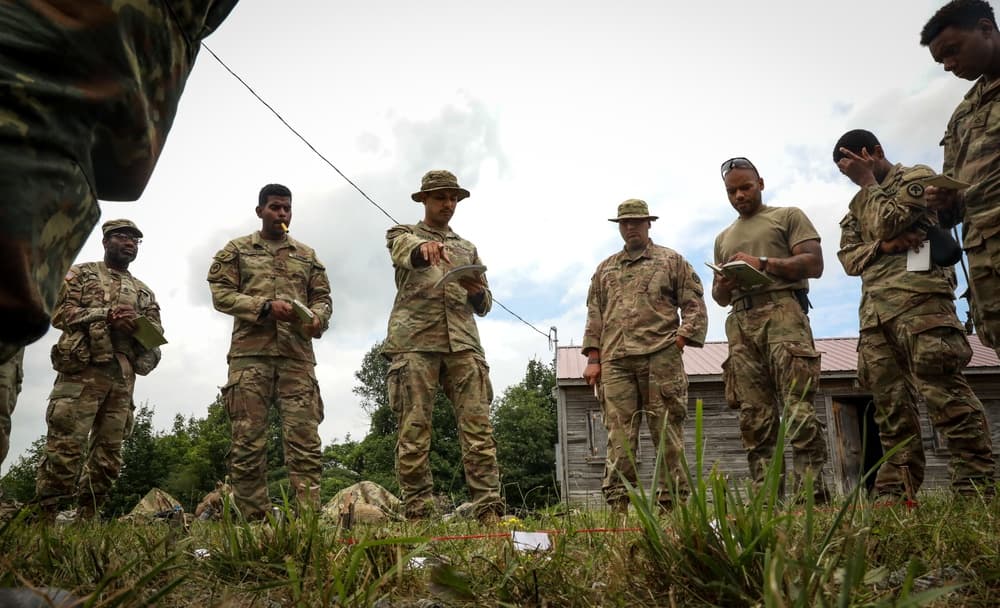
Logistics, sustainment, and organization often matter more than individual weapons systems.
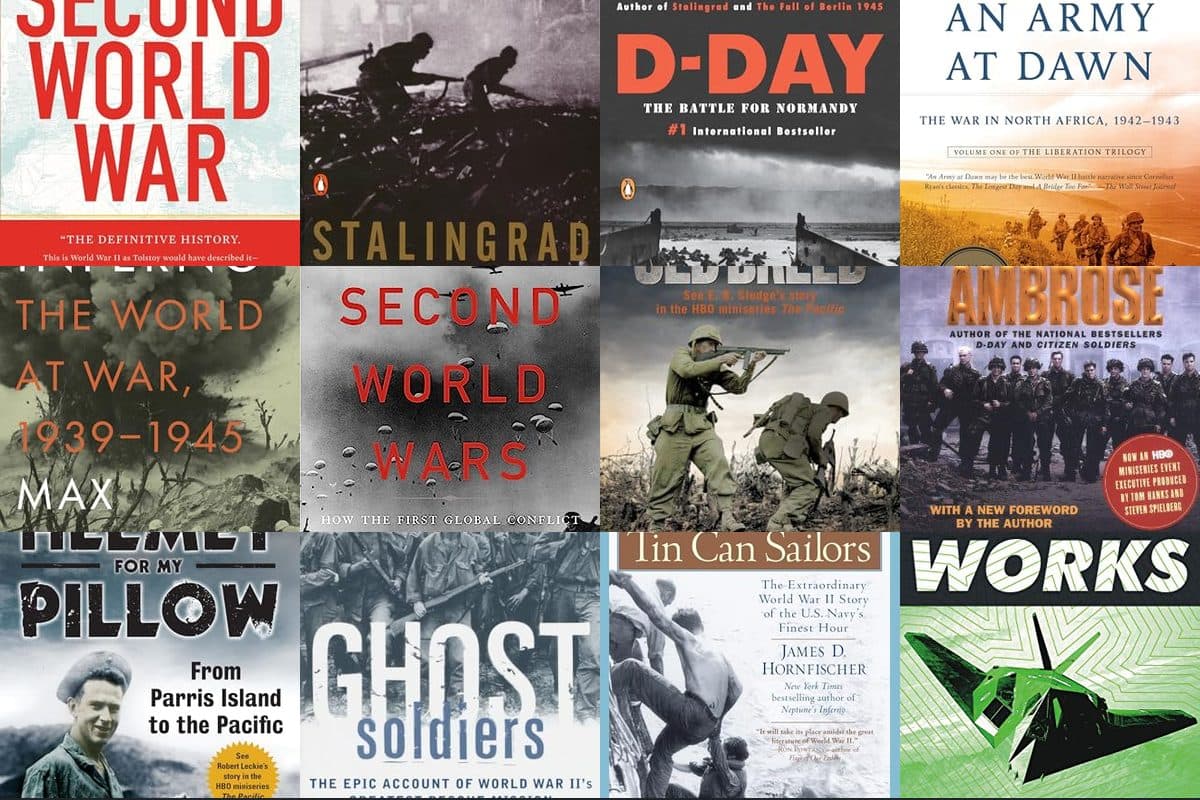
15 essential WW2 books covering every theater. Narrative histories, memoirs, and visual references ranked.