


15 Best World War II Books for History Enthusiasts (2026)
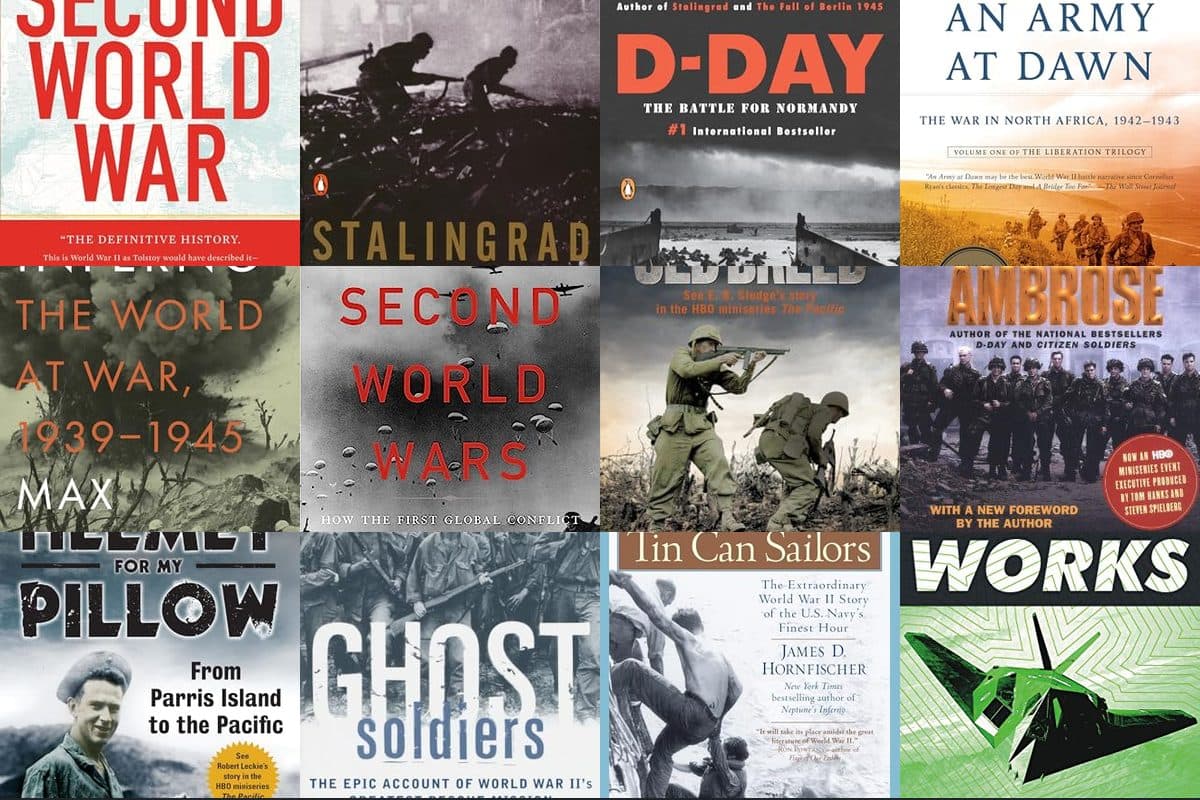
15 essential WW2 books covering every theater. Narrative histories, memoirs, and visual references ranked.
daniel-mercer··21 min read

The U.S. Fifth Army under Lieutenant General Mark Clark landed at Salerno, south of Naples, in Operation Avalanche, the main Allied amphibious assault on the Italian mainland. German forces under Field Marshal Albert Kesselring had anticipated the landing site and launched fierce counterattacks that nearly drove the invaders back into the sea. Only massive naval gunfire and air support prevented a disaster.
Germanic tribes under Arminius (Hermann) ambushed and annihilated three Roman legions, the XVII, XVIII, and XIX, commanded by Publius Quinctilius Varus in the Teutoburg Forest. Approximately 20,000 Roman soldiers were killed in one of the worst military disasters in Roman history. The defeat permanently halted Roman expansion beyond the Rhine and shaped the future boundary between Romance and Germanic Europe for two thousand years.
The Continental Congress officially adopted the name "United States of America" in place of "United Colonies." The resolution represented a decisive shift from seeking reconciliation with Britain to establishing a fully independent nation. The new name appeared on the revised Articles of War and military commissions, cementing the identity of the revolutionary cause.
Union forces under Major General William Rosecrans entered Chattanooga, Tennessee, after Confederate General Braxton Bragg evacuated the strategically critical rail junction. The capture gave the Union control of a vital gateway to the Deep South, but Bragg was not retreating, he was preparing the counterattack that would produce the Confederate victory at Chickamauga ten days later.
A Japanese floatplane launched from submarine I-25 dropped two incendiary bombs on the forests near Brookings, Oregon, in the only aerial bombing of the continental United States during World War II. The bombs failed to start a significant forest fire due to recent rainfall. The pilot, Nobuo Fujita, returned to Brookings in 1962 and presented his family's 400-year-old samurai sword to the city as a gesture of peace.
The U.S. Fifth Army landed at Salerno in Operation Avalanche, the main Allied amphibious assault on the Italian mainland. German counterattacks nearly drove the invaders back into the sea before massive naval gunfire and airborne reinforcements saved the beachhead.
Troops of the US 5th Armored Division entered Luxembourg City, liberating the capital of the Grand Duchy that had been occupied by Germany since May 1940. The advance was part of the broader Allied push across the Moselle following the breakout from Normandy. Luxembourg's liberation restored the exiled government of Grand Duchess Charlotte and placed US forces on the approaches to the Siegfried Line.
The Democratic People's Republic of Korea was proclaimed in Pyongyang under Kim Il-sung, completing the formal political division of the Korean peninsula. The new state was based on the Korean People's Army created under Soviet sponsorship in February 1948, and it immediately claimed sovereignty over the entire peninsula. The competing claims of the two Korean governments led directly to the war that broke out on June 25, 1950.
President Truman approved NSC-81, authorizing General MacArthur to conduct military operations north of the 38th parallel in Korea, provided there was no Soviet or Chinese intervention. This pivotal decision transformed the Korean War from a defensive action to restore the South Korean border into an offensive campaign to unify the Korean peninsula, a decision that would provoke Chinese intervention and transform the conflict.
The Lockheed A-12, designed by Clarence Kelly Johnson at the Skunk Works for the CIA, made its first official flight at Groom Lake, Nevada. The single-seat reconnaissance aircraft could cruise at Mach 3.2 and 90,000 feet, a combination no other aircraft has matched for sustained flight. Twelve A-12s were built, and the design evolved into the YF-12 interceptor and the SR-71 Blackbird.
Ahmad Shah Massoud, commander of the Northern Alliance's forces against the Taliban in Afghanistan, was mortally wounded in a suicide bombing by two al-Qaeda operatives posing as journalists. The attack, orchestrated by Osama bin Laden, was designed to eliminate the one Afghan commander capable of leading an effective resistance before the September 11 attacks on the United States. Massoud died of his wounds on September 15.

Duke of Normandy who invaded England in 1066 and defeated King Harold Godwinson at the Battle of Hastings, becoming King of England. His conquest permanently transformed English language, law, culture, and military organization, introducing the feudal system and the construction of castle fortifications across the island.

Colonel
U.S. Army officer who served in both World War II and Korea, earning distinction for his leadership in armored operations during the European campaign.

While William was born around September 9, he died on September 9, 1087, in Rouen, France, from injuries sustained when his horse stumbled on burning embers during the sack of Mantes. The king who had conquered England died of internal injuries, and his body was reportedly so swollen it burst his stone sarcophagus during the funeral.
Wear the Timeline
10 military events occurred on September 9, spanning multiple centuries. Key events include: Battle of Salerno, Operation Avalanche (1943), Battle of the Teutoburg Forest (9), Assassination of Ahmad Shah Massoud (2001).
The most significant military event on September 9 is Battle of Salerno, Operation Avalanche (1943). The U.S. Fifth Army under Lieutenant General Mark Clark landed at Salerno, south of Naples, in Operation Avalanche, the main Allied amphibious assault on the Italian mainland. German forces under Field Marshal Albert Kesselring had anticipated the landing site and launched fierce counterattacks that nearly drove the invaders back into the sea. Only massive naval gunfire and air support prevented a disaster.
Notable military figures born on September 9 include William the Conqueror (1028–1087), Joseph Gruber Gruber (1906–1988).
Events on September 9 span World War II, the Colonial & Revolutionary era, the Civil War, the Korean War, the Cold War, the Modern Era, covering 10 events across 5 centuries of military history.
Events on September 9 involve 5 branches of the U.S. and allied armed forces, reflecting the global scope of military operations throughout history.
Explore military history from the day you were born.
February 2
1943
February 3
1943
February 4
1945
February 5
1945
June 6
The Allied invasion of Normandy, the largest amphibious assault in history.
December 7
Japan attacks the U.S. Pacific Fleet, bringing America into World War II.
September 11
The deadliest terrorist attack in history transforms U.S. national security.
August 6
The first atomic bomb is dropped on a city, ushering in the nuclear age.
May 8
Nazi Germany surrenders unconditionally, ending World War II in Europe.
November 11
Armistice Day marks the end of World War I and honors all who served.
June 4
The turning point of the Pacific War as the U.S. Navy destroys four Japanese carriers.
July 4
The Declaration of Independence is adopted, sparking the American Revolution.
15 essential WW2 books covering every theater. Narrative histories, memoirs, and visual references ranked.
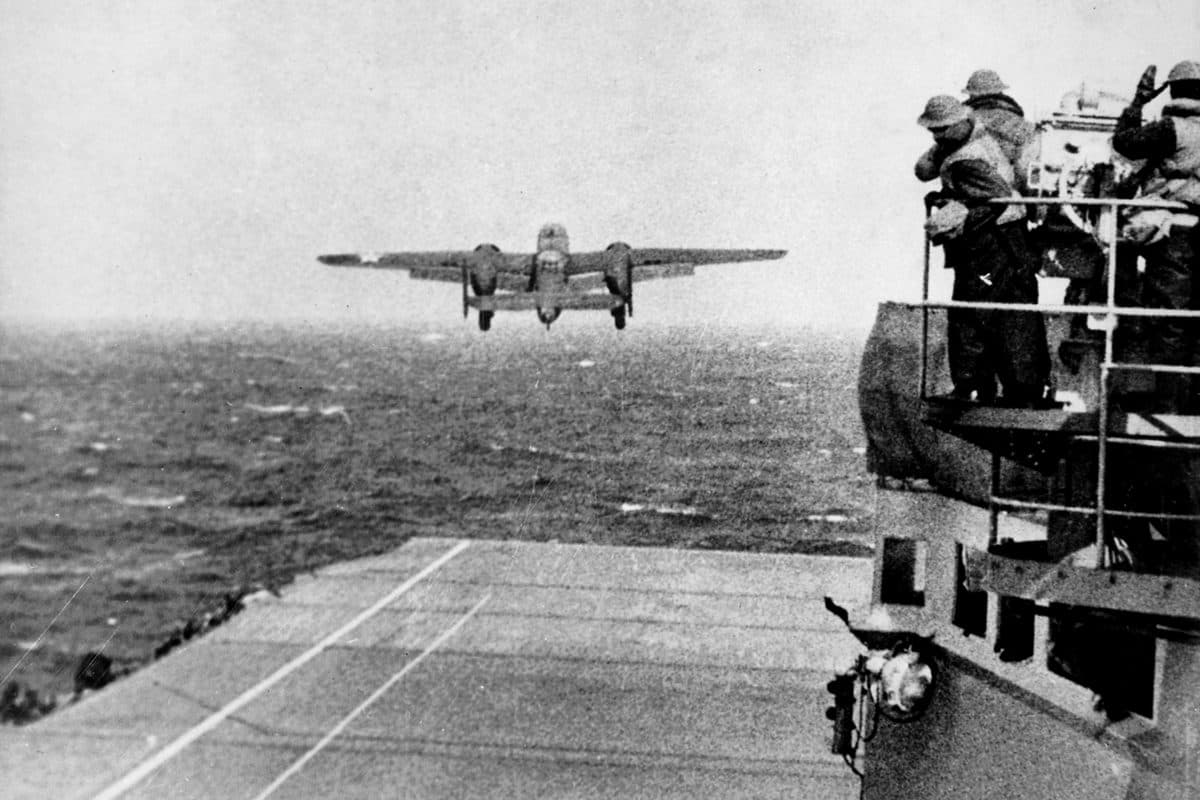
On April 18, 1942, sixteen B-25 Mitchell bombers did something no one thought possible: they launched from the deck of an aircraft carrier, flew 650 miles to Japan, and bombed Tokyo. Every aircraft was lost. The damage was negligible. The consequences changed the war.
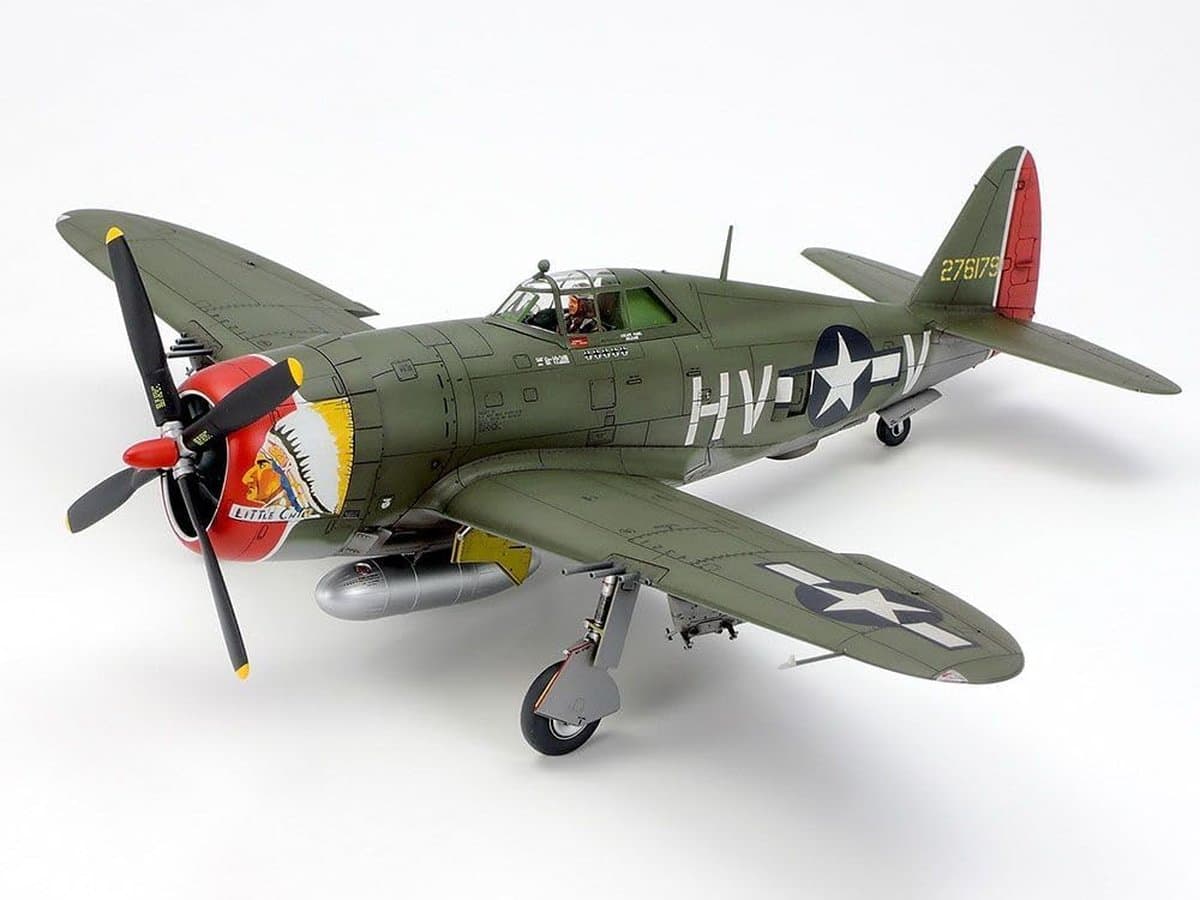
Compare 85+ WW2 scale model kits across aircraft, tanks, and ships. Beginner builds from $9 to museum-grade showpieces at $580. Covers Tamiya, Eduard, HK Models, Trumpeter, and more with honest reviews, trade-offs, and pricing.

On April 7, 1945, the Imperial Japanese Navy sent the largest battleship ever built on a one-way suicide mission to Okinawa. She never arrived. 386 American aircraft found her first, and sank her in under two hours.