

15 Best World War II Books for History Enthusiasts (2026)
15 essential WW2 books covering every theater. Narrative histories, memoirs, and visual references ranked.
daniel-mercer··21 min read

Emperor Hirohito recorded his unprecedented radio broadcast accepting the Potsdam Declaration's terms of surrender, ending World War II. News of the surrender triggered celebrations around the world. An attempted military coup by officers who wanted to fight on was suppressed overnight.
HMS Shannon captured the American frigate USS Chesapeake in a fierce fifteen-minute battle off Boston Harbor, one of the few British single-ship victories during the War of 1812. The dying American captain James Lawrence's order "Don't give up the ship!" became one of the U.S. Navy's most enduring mottos.
President Roosevelt and Prime Minister Churchill signed the Atlantic Charter aboard warships off Newfoundland, establishing the Allied war aims including self-determination, free trade, and disarmament of aggressor nations. The Charter became the foundation for the United Nations and the post-war international order.
President Roosevelt and Prime Minister Churchill completed the Atlantic Charter during a secret shipboard conference at Placentia Bay, Newfoundland. The joint declaration defined Allied war aims and laid the foundation for the United Nations, even though the United States was still officially neutral in the war.
President Roosevelt, Prime Minister Churchill, and the Combined Chiefs of Staff began the Quebec Conference (codename Quadrant) to settle Allied strategy for 1944. The conference approved the Normandy invasion plan, set a target date for Operation Overlord, and coordinated Pacific strategy against Japan.
Emperor Hirohito recorded his unprecedented radio broadcast accepting the Potsdam Declaration's terms of surrender, ending World War II. News of the surrender triggered celebrations around the world. An attempted military coup by officers who wanted to fight on was suppressed overnight.
American newspaper publisher William Randolph Hearst, whose yellow journalism helped precipitate the Spanish-American War in 1898, died in Beverly Hills at age 88. His media empire had shaped public opinion on U.S. military interventions for half a century and set the template for twentieth-century political influence through mass media.
Workers at the Lenin Shipyard in Gdansk, Poland occupied the yard and launched the strike that would lead to the Solidarity trade union, the first independent labor organization in the Soviet bloc. The strike triggered a political crisis that preoccupied Warsaw Pact military planners for the next decade and contributed to the eventual collapse of communism.
The largest blackout in North American history left 55 million people without power across the northeastern United States and Canada. The National Guard was mobilized in multiple states to maintain order, and the event exposed critical vulnerabilities in the electrical grid infrastructure that military planners had to address for homeland defense.

Dentist, gambler, and gunfighter best known for his role alongside Wyatt Earp at the Gunfight at the O.K. Corral in Tombstone, Arizona (1881). The frontier violence that Holliday embodied was intimately connected to the U.S. Army's campaigns to control the American West.

Private
Pulitzer Prize-winning columnist and humorist who served in the U.S. Navy during World War II. His memoir "Growing Up" captured the experience of a generation that came of age during the Depression and went to war.

American newspaper magnate whose sensationalist "yellow journalism" helped push the United States into the Spanish-American War in 1898. His famous (possibly apocryphal) telegram "You furnish the pictures and I'll furnish the war" symbolizes the power of media to shape military policy.
Wear the Timeline
10 military events occurred on August 14, spanning multiple centuries. Key events include: Japan Announces Surrender, VJ Day (1945), Atlantic Charter Signed (1941), Atlantic Charter Drafted Aboard HMS Prince of Wales (1941).
The most significant military event on August 14 is Japan Announces Surrender, VJ Day (1945). Emperor Hirohito recorded his unprecedented radio broadcast accepting the Potsdam Declaration's terms of surrender, ending World War II. News of the surrender triggered celebrations around the world. An attempted military coup by officers who wanted to fight on was suppressed overnight.
Notable military figures born on August 14 include Doc Holliday (1851–1887), Russell Baker (1925–2019).
Events on August 14 span World War II, the Interwar Period, the Colonial & Revolutionary era, the Modern Era, the Cold War, covering 10 events across 3 centuries of military history.
Events on August 14 involve 5 branches of the U.S. and allied armed forces, reflecting the global scope of military operations throughout history.
Explore military history from the day you were born.
June 6
The Allied invasion of Normandy, the largest amphibious assault in history.
December 7
Japan attacks the U.S. Pacific Fleet, bringing America into World War II.
September 11
The deadliest terrorist attack in history transforms U.S. national security.
August 6
The first atomic bomb is dropped on a city, ushering in the nuclear age.
May 8
Nazi Germany surrenders unconditionally, ending World War II in Europe.
November 11
Armistice Day marks the end of World War I and honors all who served.
June 4
The turning point of the Pacific War as the U.S. Navy destroys four Japanese carriers.
July 4
The Declaration of Independence is adopted, sparking the American Revolution.
15 essential WW2 books covering every theater. Narrative histories, memoirs, and visual references ranked.
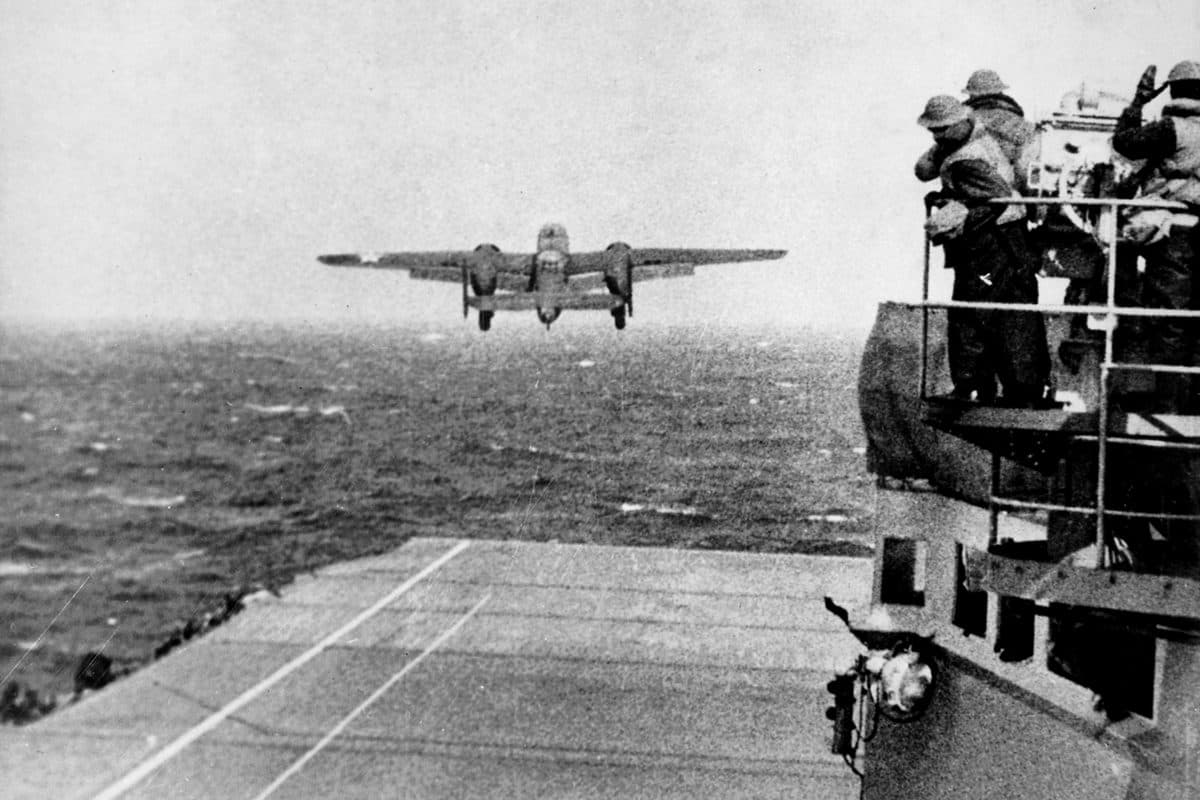
On April 18, 1942, sixteen B-25 Mitchell bombers did something no one thought possible: they launched from the deck of an aircraft carrier, flew 650 miles to Japan, and bombed Tokyo. Every aircraft was lost. The damage was negligible. The consequences changed the war.
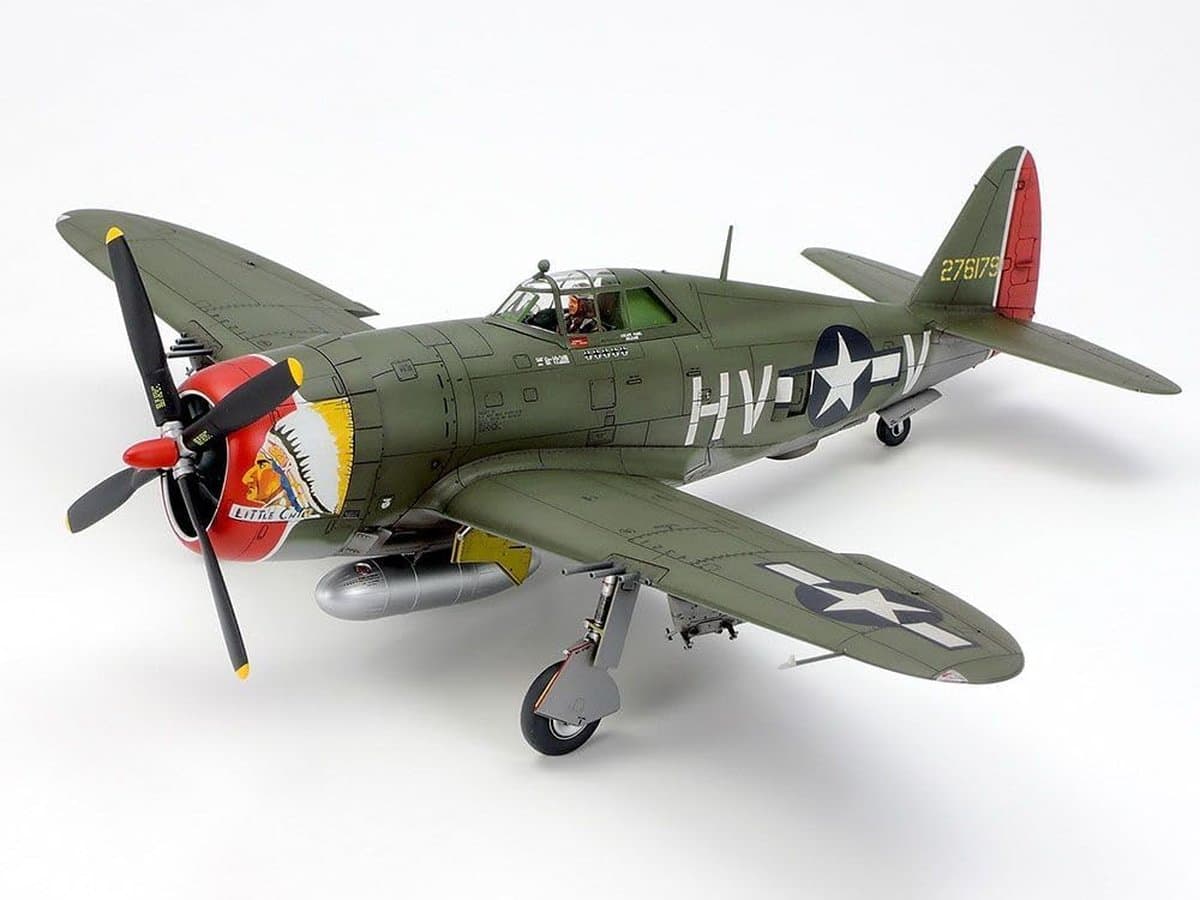
Compare 85+ WW2 scale model kits across aircraft, tanks, and ships. Beginner builds from $9 to museum-grade showpieces at $580. Covers Tamiya, Eduard, HK Models, Trumpeter, and more with honest reviews, trade-offs, and pricing.

On April 7, 1945, the Imperial Japanese Navy sent the largest battleship ever built on a one-way suicide mission to Okinawa. She never arrived. 386 American aircraft found her first, and sank her in under two hours.