

15 Best World War II Books for History Enthusiasts (2026)
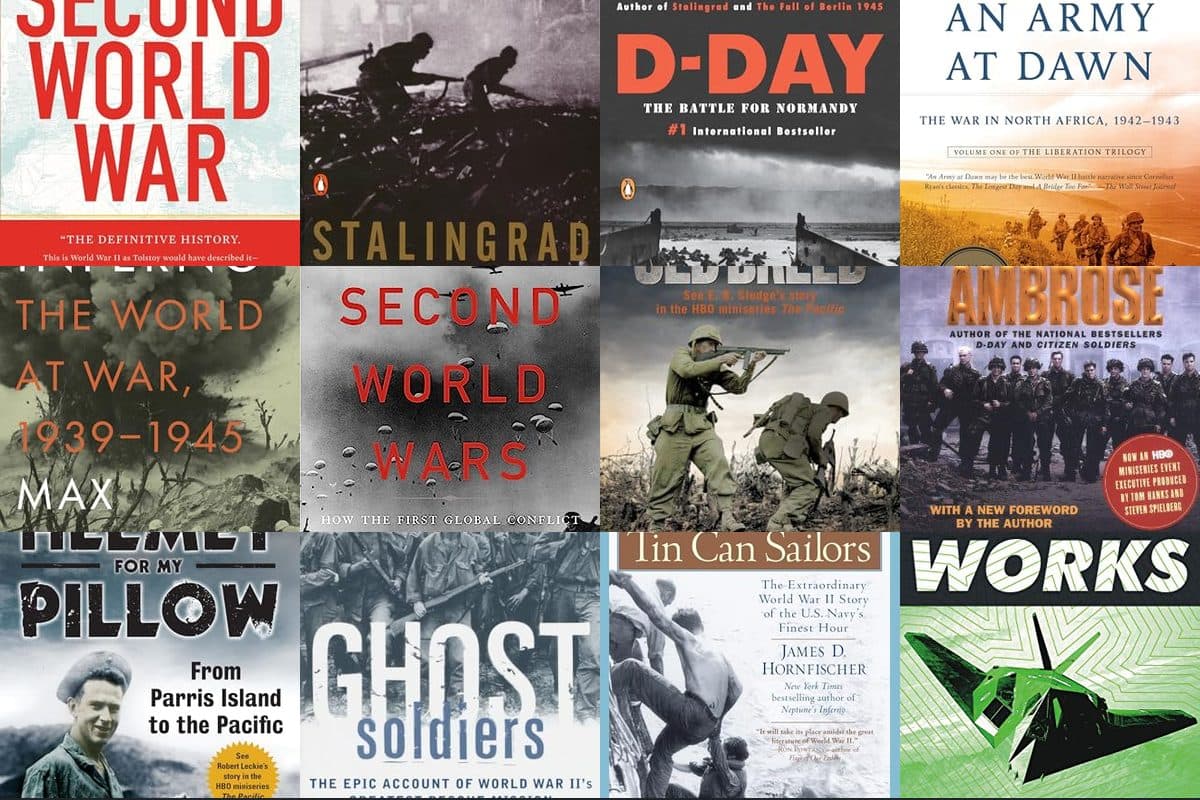
15 essential WW2 books covering every theater. Narrative histories, memoirs, and visual references ranked.
daniel-mercer··21 min read

Emperor Hirohito's recorded surrender broadcast was aired to the Japanese nation at noon, officially ending World War II. Across Asia and the Pacific, millions of soldiers, prisoners of war, and occupied peoples learned that the most destructive conflict in human history was finally over.
The Joseon Dynasty strengthened its northern border defenses against Jurchen incursions, establishing the military garrison system that would protect Korea's northern frontier for centuries. Korean military engineering of this period created fortifications that influenced defensive doctrine throughout East Asia.
The Panama Canal opened to commercial traffic, fulfilling a strategic vision that had driven American foreign policy since the 1840s. The canal halved the sailing distance between the Atlantic and Pacific oceans and allowed the U.S. Navy to rapidly shift its fleet between oceans, a capability that proved vital in both world wars.
American, British, and Free French forces launched Operation Dragoon, the amphibious invasion of southern France along the Riviera coast between Toulon and Cannes. The operation was a stunning success, with light casualties and rapid advances that liberated Marseille and Toulon within two weeks and created a second front that accelerated the liberation of France.
Emperor Hirohito's recorded surrender broadcast was aired to the Japanese nation at noon, officially ending World War II. Across Asia and the Pacific, millions of soldiers, prisoners of war, and occupied peoples learned that the most destructive conflict in human history was finally over.
India gained independence from Britain at midnight, ending nearly 200 years of British colonial rule. The partition of British India into India and Pakistan triggered massive population transfers and communal violence that killed an estimated 1-2 million people, requiring deployment of military forces by both new nations.
The British Raj ended at midnight as India and Pakistan became independent states. The partition triggered one of the largest and most violent population exchanges in history, with roughly 15 million people displaced and the two new armies inheriting British arsenals, doctrines, and the unresolved territorial dispute over Kashmir.
The Republic of the Congo (Congo-Brazzaville) became independent from France, part of the wave of African decolonization that reshaped Cold War military planning. The small central African state would become a recurring flashpoint for Cold War proxy competition between Western and Eastern bloc powers.
The Woodstock Music Festival began on a farm in Bethel, New York, attracting over 400,000 people. The festival became a defining cultural moment of the Vietnam War era, featuring performances by Jimi Hendrix (a 101st Airborne veteran) and Country Joe McDonald, whose anti-war "I-Feel-Like-I'm-Fixin'-to-Die Rag" became an anthem of the antiwar movement.
President Nixon announced the suspension of the U.S. dollar's convertibility to gold, ending the Bretton Woods international monetary system. The decision, driven partly by the cost of the Vietnam War, reshaped the global financial architecture and the funding basis for American military expenditure.

Emperor and Commander-in-Chief
French military genius and Emperor whose revolutionary and Napoleonic Wars (1792-1815) reshaped the map of Europe, introduced mass conscription and modern military organization, and whose tactical innovations are still studied at every military academy in the world.

Colonel
British intelligence officer known as "Lawrence of Arabia" who organized and led the Arab Revolt against the Ottoman Empire during World War I. His unconventional warfare methods and his account in "Seven Pillars of Wisdom" influenced a century of counterinsurgency and special operations doctrine.

Major
Japanese Army officer who led the failed coup attempt to prevent Emperor Hirohito's surrender broadcast. After storming the Imperial Palace and failing to find the recording, he distributed leaflets urging resistance from the roof of the Ministry of War, then shot himself at dawn on the palace grounds.
Wear the Timeline
10 military events occurred on August 15, spanning multiple centuries. Key events include: VJ Day, World War II Ends (1945), Indian Independence (1947), Operation Dragoon, Allied Invasion of Southern France (1944), Panama Canal Opens (1914), India and Pakistan Gain Independence and Partition (1947).
The most significant military event on August 15 is VJ Day, World War II Ends (1945). Emperor Hirohito's recorded surrender broadcast was aired to the Japanese nation at noon, officially ending World War II. Across Asia and the Pacific, millions of soldiers, prisoners of war, and occupied peoples learned that the most destructive conflict in human history was finally over.
Notable military figures born on August 15 include Napoleon Bonaparte (1769–1821), T.E. Lawrence (1888–1935).
Events on August 15 span World War II, the Cold War, the Colonial & Revolutionary era, the Vietnam War, World War I, covering 10 events across 2 centuries of military history.
Events on August 15 involve 4 branches of the U.S. and allied armed forces, reflecting the global scope of military operations throughout history.
Explore military history from the day you were born.
June 6
The Allied invasion of Normandy, the largest amphibious assault in history.
December 7
Japan attacks the U.S. Pacific Fleet, bringing America into World War II.
September 11
The deadliest terrorist attack in history transforms U.S. national security.
August 6
The first atomic bomb is dropped on a city, ushering in the nuclear age.
May 8
Nazi Germany surrenders unconditionally, ending World War II in Europe.
November 11
Armistice Day marks the end of World War I and honors all who served.
June 4
The turning point of the Pacific War as the U.S. Navy destroys four Japanese carriers.
July 4
The Declaration of Independence is adopted, sparking the American Revolution.
15 essential WW2 books covering every theater. Narrative histories, memoirs, and visual references ranked.
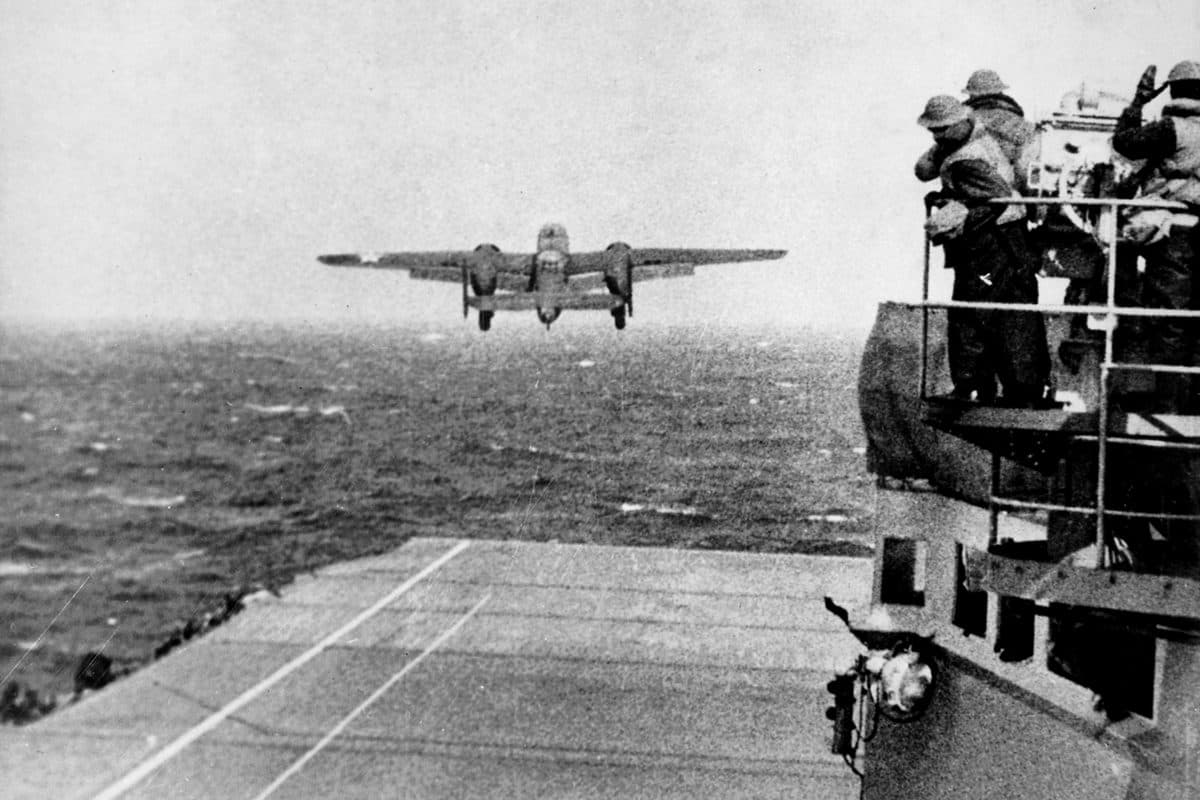
On April 18, 1942, sixteen B-25 Mitchell bombers did something no one thought possible: they launched from the deck of an aircraft carrier, flew 650 miles to Japan, and bombed Tokyo. Every aircraft was lost. The damage was negligible. The consequences changed the war.
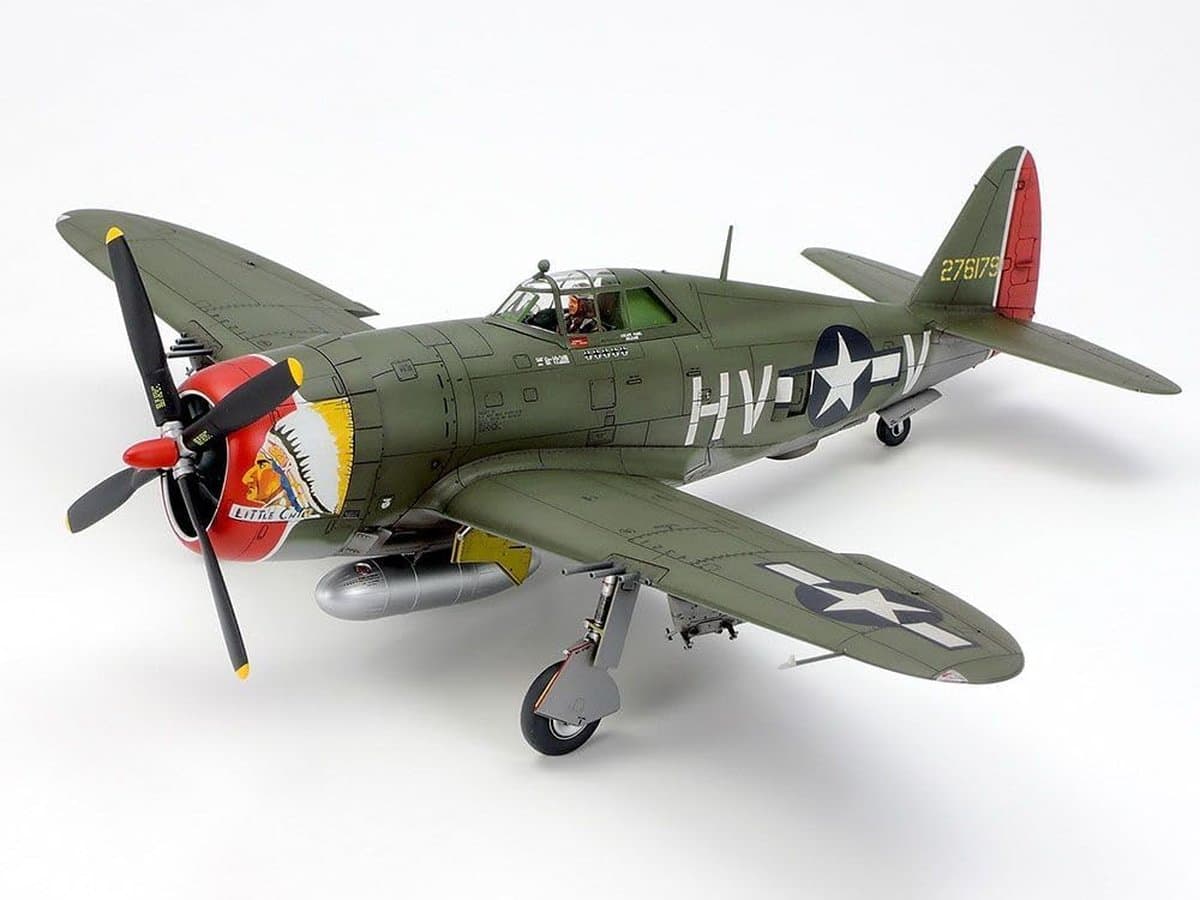
Compare 85+ WW2 scale model kits across aircraft, tanks, and ships. Beginner builds from $9 to museum-grade showpieces at $580. Covers Tamiya, Eduard, HK Models, Trumpeter, and more with honest reviews, trade-offs, and pricing.

On April 7, 1945, the Imperial Japanese Navy sent the largest battleship ever built on a one-way suicide mission to Okinawa. She never arrived. 386 American aircraft found her first, and sank her in under two hours.