

15 Best World War II Books for History Enthusiasts (2026)
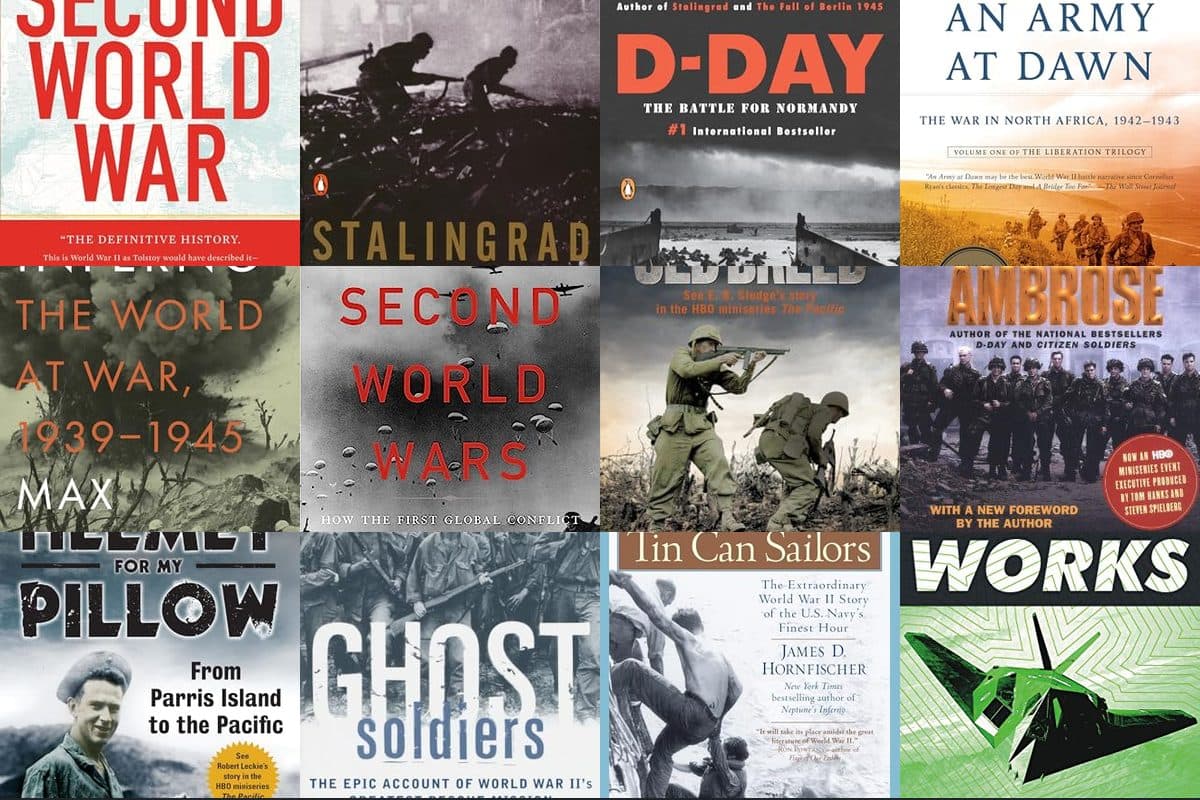
15 essential WW2 books covering every theater. Narrative histories, memoirs, and visual references ranked.
daniel-mercer··21 min read

The U.S. Eighth Air Force launched a daring double strike against ball-bearing factories at Schweinfurt and aircraft plants at Regensburg in one of the costliest air missions of World War II. Of 376 B-17s dispatched, 60 were shot down and 87 damaged beyond repair, a 16% loss rate that nearly broke the daylight bombing campaign.
Dakota Sioux warriors attacked settlements in southwestern Minnesota, beginning the bloodiest Native American uprising in American history. Over the following six weeks, approximately 800 settlers and soldiers were killed. The war ended with the largest mass execution in U.S. history, 38 Dakota men hanged at Mankato on December 26, 1862.
Twelve B-17 Flying Fortresses of the Eighth Air Force, led by General Ira Eaker, attacked marshaling yards at Rouen-Sotteville, France, in the first heavy bomber mission conducted entirely by American forces in Europe. All twelve aircraft returned safely, giving false confidence about the survivability of daylight precision bombing.
The U.S. Eighth Air Force launched a daring double strike against ball-bearing factories at Schweinfurt and aircraft plants at Regensburg in one of the costliest air missions of World War II. Of 376 B-17s dispatched, 60 were shot down and 87 damaged beyond repair, a 16% loss rate that nearly broke the daylight bombing campaign.
The U.S. Eighth Air Force launched simultaneous daylight raids against the ball-bearing plants at Schweinfurt and the Messerschmitt factory at Regensburg, losing 60 B-17 Flying Fortresses out of 376. The catastrophic losses forced a temporary suspension of deep-penetration raids until long-range fighter escort became available in late 1943.
On the closing day of the Quadrant Conference in Quebec, Roosevelt and Churchill signed the Quebec Agreement on August 17, 1943, formally committing the United States and Britain to full cooperation on atomic weapons development and establishing the wartime command architecture that would deliver the bomb.
Sukarno and Mohammad Hatta proclaimed Indonesian independence from the Netherlands, just two days after Japan's surrender. The Dutch attempted to reassert colonial control, leading to a four-year war of independence (1945-1949) that became one of the first major decolonization conflicts of the post-war era.
Hurricane Camille, the second Category 5 hurricane ever recorded striking the continental United States, came ashore at Waveland, Mississippi with 175 mph winds and a 24-foot storm surge. The storm devastated the Mississippi coast and triggered one of the largest peacetime military relief operations in American history.
Ben Abruzzo, Maxie Anderson, and Larry Newman landed their helium balloon Double Eagle II in a barley field in Miserey, France, on August 17, 1978, completing the first successful transatlantic balloon crossing and validating high-altitude weather models that military reconnaissance balloon programs had been refining for three decades.
President Clinton announced Operation Infinite Reach, the cruise missile strikes on the al-Shifa pharmaceutical plant in Sudan and al-Qaeda training camps in Afghanistan. The strikes were the first American military response to the August 7 U.S. embassy bombings and marked the beginning of a sustained counterterrorism campaign that would expand dramatically after 9/11.
A magnitude 7.6 earthquake struck northwestern Turkey, killing over 17,000 people. NATO deployed military relief forces including field hospitals, engineering units, and search-and-rescue teams in one of the Alliance's first major humanitarian operations, helping demonstrate NATO's relevance in the post-Cold War era.

Colonel
Frontier legend, U.S. Congressman, and militia colonel who served under Andrew Jackson in the Creek War (1813-14) before his famous death at the Alamo in 1836. His frontier skill and political populism made him one of the most iconic figures in American military folklore.

Polish-American film mogul who co-founded several major Hollywood studios. His war films, including "The Best Years of Our Lives" (1946) about returning WWII veterans, shaped American understanding of military service and won multiple Academy Awards.

King and Commander-in-Chief
King of Prussia whose military genius in the Seven Years' War (1756-1763) established Prussia as a great power against seemingly impossible odds. His innovations in tactics, training, and administration became the foundation of the Prussian military tradition that dominated European warfare for the next two centuries.
Wear the Timeline
10 military events occurred on August 17, spanning multiple centuries. Key events include: Schweinfurt-Regensburg Raid (1943), First All-American Air Raid in Europe (1942), Dakota War of 1862 Begins (1862), Schweinfurt and Regensburg Raids Mark USAAF Crisis (1943), The Quebec Conference Approves the Atomic Weapons Partnership (1943).
The most significant military event on August 17 is Schweinfurt-Regensburg Raid (1943). The U.S. Eighth Air Force launched a daring double strike against ball-bearing factories at Schweinfurt and aircraft plants at Regensburg in one of the costliest air missions of World War II. Of 376 B-17s dispatched, 60 were shot down and 87 damaged beyond repair, a 16% loss rate that nearly broke the daylight bombing campaign.
Notable military figures born on August 17 include Davy Crockett (1786–1836), Samuel Goldwyn (1879–1974).
Events on August 17 span World War II, the Civil War, the Cold War, the Modern Era, the Vietnam War, covering 10 events across 2 centuries of military history.
Events on August 17 involve 4 branches of the U.S. and allied armed forces, reflecting the global scope of military operations throughout history.
Explore military history from the day you were born.
June 6
The Allied invasion of Normandy, the largest amphibious assault in history.
December 7
Japan attacks the U.S. Pacific Fleet, bringing America into World War II.
September 11
The deadliest terrorist attack in history transforms U.S. national security.
August 6
The first atomic bomb is dropped on a city, ushering in the nuclear age.
May 8
Nazi Germany surrenders unconditionally, ending World War II in Europe.
November 11
Armistice Day marks the end of World War I and honors all who served.
June 4
The turning point of the Pacific War as the U.S. Navy destroys four Japanese carriers.
July 4
The Declaration of Independence is adopted, sparking the American Revolution.
15 essential WW2 books covering every theater. Narrative histories, memoirs, and visual references ranked.
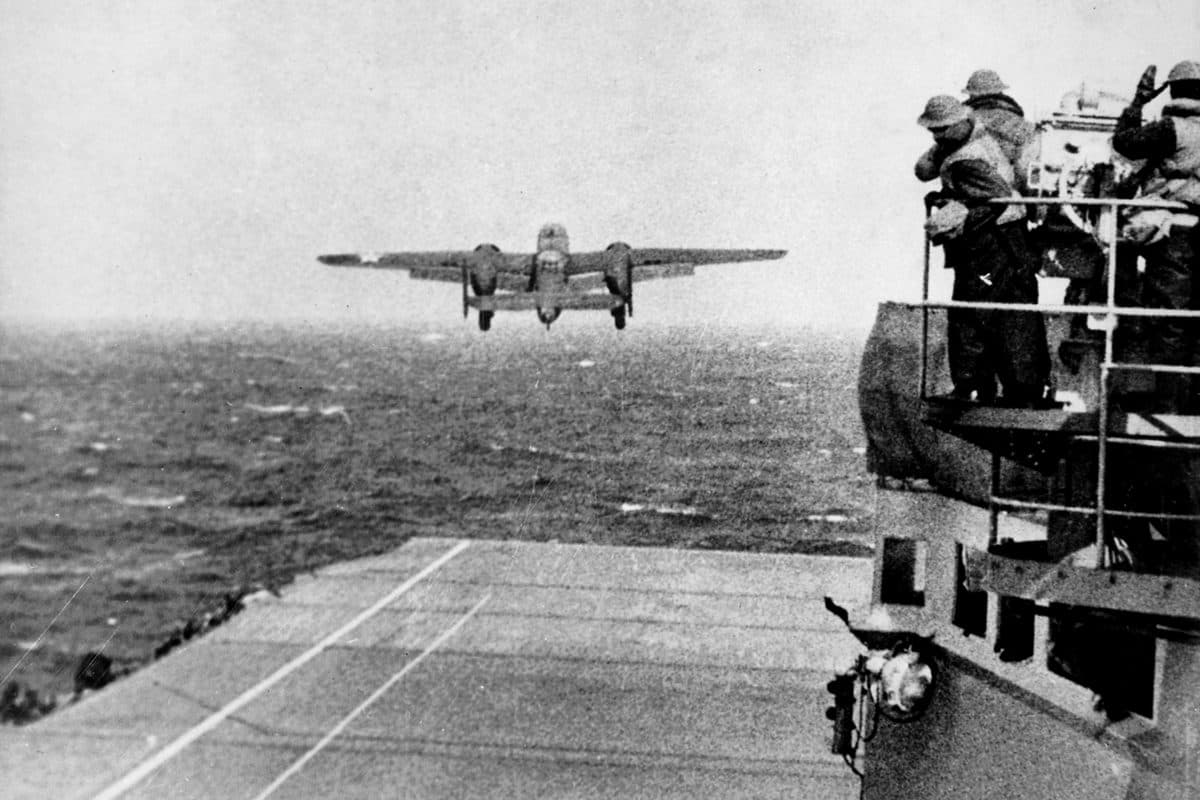
On April 18, 1942, sixteen B-25 Mitchell bombers did something no one thought possible: they launched from the deck of an aircraft carrier, flew 650 miles to Japan, and bombed Tokyo. Every aircraft was lost. The damage was negligible. The consequences changed the war.
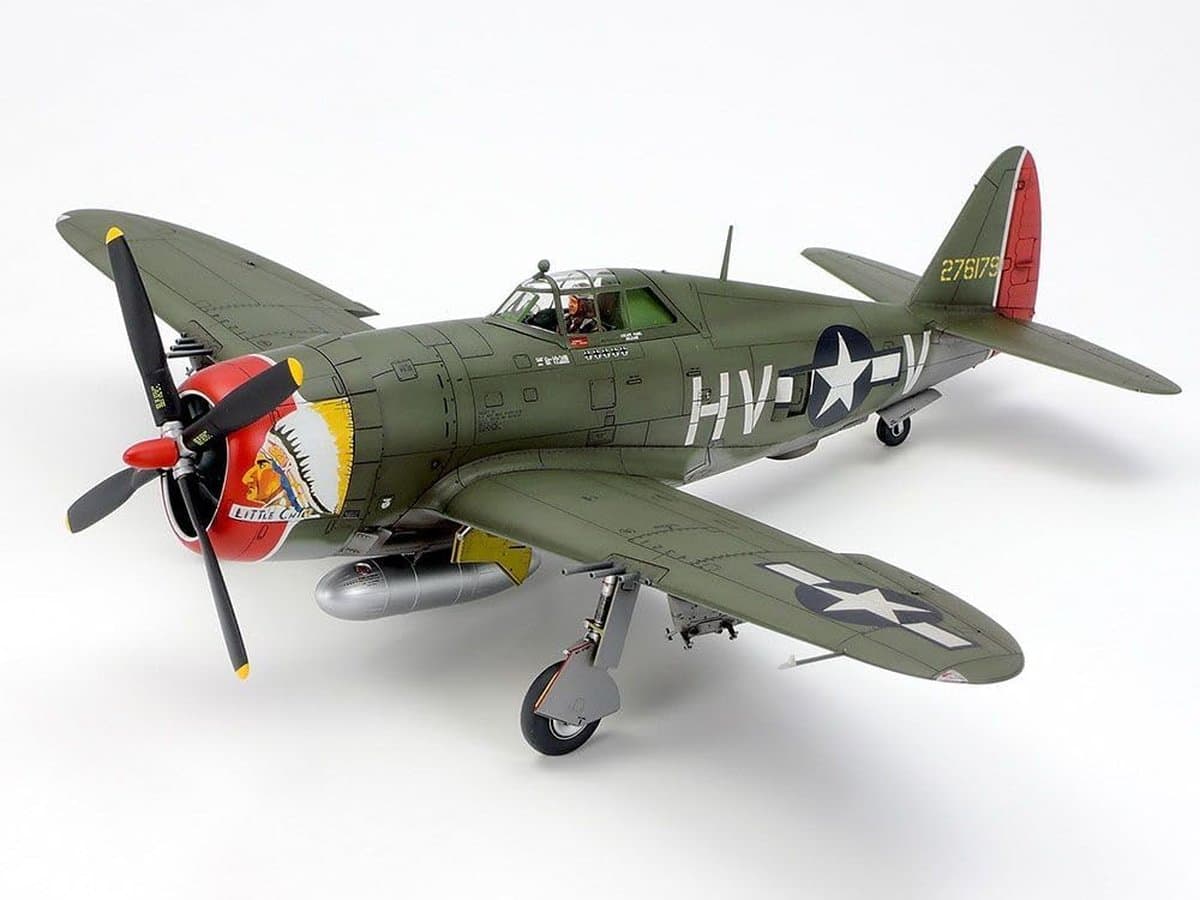
Compare 85+ WW2 scale model kits across aircraft, tanks, and ships. Beginner builds from $9 to museum-grade showpieces at $580. Covers Tamiya, Eduard, HK Models, Trumpeter, and more with honest reviews, trade-offs, and pricing.

On April 7, 1945, the Imperial Japanese Navy sent the largest battleship ever built on a one-way suicide mission to Okinawa. She never arrived. 386 American aircraft found her first, and sank her in under two hours.