

15 Best World War II Books for History Enthusiasts (2026)
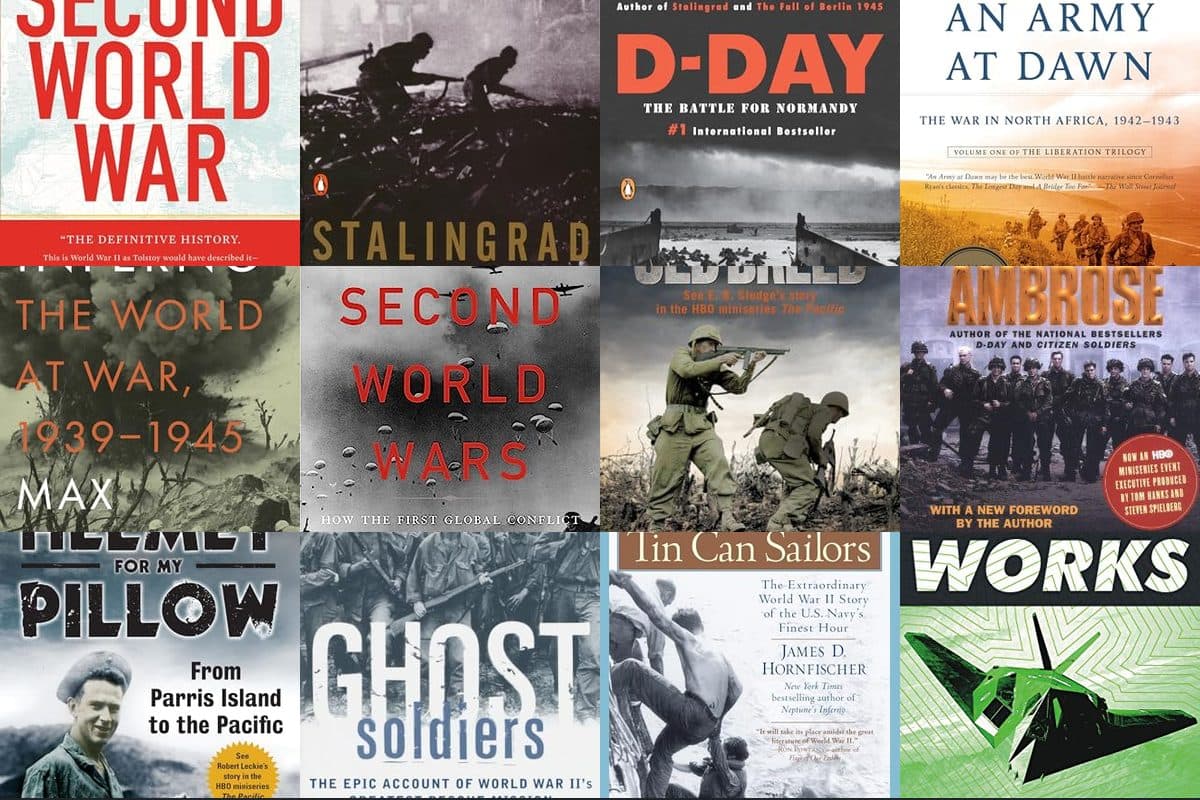
15 essential WW2 books covering every theater. Narrative histories, memoirs, and visual references ranked.
daniel-mercer··21 min read
Winston Churchill delivered his first speech as Prime Minister to the House of Commons, offering nothing but "blood, toil, tears and sweat." On the same day, German forces crossed the Meuse River at Sedan, achieving the decisive breakthrough that would lead to the fall of France in six weeks.
Congress declared war on Mexico after President Polk asserted that Mexico had "shed American blood upon American soil", a claim hotly disputed by Abraham Lincoln and other Whig opponents. The war would add California, New Mexico, Arizona, Nevada, Utah, and parts of Colorado and Wyoming to the United States.
Robert Smalls, an enslaved harbor pilot, commandeered the Confederate transport CSS Planter in Charleston Harbor and sailed it to the Union fleet, one of the most daring escapes of the Civil War. His act helped persuade Lincoln to allow Black men to serve in the Union military.
The British Royal Flying Corps was established by royal warrant, creating the military aviation organization that would play a crucial role in World War I. The RFC would merge with the Royal Naval Air Service in 1918 to form the Royal Air Force, the world's first independent air force.
Churchill delivered his first speech as PM, offering "blood, toil, tears and sweat." The same day, German forces crossed the Meuse at Sedan.
Guderian's XIX Panzer Corps crossed the Meuse River at Sedan in a virtuoso combined-arms assault, achieving the decisive breakthrough of the Battle of France. French defenders broke under a storm of Stuka dive-bomber attacks. Within a week, German tanks reached the English Channel.
German Fallschirmjager of Sturmabteilung Koch, who had landed gliders on the roof of Belgium's Fort Eben-Emael three days earlier, secured the fortress complex as the garrison surrendered, clearing the way across the Albert Canal.
The U.S. aircraft carrier USS Wasp completed her second ferry mission to the besieged island of Malta, delivering 47 Royal Air Force Spitfires whose arrival broke Axis air superiority over the island within weeks.
The North American Aerospace Defense Command (NORAD) formally activated as a binational United States and Canadian command, integrating air defense radars, interceptor squadrons, and command centers into a single operational structure.
U.S. Air Force F-4 Phantoms of the 8th Tactical Fighter Wing dropped the Thanh Hoa Bridge in North Vietnam using laser-guided bombs, destroying in one mission a structure that had survived 871 sorties during Operation Rolling Thunder.
Pope John Paul II was shot and severely wounded by Turkish nationalist Mehmet Ali Agca in St. Peter's Square. The assassination attempt, later linked to Bulgarian intelligence and possibly the Soviet KGB, highlighted Cold War tensions between the Catholic Church's anti-communist stance and Eastern Bloc governments.

Known as the "Organizer of Victory" during the French Revolutionary Wars, Carnot transformed the French military from a disorganized force into the most powerful army in Europe. His system of mass conscription (levee en masse) created the citizen army model that dominated warfare for the next two centuries.

Composer of the patriotic hymn "Onward, Christian Soldiers" and partner of W.S. Gilbert in the famous Savoy Operas. His stirring musical compositions became closely associated with British military and imperial ceremonies.

Norwegian explorer and humanitarian who won the Nobel Peace Prize for his work repatriating prisoners of war after World War I. His "Nansen Passport" for stateless refugees helped hundreds of thousands displaced by the war and the Russian Revolution.
Wear the Timeline
10 military events occurred on May 13, spanning multiple centuries. Key events include: Churchill's "Blood, Toil, Tears and Sweat" Speech (1940), United States Declares War on Mexico (1846), Robert Smalls Steals the CSS Planter (1862), Germans Cross the Meuse at Sedan (1940), Thanh Hoa Bridge Destroyed by Precision Guided Bombs (1972).
The most significant military event on May 13 is Churchill's "Blood, Toil, Tears and Sweat" Speech (1940). Winston Churchill delivered his first speech as Prime Minister to the House of Commons, offering nothing but "blood, toil, tears and sweat." On the same day, German forces crossed the Meuse River at Sedan, achieving the decisive breakthrough that would lead to the fall of France in six weeks.
Notable military figures born on May 13 include Lazare Carnot (1753–1823), Arthur Sullivan (1842–1900).
Events on May 13 span World War II, the Colonial & Revolutionary era, the Civil War, World War I, the Cold War, the Vietnam War, covering 10 events across 2 centuries of military history.
Events on May 13 involve 4 branches of the U.S. and allied armed forces, reflecting the global scope of military operations throughout history.
Explore military history from the day you were born.
June 6
The Allied invasion of Normandy, the largest amphibious assault in history.
December 7
Japan attacks the U.S. Pacific Fleet, bringing America into World War II.
September 11
The deadliest terrorist attack in history transforms U.S. national security.
August 6
The first atomic bomb is dropped on a city, ushering in the nuclear age.
May 8
Nazi Germany surrenders unconditionally, ending World War II in Europe.
November 11
Armistice Day marks the end of World War I and honors all who served.
June 4
The turning point of the Pacific War as the U.S. Navy destroys four Japanese carriers.
July 4
The Declaration of Independence is adopted, sparking the American Revolution.
15 essential WW2 books covering every theater. Narrative histories, memoirs, and visual references ranked.
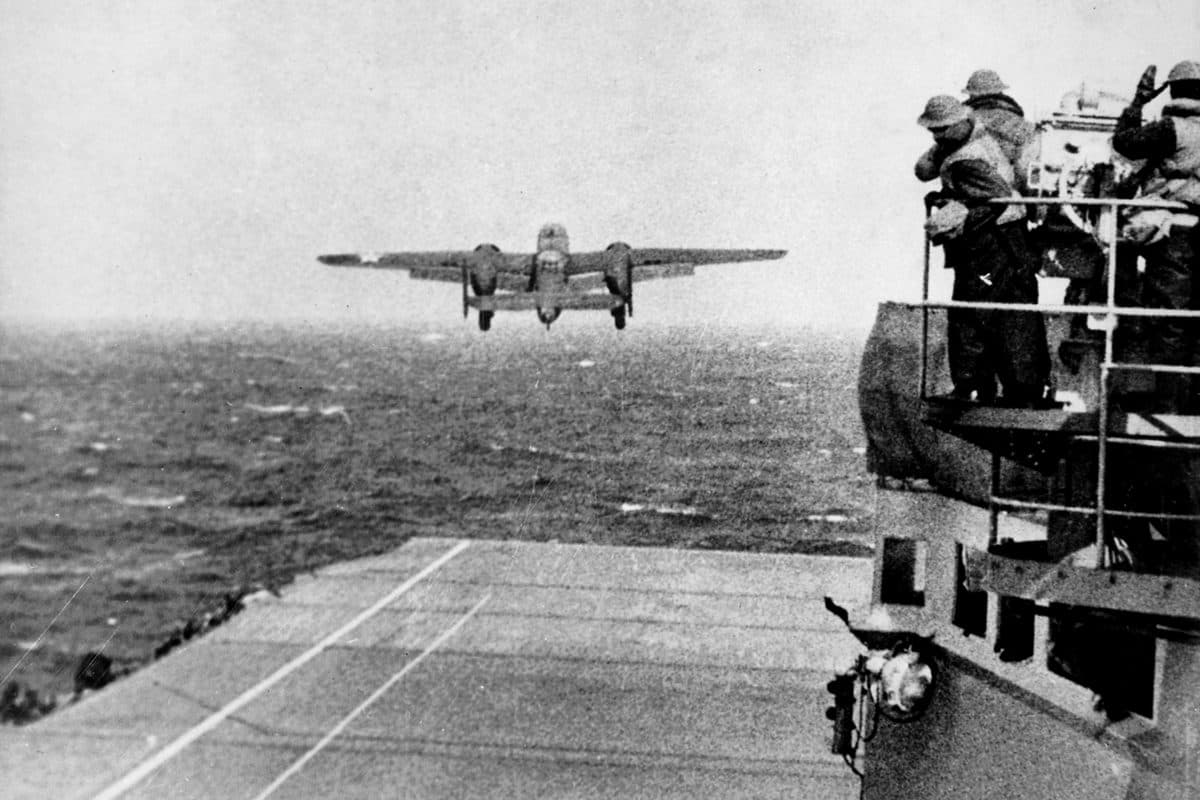
On April 18, 1942, sixteen B-25 Mitchell bombers did something no one thought possible: they launched from the deck of an aircraft carrier, flew 650 miles to Japan, and bombed Tokyo. Every aircraft was lost. The damage was negligible. The consequences changed the war.
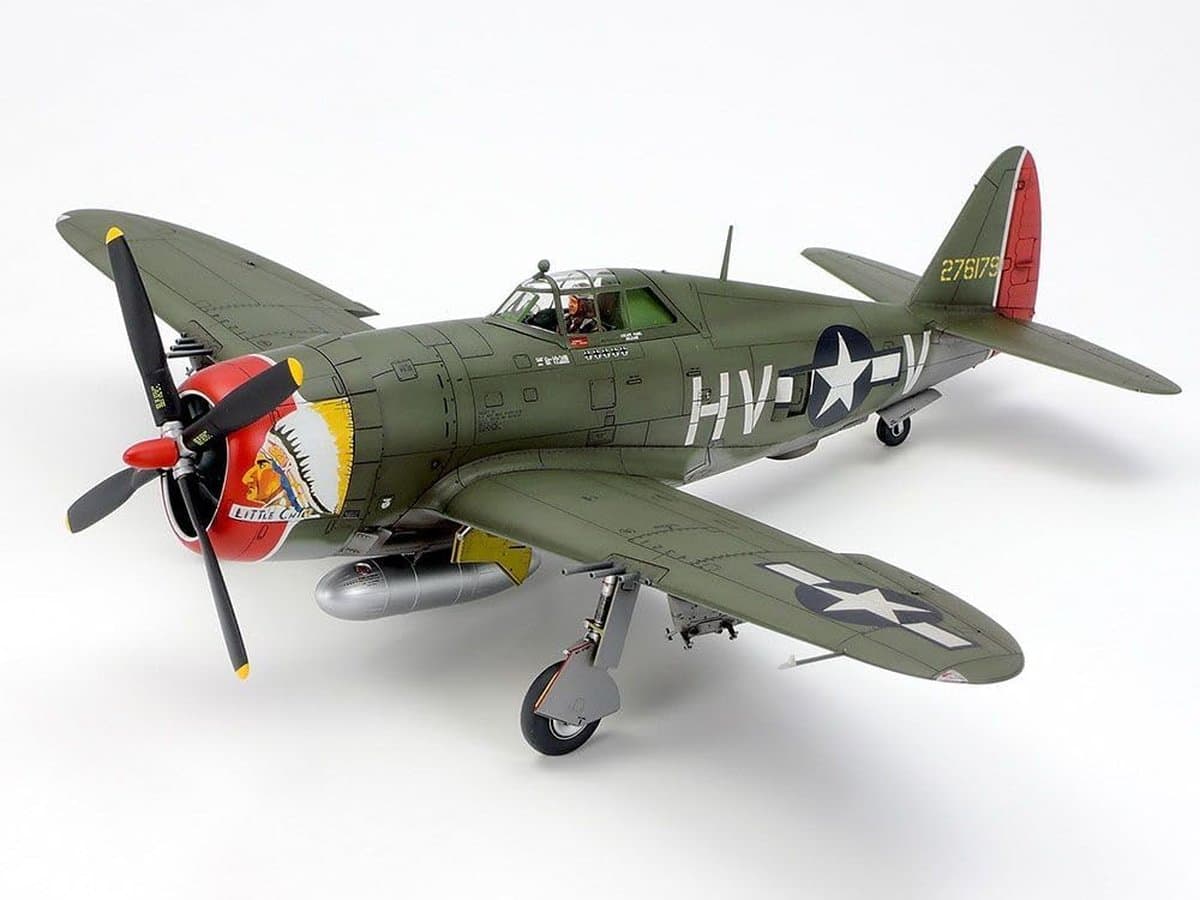
Compare 85+ WW2 scale model kits across aircraft, tanks, and ships. Beginner builds from $9 to museum-grade showpieces at $580. Covers Tamiya, Eduard, HK Models, Trumpeter, and more with honest reviews, trade-offs, and pricing.

On April 7, 1945, the Imperial Japanese Navy sent the largest battleship ever built on a one-way suicide mission to Okinawa. She never arrived. 386 American aircraft found her first, and sank her in under two hours.