

How the US Military Trains Special Forces
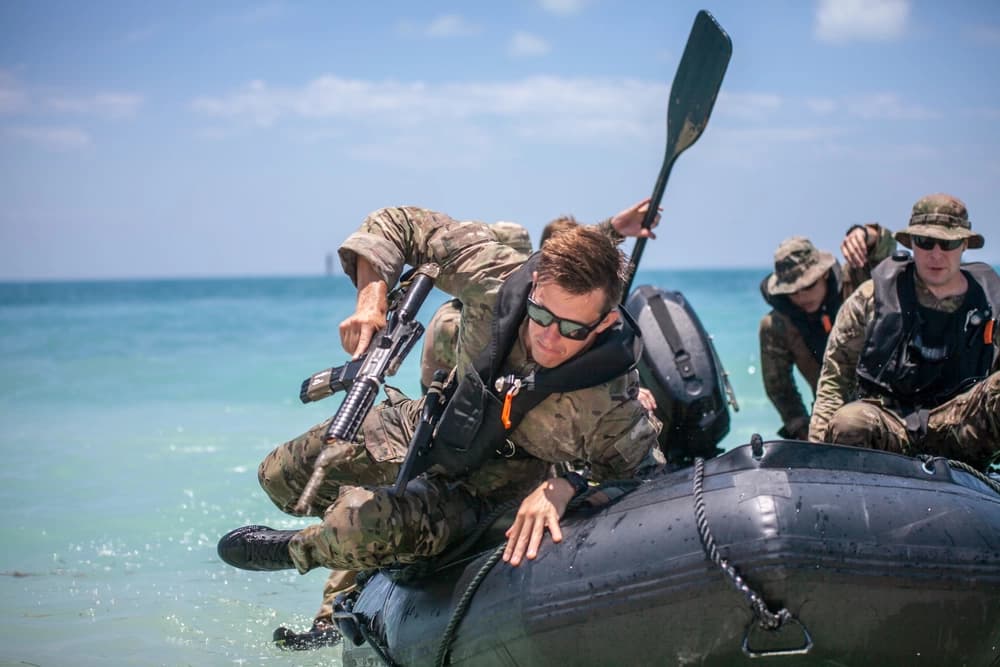
An in-depth look at the selection, qualification, and lifelong training that produces America's most capable special operations units.
daniel-mercer··28 min read

Fifty-six U.S. Army Special Forces soldiers launched a daring helicopter assault on the Son Tay prisoner-of-war camp just 23 miles west of Hanoi, North Vietnam. Led by Colonel Arthur "Bull" Simons, the meticulously planned rescue mission penetrated the most heavily defended airspace in history, fought through enemy forces with precision, and executed a flawless tactical operation, only to discover that the American POWs had been moved months earlier. Despite finding no prisoners, Son Tay is widely regarded as one of the most brilliantly executed special operations in military history.
How the US Military Trains Special ForcesForty-one male passengers aboard the Mayflower signed a governance agreement in the ship's cabin off Cape Cod, establishing a framework of civil self-government that preceded any colonial charter authority. The compact became a foundational reference for subsequent American colonial military authority and, later, the constitutional principle of civilian control of the armed forces.
Pilâtre de Rozier and the Marquis d'Arlandes made the first untethered manned flight in a Montgolfier hot air balloon over Paris, traveling approximately 5.5 miles in 25 minutes. Military observers immediately recognized the potential for aerial reconnaissance, and within a decade the French Revolutionary Army established the world's first military balloon corps, the Compagnie d'Aérostiers, fundamentally changing battlefield intelligence.
Emperor Napoleon Bonaparte issued the Berlin Decree from the captured Prussian capital, establishing the Continental System, a massive blockade intended to destroy British trade by closing all European ports to British goods. The decree turned economic warfare into a primary weapon, eventually drawing Napoleon into disastrous campaigns in Spain and Russia as he attempted to enforce the blockade across a resistant continent.
President Abraham Lincoln wrote a letter of condolence to Lydia Parker Bixby, a Boston widow believed to have lost five sons in the Civil War. The eloquent letter, "I feel how weak and fruitless must be any words of mine which should attempt to beguile you from the grief of a loss so overwhelming", became one of the most famous presidential documents in American history, though later research revealed only two of her sons had actually died in combat.
The HMHS Britannic, sister ship of the RMS Titanic and the largest ship in the White Star Line fleet, struck a naval mine in the Kea Channel while serving as a hospital ship. She sank in just 55 minutes, killing 30 of the 1,066 people aboard. Among the survivors was Violet Jessop, a stewardess who had also survived the sinking of the Titanic four years earlier.
Following the Armistice of November 11, 1918, the entirety of Germany's High Seas Fleet steamed out of port under Allied escort and surrendered at Scapa Flow in Scotland. The internment of nine battleships, five battlecruisers, seven light cruisers, and 49 destroyers effectively ended the German naval threat and reshaped the world naval balance.
The Alaska Highway (ALCAN) was formally opened after just eight months of construction by over 10,000 U.S. Army soldiers and civilian workers. The 1,700-mile road from Dawson Creek, British Columbia, to Delta Junction, Alaska, was built as a military supply route after Pearl Harbor exposed Alaska's vulnerability to Japanese invasion. The project remains one of the most impressive military engineering feats of World War II.
Fifty-six U.S. Army Special Forces soldiers launched a daring helicopter raid on the Son Tay POW camp 23 miles west of Hanoi. The flawlessly executed mission found the camp empty, the prisoners had been moved, but it remains one of the most brilliantly planned special operations in military history.
How the US Military Trains Special ForcesThe Provisional Irish Republican Army detonated two time bombs inside crowded pubs in central Birmingham, England, killing 21 civilians and wounding 182. The coordinated attack represented a significant escalation in the Troubles and prompted sweeping changes in British counterterrorism legislation and military deployment on the home island.
U.S., Bosnian, Croatian, and Serbian negotiators initialed the General Framework Agreement for Peace in Bosnia and Herzegovina at Wright-Patterson Air Force Base near Dayton, Ohio. The agreement ended the three-year Bosnian War and authorized the NATO-led Implementation Force, the largest NATO ground deployment to date.

Surgeon
U.S. Army surgeon who made groundbreaking discoveries about the human digestive system through his treatment of Alexis St. Martin, a fur trader with a permanent gunshot wound to his stomach. Stationed at frontier Army posts, Beaumont conducted over 200 experiments through the open wound over a decade, publishing "Experiments and Observations on the Gastric Juice" in 1833, the foundation of modern gastroenterology.

French philosopher and writer whose correspondence with Frederick the Great of Prussia and extensive writings on military strategy profoundly influenced Enlightenment-era military reform across Europe. His histories of Charles XII of Sweden and Louis XIV examined the relationship between military power and statecraft, and his advocacy for religious tolerance and civil liberties helped reshape the intellectual foundations upon which democratic armies would eventually be built.

Emperor of Austria and King of Hungary who ruled for 68 years and whose assassination of his heir, Archduke Franz Ferdinand, triggered World War I. Franz Joseph died on November 21, 1916, in the midst of the war his empire had helped start, leaving the Habsburg monarchy in the hands of his grandnephew Karl I. Within two years of his death, the empire collapsed entirely, fracturing into the nations of Austria, Hungary, Czechoslovakia, and Yugoslavia.
Wear the Timeline
10 military events occurred on November 21, spanning multiple centuries. Key events include: The Son Tay Raid (1970), HMHS Britannic Sinks in the Aegean Sea (1916), Napoleon Issues the Berlin Decree (1806), German High Seas Fleet Interned at Scapa Flow (1918), Dayton Peace Accords Initialed (1995).
The most significant military event on November 21 is The Son Tay Raid (1970). Fifty-six U.S. Army Special Forces soldiers launched a daring helicopter assault on the Son Tay prisoner-of-war camp just 23 miles west of Hanoi, North Vietnam. Led by Colonel Arthur "Bull" Simons, the meticulously planned rescue mission penetrated the most heavily defended airspace in history, fought through enemy forces with precision, and executed a flawless tactical operation, only to discover that the American POWs had been moved months earlier. Despite finding no prisoners, Son Tay is widely regarded as one of the most brilliantly executed special operations in military history.
Notable military figures born on November 21 include William Beaumont (1785–1853), Voltaire (1694–1778).
Events on November 21 span the Vietnam War, World War I, the Civil War, the Colonial & Revolutionary era, World War II, the Modern Era, covering 10 events across 4 centuries of military history.
Events on November 21 involve 4 branches of the U.S. and allied armed forces, reflecting the global scope of military operations throughout history.
Explore military history from the day you were born.
June 6
The Allied invasion of Normandy, the largest amphibious assault in history.
December 7
Japan attacks the U.S. Pacific Fleet, bringing America into World War II.
September 11
The deadliest terrorist attack in history transforms U.S. national security.
August 6
The first atomic bomb is dropped on a city, ushering in the nuclear age.
May 8
Nazi Germany surrenders unconditionally, ending World War II in Europe.
November 11
Armistice Day marks the end of World War I and honors all who served.
June 4
The turning point of the Pacific War as the U.S. Navy destroys four Japanese carriers.
July 4
The Declaration of Independence is adopted, sparking the American Revolution.
An in-depth look at the selection, qualification, and lifelong training that produces America's most capable special operations units.
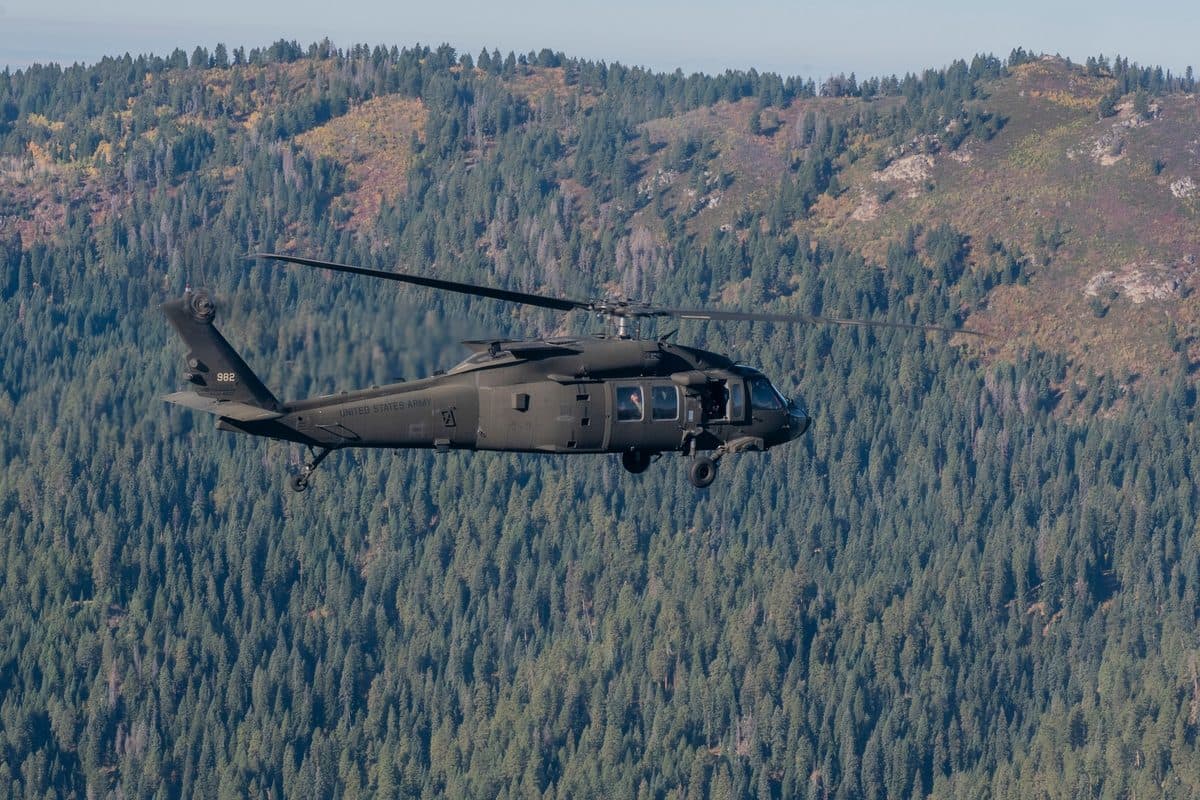
In 19 hours, Marine helicopters flew 682 sorties and lifted 7,000 people off rooftops as North Vietnamese tanks closed in. Operation Frequent Wind was the largest helicopter evacuation in history, and it nearly didn't happen.
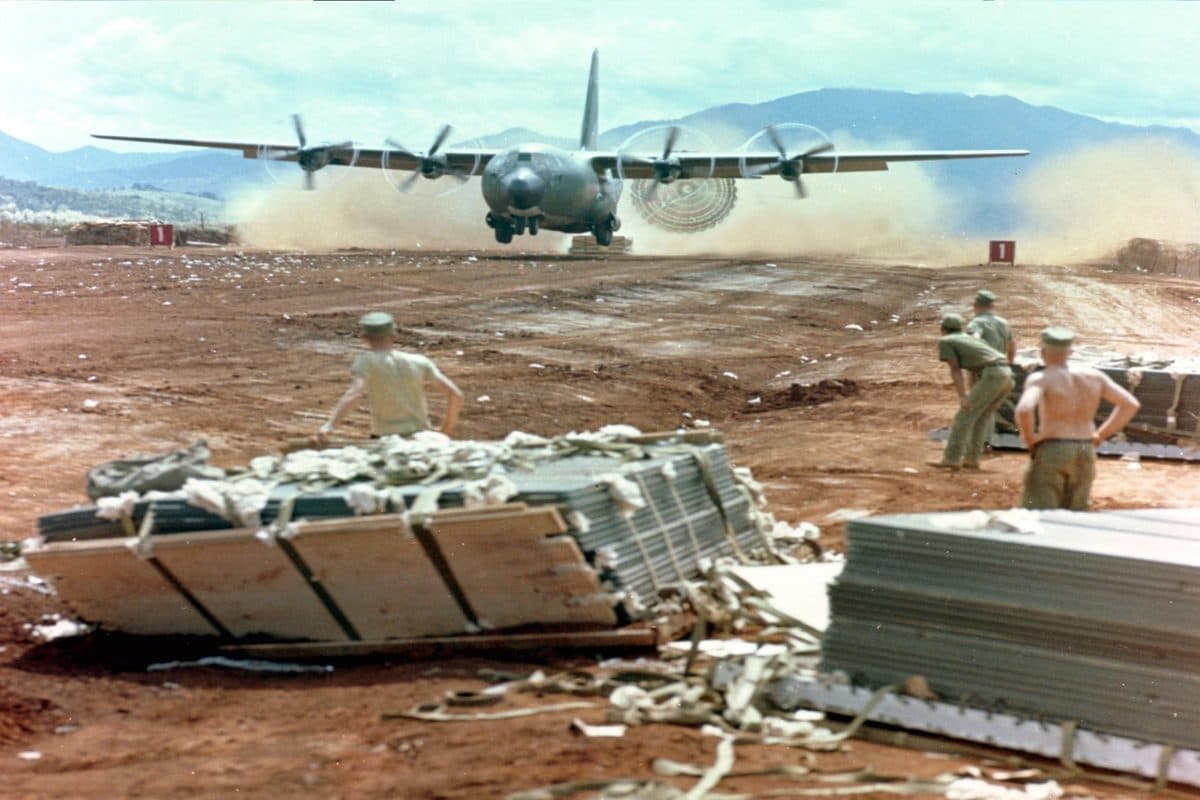
For 77 days in 1968, 6,000 Marines held a remote hilltop combat base against 20,000-30,000 North Vietnamese soldiers. Operation Niagara dropped 110,000 tons of bombs around the perimeter. Resupply aircraft landed on a runway under constant shelling. The question isn't whether Khe Sanh was a tactical victory, it's whether it mattered.
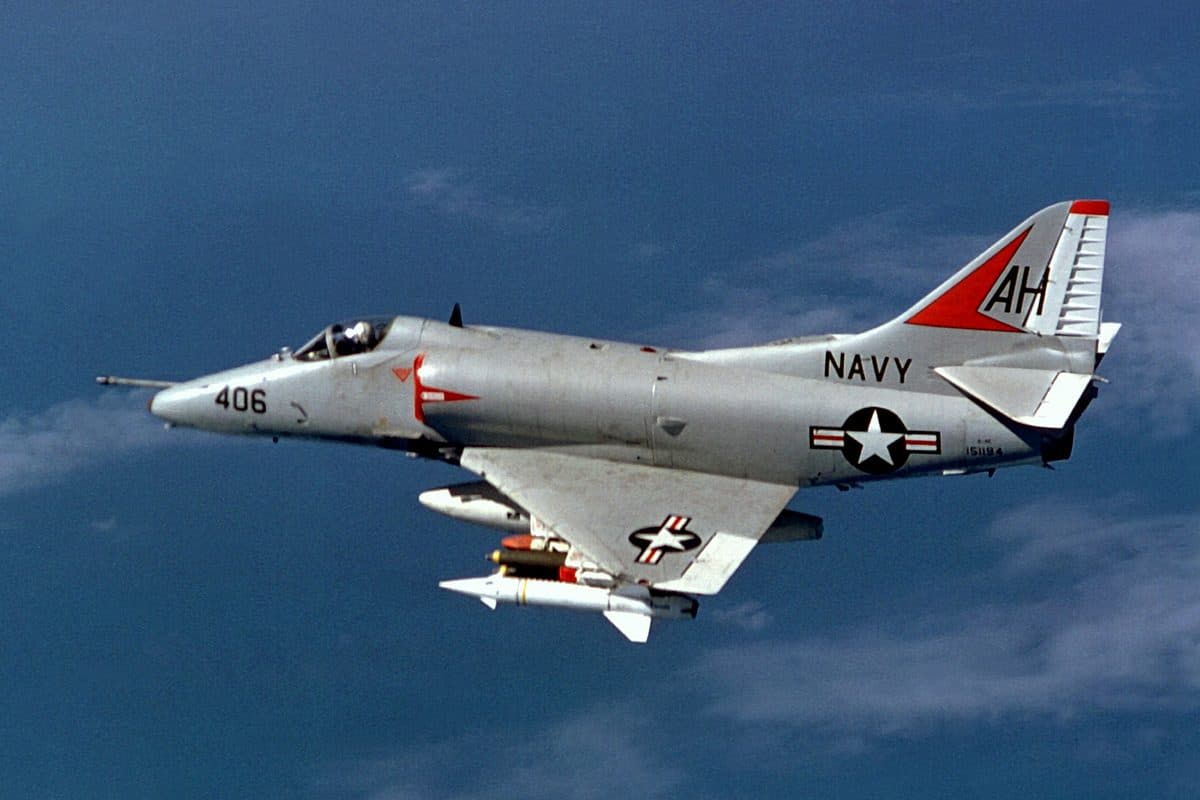
When the Navy asked for a jet attack aircraft weighing 30,000 pounds, Douglas engineer Ed Heinemann delivered one that weighed half that. The A-4 Skyhawk was smaller, lighter, simpler, and cheaper than the Navy specified, and it turned out to be one of the most successful combat aircraft in history, serving with distinction from Vietnam to the Falklands over a career spanning four decades.