


World World 2 Facts: Did You Know These 29 Interesting Details?
Calvin Graham Was Youngest Decorated US Soldier at 12 Pearl Harbor Visitors Bureau “Green Boys” was a term given to soldiers who…
daniel-mercer··27 min read

The International Military Tribunal opened proceedings against 22 major Nazi war criminals in the Palace of Justice at Nuremberg, Germany. The trials established the principle that individuals, including heads of state, could be held criminally responsible for crimes against peace, war crimes, and crimes against humanity, fundamentally transforming international law and military justice.
The Nantucket whaleship Essex was rammed and sunk by a sperm whale in the Pacific Ocean, setting its crew adrift in three open boats for 89 days. The survivors' ordeal, which included cannibalism, inspired Herman Melville's Moby-Dick. The Navy studied the Essex disaster to improve survival protocols for shipwrecked sailors.
The U.S. Army's 18th Infantry Regiment completed the palisade and fortification of Fort Phil Kearny in present-day Wyoming, establishing the centerpiece of the three-post chain guarding the Bozeman Trail through Powder River country. The fort became the focal point of Red Cloud's War and the site of the Fetterman Fight three weeks later.
Francisco Madero issued the Plan of San Luis Potosi from his exile in San Antonio, Texas, calling on Mexicans to rise up against the 34-year dictatorship of Porfirio Diaz at 6 p.m. on November 20. The uprising that followed became the Mexican Revolution, a decade of warfare that produced modern Mexican military institutions and reshaped the entire U.S.-Mexico strategic relationship.
The British Army launched 476 tanks in the first mass armored assault in history at Cambrai, France, achieving a six-mile breakthrough that demonstrated the tank's revolutionary potential. Church bells rang in England for the first time since 1914. However, a German counterattack recaptured most of the ground within days.
The Evolution of TanksThe Ukrainian Central Rada proclaimed the Ukrainian People's Republic in Kyiv, asserting autonomy within a federated Russian state even as the Bolshevik Revolution reshaped the former empire. The proclamation initiated a four-year struggle for Ukrainian independence that involved military conflict with Bolshevik, White, and Polish forces, and established precedents that would resurface a century later.
The Soviet Red Army launched Operation Uranus, a massive pincer offensive against the thinly held Axis flanks guarding the German 6th Army at Stalingrad. Within 72 hours the Romanian 3rd and 4th Armies were shattered and Soviet armor had driven deep into the German rear, setting up the encirclement that would destroy a complete field army.
The 2nd Marine Division's assault on Betio reached its bloodiest phase as Marines fought to expand their toehold against fanatical Japanese resistance. Amphibious tractors that had survived the crossing disgorged Marines directly onto the beach, but many had to wade hundreds of yards through chest-deep water under withering fire when their landing craft grounded on the reef.
The International Military Tribunal opened proceedings against 22 major Nazi war criminals, establishing that individuals could be held criminally responsible for crimes against peace and crimes against humanity.
World War 2 FactsApproximately 500 armed militants seized the Grand Mosque in Mecca, Islam's holiest site, declaring their leader the Mahdi. Saudi Arabian security forces, assisted by French GIGN commandos, fought a two-week battle to retake the mosque. The siege killed over 250 people and profoundly influenced Saudi Arabia's subsequent support for Wahhabist Islam.

The astronomer who proved the universe extends beyond the Milky Way also served as a major in the U.S. Army during both World Wars. In World War I, Hubble commanded troops in France. In World War II, he led ballistics research at Aberdeen Proving Ground. The Hubble Space Telescope, named in his honor, has since become essential for military space surveillance.

Attorney General during the Cuban Missile Crisis who played a crucial role in the back-channel negotiations that averted nuclear war. Kennedy served in the U.S. Naval Reserve during World War II aboard the destroyer USS Joseph P. Kennedy Jr., named for his elder brother killed in action. He was assassinated during his 1968 presidential campaign.

Spanish military dictator who ruled Spain from 1939 until his death. A career army officer, Franco led the Nationalist forces to victory in the Spanish Civil War with aid from Hitler and Mussolini. Though he kept Spain neutral during World War II (despite pressure from Hitler), his regime was one of the longest-lasting military dictatorships in European history.
Wear the Timeline
10 military events occurred on November 20, spanning multiple centuries. Key events include: The Nuremberg Trials Begin (1945), Battle of Cambrai: First Mass Tank Attack (1917), Battle of Tarawa: The Assault on Betio (1943), Operation Uranus Launches Soviet Counteroffensive at Stalingrad (1942).
The most significant military event on November 20 is The Nuremberg Trials Begin (1945). The International Military Tribunal opened proceedings against 22 major Nazi war criminals in the Palace of Justice at Nuremberg, Germany. The trials established the principle that individuals, including heads of state, could be held criminally responsible for crimes against peace, war crimes, and crimes against humanity, fundamentally transforming international law and military justice.
Notable military figures born on November 20 include Edwin Hubble (1889–1953), Robert F. Kennedy (1925–1968).
Events on November 20 span World War II, World War I, the Colonial & Revolutionary era, the Cold War, the Modern Era, the Interwar Period, covering 10 events across 2 centuries of military history.
Events on November 20 involve 3 branches of the U.S. and allied armed forces, reflecting the global scope of military operations throughout history.
Explore military history from the day you were born.
June 6
The Allied invasion of Normandy, the largest amphibious assault in history.
December 7
Japan attacks the U.S. Pacific Fleet, bringing America into World War II.
September 11
The deadliest terrorist attack in history transforms U.S. national security.
August 6
The first atomic bomb is dropped on a city, ushering in the nuclear age.
May 8
Nazi Germany surrenders unconditionally, ending World War II in Europe.
November 11
Armistice Day marks the end of World War I and honors all who served.
June 4
The turning point of the Pacific War as the U.S. Navy destroys four Japanese carriers.
July 4
The Declaration of Independence is adopted, sparking the American Revolution.
Calvin Graham Was Youngest Decorated US Soldier at 12 Pearl Harbor Visitors Bureau “Green Boys” was a term given to soldiers who…
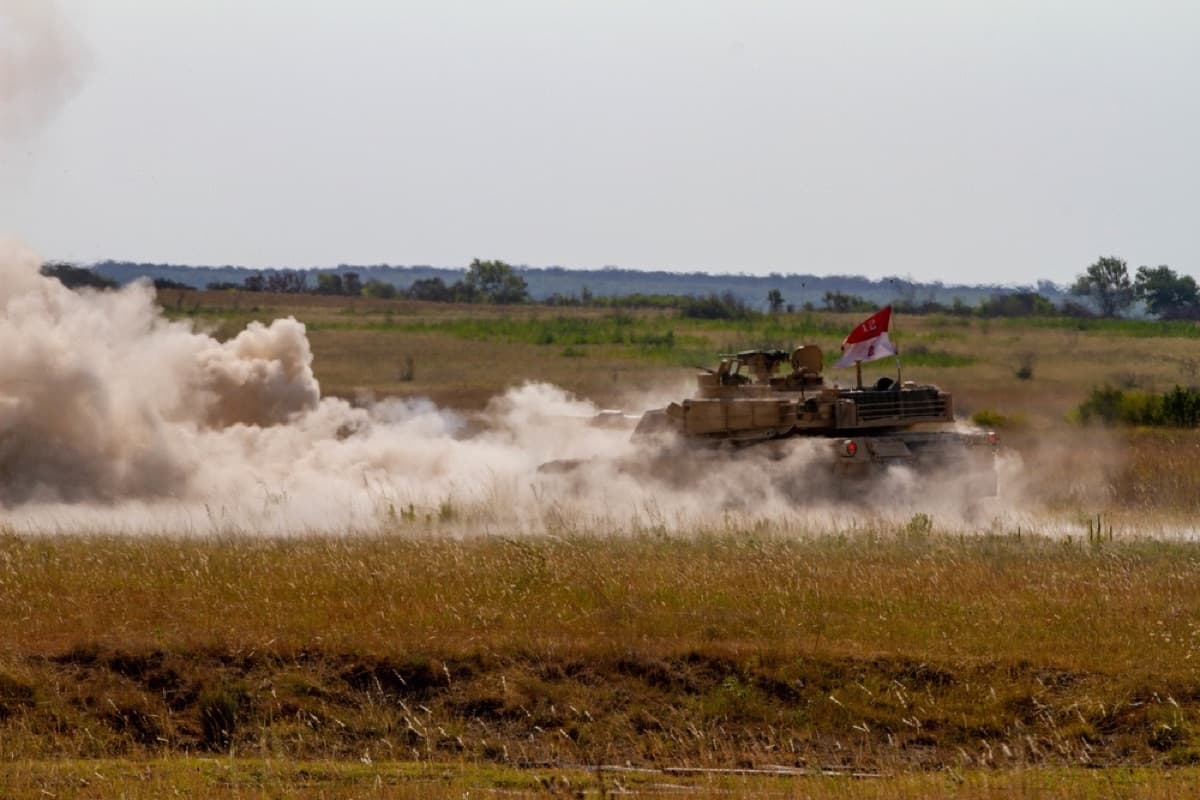
The Evolution of Modern Armor: How Tanks Changed Warfare from World War I to Today For more than a century, the tank has been one of the most powerful…
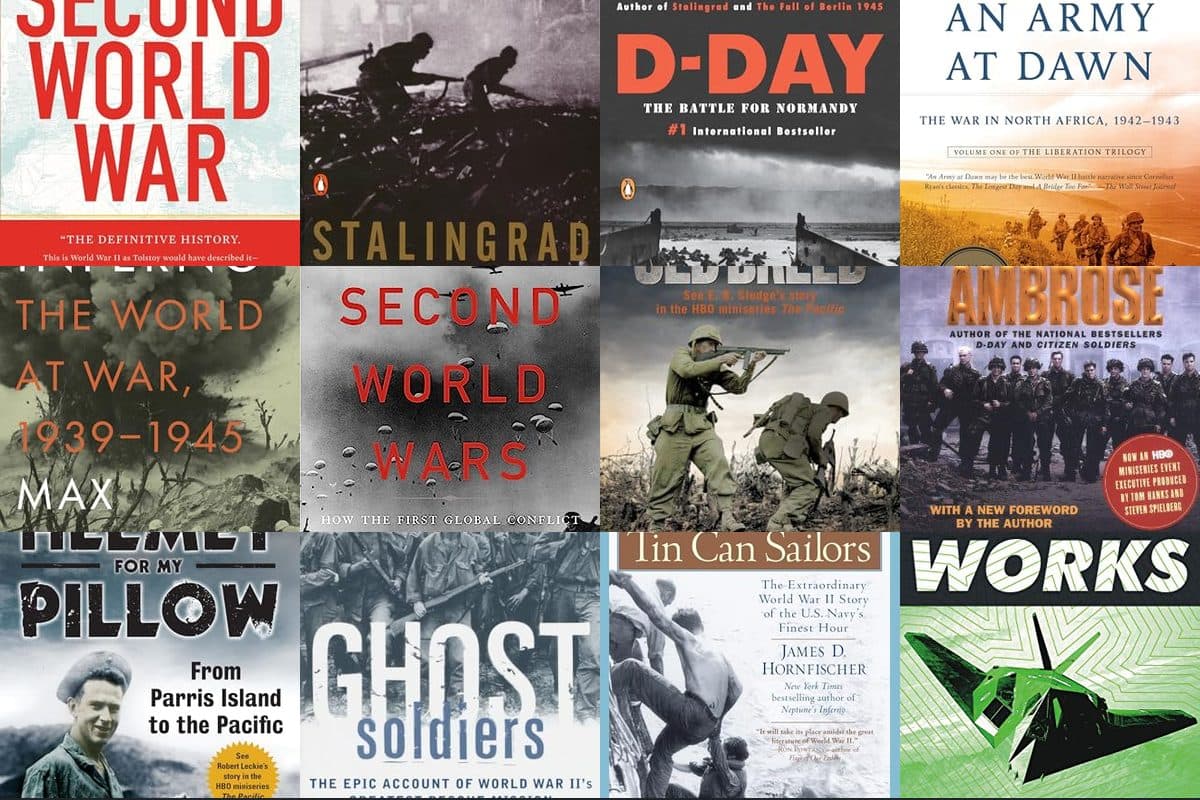
15 essential WW2 books covering every theater. Narrative histories, memoirs, and visual references ranked.
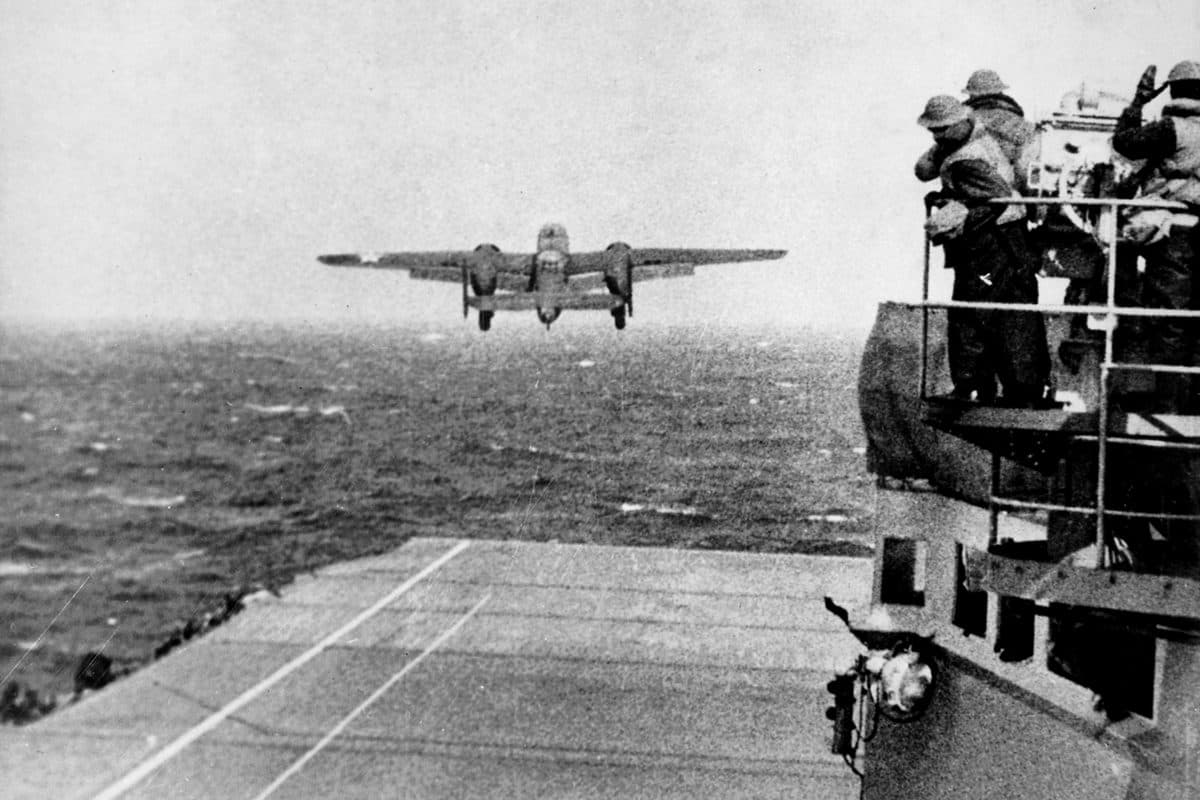
On April 18, 1942, sixteen B-25 Mitchell bombers did something no one thought possible: they launched from the deck of an aircraft carrier, flew 650 miles to Japan, and bombed Tokyo. Every aircraft was lost. The damage was negligible. The consequences changed the war.