

Skip to content
May 3:British Recapture of Rangoon: The Burma Campaign Ends81yr ago

September 18 in Military History

Share:

This Day in Military History: September 18

Go to Today
B-29 Superfortress formation representing the airpower that led to the creation of an independent Air Force
Defining Moment79 years ago

United States Air Force Established

Air ForceArmy· 1947

The National Security Act of 1947 took effect, establishing the United States Air Force as an independent military branch separate from the Army. Stuart Symington became the first Secretary of the Air Force, and General Carl "Tooey" Spaatz became its first Chief of Staff. The act also created the Department of Defense, the National Security Council, and the Central Intelligence Agency.

10 events, 2 notable births, 1 notable deaths, and 5 military quotes10events2births1deaths5quotes

1700s

1759RevolutionaryArmyNavy267 years ago

Five days after the Battle of the Plains of Abraham, the city of Quebec formally surrendered to the British. The fall of New France's capital effectively ended French military power in North America. The terms were generous, civilians were allowed to retain their property and religion, establishing precedents for British rule in Canada.

1800s

1863Civil WarArmy163 years ago

Confederate forces under General Braxton Bragg attacked Union General William Rosecrans's Army of the Cumberland along Chickamauga Creek in northwest Georgia. The two-day battle would become the bloodiest engagement of the Western Theater, with over 34,000 total casualties, and result in one of the Confederacy's few decisive tactical victories.

1900s

1918WWIArmy108 years ago

British and Australian forces attacked German positions at Épehy in a major preliminary operation before the final assault on the Hindenburg Line. The battle involved some of the most sophisticated combined-arms tactics of the war, with infantry, tanks, artillery, and aircraft working in close coordination, a preview of the methods that would breach the Hindenburg Line ten days later.

1931InterwarArmy95 years ago

Japanese officers of the Kwantung Army staged the Mukden Incident, detonating a small charge of dynamite along the Japanese-owned South Manchuria Railway near Mukden (Shenyang) and blaming Chinese saboteurs. The fabricated incident served as the pretext for Japan's invasion and occupation of Manchuria, establishing the puppet state of Manchukuo and beginning Japan's expansion that would culminate in the Pacific War.

1947Cold WarAir ForceArmy79 years agoDefining Moment

The National Security Act of 1947 took effect, establishing the USAF as an independent branch. The act also created the Department of Defense, the NSC, and the CIA.

1947Cold WarArmyNavyAir Force79 years agoDefining Moment

The National Security Act of 1947, which created the U.S. Air Force on this same date, also established the Central Intelligence Agency. The CIA consolidated wartime OSS functions under civilian control and became the primary U.S. foreign intelligence service, operating paramilitary, signals, and human intelligence programs that shaped every subsequent American military operation.

1960Cold WarArmyNavyAir Force66 years ago

Fidel Castro's government nationalized remaining U.S. banking and industrial assets in Cuba, culminating a year of confiscations that turned the island into a Soviet military client. Within two years Soviet nuclear missiles would be deployed to Cuba, triggering the October 1962 crisis that brought the superpowers closer to nuclear war than at any other moment.

1982Cold WarArmy44 years ago

Lebanese Christian Phalange militia entered the Sabra and Shatila Palestinian refugee camps in West Beirut and massacred civilians over two days while Israeli forces controlled the perimeter. The event prompted a commission of inquiry in Israel, the resignation of Defense Minister Ariel Sharon, and a reshaping of doctrine on urban operations and allied militia oversight.

2000s

2014ModernArmy12 years ago

Congress authorized the Pentagon to train and equip vetted Syrian rebel forces to fight the Islamic State. The program, which cost $500 million, would ultimately produce only a handful of effective fighters and was widely regarded as one of the most expensive failures in recent military history.

2015ModernArmy11 years ago

The U.S. Environmental Protection Agency announced that Volkswagen had installed defeat devices in diesel vehicles to cheat emissions tests. The scandal reverberated through military procurement, since the Department of Defense operated thousands of commercial diesel vehicles and the revelations accelerated a Pentagon shift toward electrified tactical fleets.

Enjoyed this page? Share it with someone who loves military history.

Share:

Never Miss a Day in Military History

Get daily military history, analysis, and technology delivered to your inbox.

Born on This Day

Samuel Johnson

Samuel Johnson

b. 1709

British lexicographer and author whose writings on military affairs and patriotism profoundly influenced English-language discourse on war. His famous observation that "patriotism is the last refuge of the scoundrel" has been quoted in debates about military policy ever since.

Edwin Gruhl

Edwin Gruhl

Colonel

b. 1917
AAF

U.S. Army Air Forces officer who flew B-17 missions over occupied Europe during World War II and later served in the newly independent Air Force during the Korean War and early Cold War period.

Died on This Day

Dag Hammarskjöld

Dag Hammarskjöld

d. 1961

Secretary-General of the United Nations who was killed in a plane crash in Northern Rhodesia (Zambia) while flying to negotiate a ceasefire in the Congo Crisis. The crash, which may have been the result of sabotage, killed all aboard. He was posthumously awarded the Nobel Peace Prize.

Military Quotes

Air power is indivisible. If you split it up into compartments, you merely pull it to pieces and destroy its greatest asset, its flexibility.

Bernard Montgomery

Field Marshal, British Army

Montgomery's support for independent air command, reflecting lessons learned in North Africa., 1943

The bomber will always get through.

Stanley Baldwin

Prime Minister of the United Kingdom

Baldwin's famous warning about the impossibility of defending against strategic bombing, which shaped the argument for an independent air force., 1932

If we lose the war in the air, we lose the war and we lose it quickly.

Bernard Montgomery

Field Marshal, British Army

Montgomery's assessment of airpower's central importance to modern warfare., 1943

The whole history of aviation has been a struggle to make machines do what birds do naturally.

Carl Spaatz

General, First Chief of Staff of the Air Force

Spaatz reflecting on the journey from the Wright Brothers to the independent Air Force he now led., 1947

In the next war, the weights of the bombers will determine the victor.

Giulio Douhet

Italian General and Air Theorist

From "The Command of the Air," the pioneering work that argued for independent air forces and strategic bombing., 1921

Frequently Asked Questions

What military events happened on September 18?

10 military events occurred on September 18, spanning multiple centuries. Key events include: United States Air Force Established (1947), Quebec Surrenders to the British (1759), Battle of Chickamauga Begins (1863), Mukden Incident, Japan Invades Manchuria (1931), Central Intelligence Agency Established (1947).

What is the most significant military event on September 18?

The most significant military event on September 18 is United States Air Force Established (1947). The National Security Act of 1947 took effect, establishing the United States Air Force as an independent military branch separate from the Army. Stuart Symington became the first Secretary of the Air Force, and General Carl "Tooey" Spaatz became its first Chief of Staff. The act also created the Department of Defense, the National Security Council, and the Central Intelligence Agency.

What famous military figures were born on September 18?

Notable military figures born on September 18 include Samuel Johnson (1709–1784), Edwin Gruhl (1917–2001).

What wars are represented in September 18's military timeline?

Events on September 18 span the Cold War, the Colonial & Revolutionary era, the Civil War, World War I, the Interwar Period, the Modern Era, covering 10 events across 4 centuries of military history.

How many military branches are represented on September 18?

Events on September 18 involve 3 branches of the U.S. and allied armed forces, reflecting the global scope of military operations throughout history.

What Happened on Your Birthday?

Explore military history from the day you were born.

Related Days by Era

Explore More Days

Related Articles

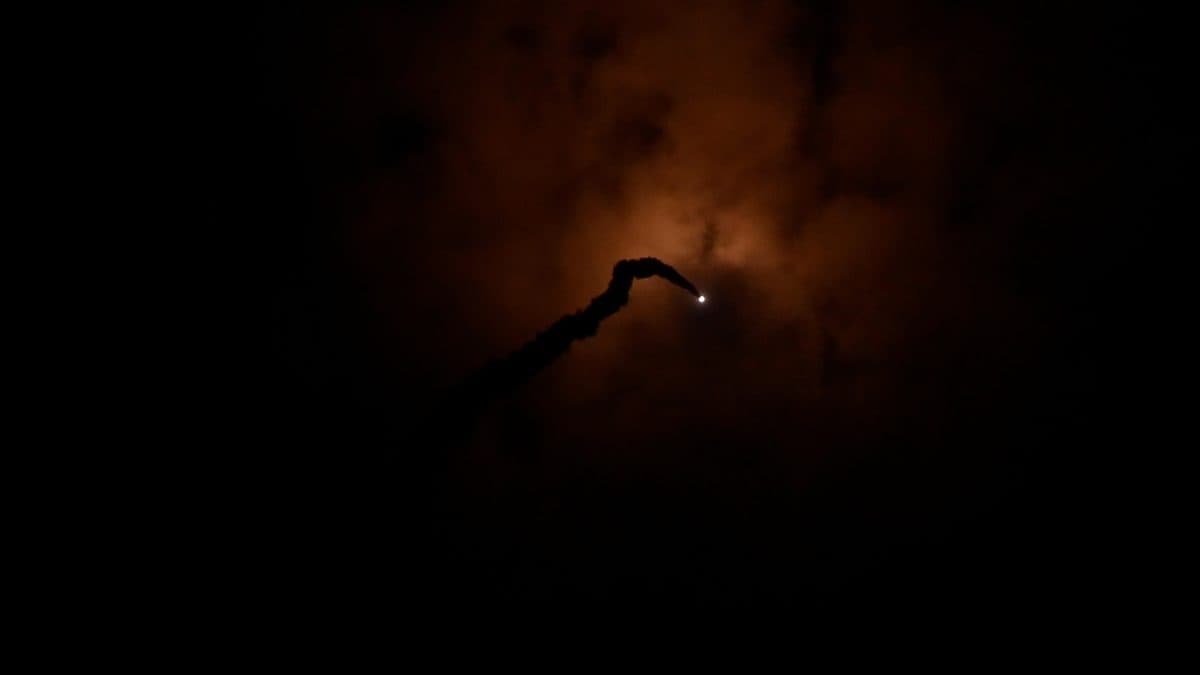
Minuteman III ICBM launching from its silo at Vandenberg Air Force Base with a trail of flame and smoke against a dark sky

10 Cold War Weapons That Were Designed for World War III and Never Fired

These weapons were built to fight a war that everyone prayed would never happen. The Minuteman III has been on alert since 1970. The Typhoon-class carried enough nuclear warheads to destroy a continent. The Davy Crockett could be fired by three soldiers. Most of them have been waiting for 40 years. Here are 10 Cold War weapons built exclusively for World War III.

daniel-mercer··13 min read
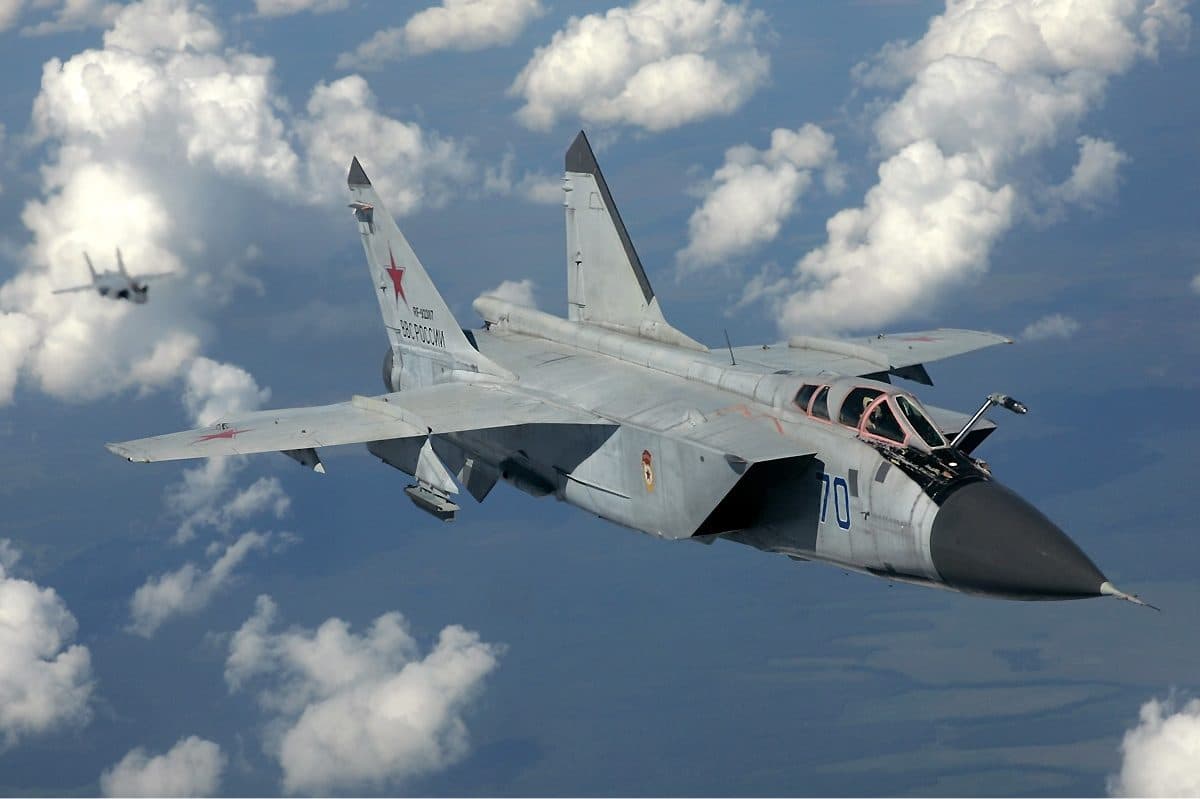
Russian Air Force MiG-31 Foxhound interceptor in flight showing its twin-engine configuration and large airframe

The MiG-31 Foxhound Can Fly Mach 2.83 and Fire Missiles at Targets 200 Miles Away

The MiG-31 was designed to catch the SR-71 Blackbird. It is still the fastest fighter in any air force. The Foxhound's Zaslon phased-array radar, the first ever installed in a fighter, can track 10 targets and engage 4 simultaneously at ranges exceeding 200 miles. Here is why Russia still flies a 1980s interceptor, and why the MiG-31BM carrying a Kinzhal hypersonic missile has changed what the aircraft means to modern warfare.

michael-trent··10 min read