

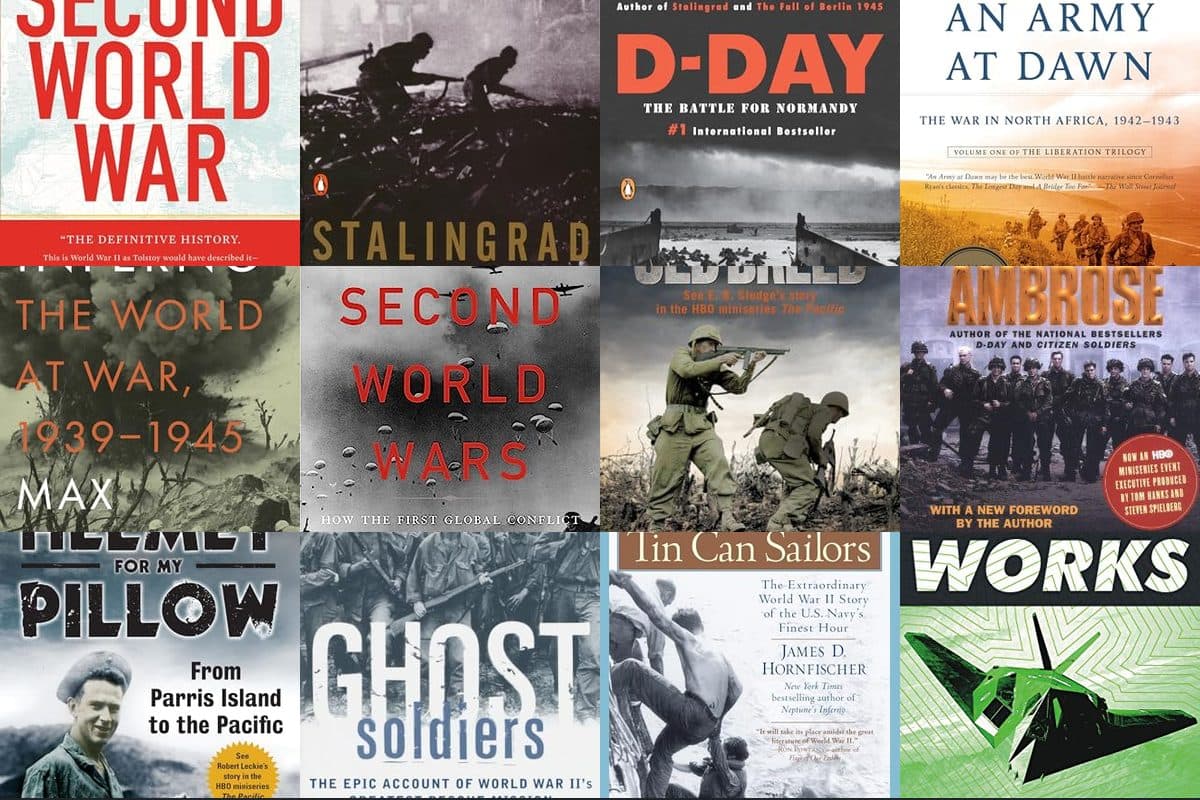
15 Best World War II Books for History Enthusiasts (2026)
15 essential WW2 books covering every theater. Narrative histories, memoirs, and visual references ranked.
daniel-mercer··21 min read

Continental forces under General Horatio Gates and Benedict Arnold fought British General John Burgoyne's invasion army at Freeman's Farm near Saratoga, New York. Though Burgoyne held the field, his army suffered severe casualties it could not replace. The battle was the first of two engagements that would lead to Burgoyne's surrender on October 17, the turning point of the American Revolution that brought France into the war as an American ally.
An English army of 6,000 under Edward, the Black Prince, defeated a French army of 20,000 under King John II at Poitiers, capturing the French king himself. The victory, achieved through the devastating effectiveness of English longbowmen and dismounted men-at-arms, was one of the three great English victories of the Hundred Years' War alongside Crécy and Agincourt.
Continental forces fought Burgoyne's British invasion army at Freeman's Farm. The battle was the first of two engagements that led to Burgoyne's surrender, the turning point that brought France into the war.
Confederate General James Longstreet exploited a gap in the Union line at Chickamauga, sending eight brigades crashing through and routing half the Union army. General George Thomas earned the nickname "Rock of Chickamauga" by holding his position and covering the retreat. The Confederate victory cost 18,454 Southern casualties against 16,170 Union, making Chickamauga the bloodiest battle of the Western Theater.
General Edmund Allenby's Egyptian Expeditionary Force launched the Battle of Megiddo against Ottoman forces in Palestine, achieving one of the most complete victories of World War I. Allenby's plan combined infantry assault, cavalry exploitation, and RAF air strikes in a combined-arms masterpiece that destroyed three Ottoman armies in five days. The campaign effectively ended the Ottoman Empire's involvement in the war.
U.S. Army Air Service Lieutenant Wesley May walked along the wing of a Lincoln Standard biplane in flight over San Diego, California, carrying a five-gallon can of fuel strapped to his back, and stepped onto the wing of a JN-4 Jenny to transfer it into the second aircraft's tank. The stunt was the first demonstration of aerial refueling and launched decades of capability development.
Finland signed an armistice with the Soviet Union, ending the Continuation War after three years of fighting. Finland was forced to cede Karelia, pay heavy reparations, and expel German forces from Finnish Lapland. Despite the harsh terms, Finland avoided Soviet occupation, the only European country bordering the USSR to maintain its independence and democratic government.
The United States conducted its first fully contained underground nuclear test, codenamed "Rainier," at the Nevada Test Site as part of Operation Plumbbob. The 1.7-kiloton detonation, conducted in a tunnel inside Rainier Mesa, demonstrated the feasibility of underground testing, which would become the standard after the 1963 Partial Nuclear Test Ban Treaty.
The Kitty Hawk-class supercarrier USS Constellation was commissioned at the New York Naval Shipyard, marking the transition from oil-fired carriers to larger, more capable angled-deck platforms that would define U.S. carrier operations through the end of the Cold War. Constellation served 42 years, flying combat sorties in Vietnam, the Persian Gulf, and Iraq.
A magnitude 8.0 earthquake struck Mexico City, killing roughly 10,000 people and collapsing hundreds of buildings. The U.S. military provided urban search and rescue teams, medical support, and heavy-lift helicopter capacity in one of the first major tests of post-disaster joint civil-military coordination in the Americas.
U.S. Army and Marine forces entered Haiti to restore President Jean-Bertrand Aristide to power after a three-year military junta. The operation was conducted unopposed following last-minute negotiations by former President Jimmy Carter, General Colin Powell, and Senator Sam Nunn. Uphold Democracy was the first major U.S. peace-enforcement operation of the post-Cold War era.

Major General
U.S. Army officer who served with distinction in the Mexican-American War at the Battles of Palo Alto and Resaca de la Palma. During the Civil War, he commanded Union troops defending Baltimore and helped maintain Maryland's loyalty to the Union.

British novelist who served in the Royal Navy during World War II, commanding a rocket-launching craft during the D-Day invasion. His wartime experiences informed "Lord of the Flies" (1954), which explored the savagery beneath civilization, a theme directly shaped by what he witnessed in war.

Major General
The 20th President of the United States, who had served as a Union general during the Civil War, earning distinction at the Battle of Middle Creek and serving as chief of staff at Chickamauga. He was shot by an assassin on July 2, 1881, and died on September 19 after eleven weeks of suffering.
Wear the Timeline
10 military events occurred on September 19, spanning multiple centuries. Key events include: First Battle of Saratoga (Freeman's Farm) (1777), Battle of Poitiers (1356), Battle of Chickamauga, Second Day (1863), Battle of Megiddo, Allenby's Masterpiece (1918).
The most significant military event on September 19 is First Battle of Saratoga (Freeman's Farm) (1777). Continental forces under General Horatio Gates and Benedict Arnold fought British General John Burgoyne's invasion army at Freeman's Farm near Saratoga, New York. Though Burgoyne held the field, his army suffered severe casualties it could not replace. The battle was the first of two engagements that would lead to Burgoyne's surrender on October 17, the turning point of the American Revolution that brought France into the war as an American ally.
Notable military figures born on September 19 include George Cadwalader (1806–1879), William Golding (1911–1993).
Events on September 19 span the Colonial & Revolutionary era, the Civil War, World War I, World War II, the Cold War, the Interwar Period, the Modern Era, covering 10 events across 4 centuries of military history.
Events on September 19 involve 5 branches of the U.S. and allied armed forces, reflecting the global scope of military operations throughout history.
Explore military history from the day you were born.
June 6
The Allied invasion of Normandy, the largest amphibious assault in history.
December 7
Japan attacks the U.S. Pacific Fleet, bringing America into World War II.
September 11
The deadliest terrorist attack in history transforms U.S. national security.
August 6
The first atomic bomb is dropped on a city, ushering in the nuclear age.
May 8
Nazi Germany surrenders unconditionally, ending World War II in Europe.
November 11
Armistice Day marks the end of World War I and honors all who served.
June 4
The turning point of the Pacific War as the U.S. Navy destroys four Japanese carriers.
July 4
The Declaration of Independence is adopted, sparking the American Revolution.
15 essential WW2 books covering every theater. Narrative histories, memoirs, and visual references ranked.
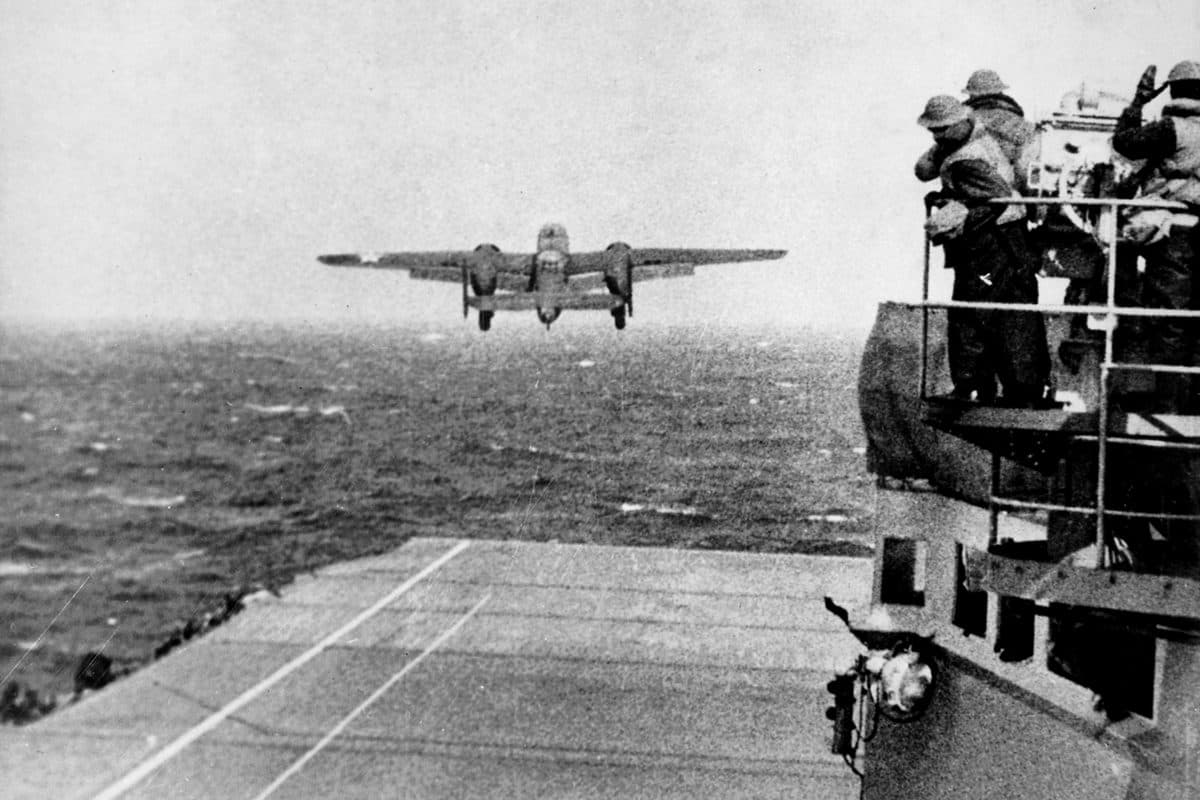
On April 18, 1942, sixteen B-25 Mitchell bombers did something no one thought possible: they launched from the deck of an aircraft carrier, flew 650 miles to Japan, and bombed Tokyo. Every aircraft was lost. The damage was negligible. The consequences changed the war.
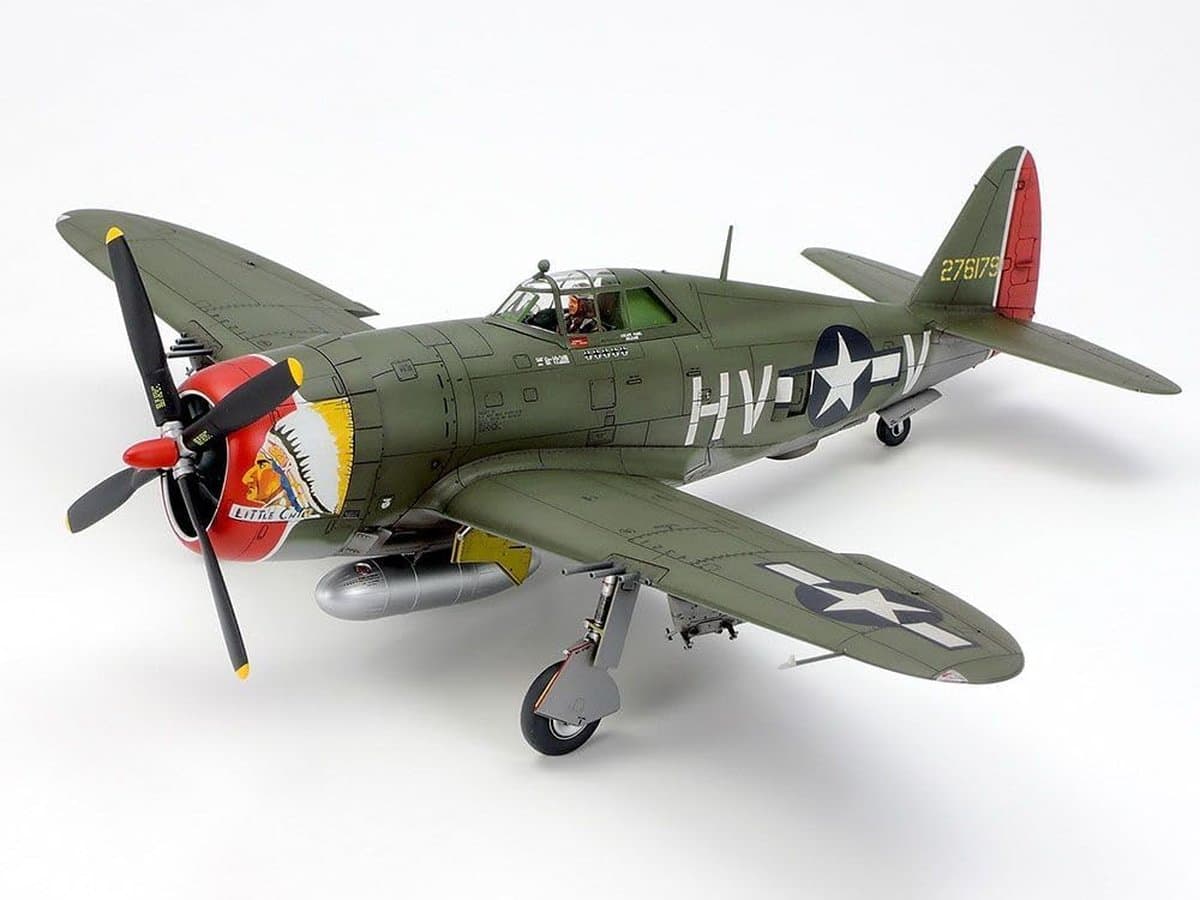
Compare 85+ WW2 scale model kits across aircraft, tanks, and ships. Beginner builds from $9 to museum-grade showpieces at $580. Covers Tamiya, Eduard, HK Models, Trumpeter, and more with honest reviews, trade-offs, and pricing.

On April 7, 1945, the Imperial Japanese Navy sent the largest battleship ever built on a one-way suicide mission to Okinawa. She never arrived. 386 American aircraft found her first, and sank her in under two hours.