Here Is Every One Of The Active Aircraft Carriers In The World
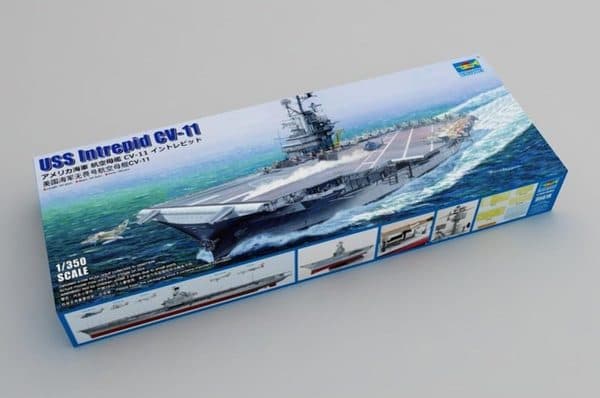
All in all, there are 19 active aircraft carriers around the world. As you’ll see in this article, the vast majority of those belong to the United States. However, there…

The USS Enterprise (CVN-65), the world's first nuclear-powered aircraft carrier, was launched at Newport News Shipbuilding in Virginia. At 1,123 feet long and displacing over 93,000 tons, she was the largest warship ever built at that time. Her eight nuclear reactors gave her virtually unlimited range, fundamentally transforming naval warfare by freeing carrier task forces from dependence on fuel supply ships.
Active Aircraft CarriersCongress passed the Judiciary Act of 1789, establishing the federal court system. The act laid the legal foundation for military justice in the United States, creating the framework through which courts-martial and military tribunals would operate. It also established the Office of Attorney General, which would oversee legal matters affecting the armed forces.
President Washington signed the Judiciary Act of 1789, establishing the federal court system that would later adjudicate appeals from courts-martial and cases involving military property, contracts, and veterans' benefits. The act set the constitutional framework under which civilian and military justice systems have coexisted for more than two centuries.
French engineer Henri Giffard flew a 44-meter hydrogen-filled dirigible powered by a 3-horsepower steam engine from Paris to Trappes, the first sustained powered flight of a lighter-than-air craft. The demonstration launched more than eight decades of military and civilian airship development that ran through the Great War and culminated in the Hindenburg era.
Imperial Japanese Army forces overwhelmed the last samurai rebels under Saigō Takamori at the Battle of Shiroyama in Kagoshima, ending the Satsuma Rebellion. The battle pitted traditional samurai warriors against a modern conscript army equipped with Gatling guns and artillery. Saigō was killed, by his own hand or an enemy bullet, and the samurai class effectively ceased to exist as a military force.
The British Army launched the Battle of Loos, its largest offensive of 1915, on the Western Front in northern France. The attack marked the first use of poison gas by British forces, introduced the New Army divisions to combat, and produced sobering lessons about chemical weapons, artillery preparation, and reserve handling.
Captain Eddie Rickenbacker of the 94th "Hat in the Ring" Aero Squadron shot down his 22nd enemy aircraft near Waroq, France, surpassing Frank Luke's record to become America's leading ace of World War I. Rickenbacker would finish the war with 26 victories and receive the Medal of Honor, becoming the most celebrated American aviator of the Great War.
WWI AircraftThe remnants of the British 1st Airborne Division began their desperate withdrawal across the Rhine at Oosterbeek, near Arnhem. Of the approximately 10,000 men who had been dropped or landed by glider, only 2,163 escaped. Operation Market Garden had failed to achieve its objective of crossing the Rhine, prolonging the war by months.
The world's first nuclear-powered aircraft carrier was launched at Newport News. Her nuclear propulsion gave her virtually unlimited range, revolutionizing naval warfare.
Active Aircraft CarriersThe aircraft carrier USS Enterprise was launched at Newport News Shipbuilding, the world's first nuclear-powered aircraft carrier and the longest warship ever built. Powered by eight A2W reactors, Enterprise served 51 years, demonstrated the operational advantages of unlimited range, and set the architectural template for every U.S. nuclear carrier that followed.
An estimated 100,000 to 300,000 people marched in Washington, D.C., against the Iraq War, the largest anti-war demonstration since the Vietnam era. Military families, including those of fallen soldiers, participated prominently, highlighting the growing public opposition to the conflict.
Get daily military history, analysis, and technology delivered to your inbox.
10 military events occurred on September 24, spanning multiple centuries. Key events include: USS Enterprise (CVN-65) Launched (1960), Battle of Shiroyama, Last Samurai Stand (1877), Operation Market Garden, British Withdraw from Arnhem (1944), Battle of Loos Begins, First British Use of Poison Gas (1915), USS Enterprise (CVN-65) Launched, First Nuclear-Powered Carrier (1960).
The most significant military event on September 24 is USS Enterprise (CVN-65) Launched, First Nuclear-Powered Aircraft Carrier (1960). The USS Enterprise (CVN-65), the world's first nuclear-powered aircraft carrier, was launched at Newport News Shipbuilding in Virginia. At 1,123 feet long and displacing over 93,000 tons, she was the largest warship ever built at that time. Her eight nuclear reactors gave her virtually unlimited range, fundamentally transforming naval warfare by freeing carrier task forces from dependence on fuel supply ships.
Notable military figures born on September 24 include John Marshall (1755–1835), F. Scott Fitzgerald (1896–1940).
Events on September 24 span the Cold War, the Colonial & Revolutionary era, the Interwar Period, World War I, World War II, the Modern Era, covering 10 events across 4 centuries of military history.
Events on September 24 involve 4 branches of the U.S. and allied armed forces, reflecting the global scope of military operations throughout history.
Explore military history from the day you were born.
June 6
The Allied invasion of Normandy, the largest amphibious assault in history.
December 7
Japan attacks the U.S. Pacific Fleet, bringing America into World War II.
September 11
The deadliest terrorist attack in history transforms U.S. national security.
August 6
The first atomic bomb is dropped on a city, ushering in the nuclear age.
May 8
Nazi Germany surrenders unconditionally, ending World War II in Europe.
November 11
Armistice Day marks the end of World War I and honors all who served.
June 4
The turning point of the Pacific War as the U.S. Navy destroys four Japanese carriers.
July 4
The Declaration of Independence is adopted, sparking the American Revolution.
All in all, there are 19 active aircraft carriers around the world. As you’ll see in this article, the vast majority of those belong to the United States. However, there…
Fokker D VII Julian Herzog The Fokker D VII aircraft may have made a rather late entry into the war (January 1918)…
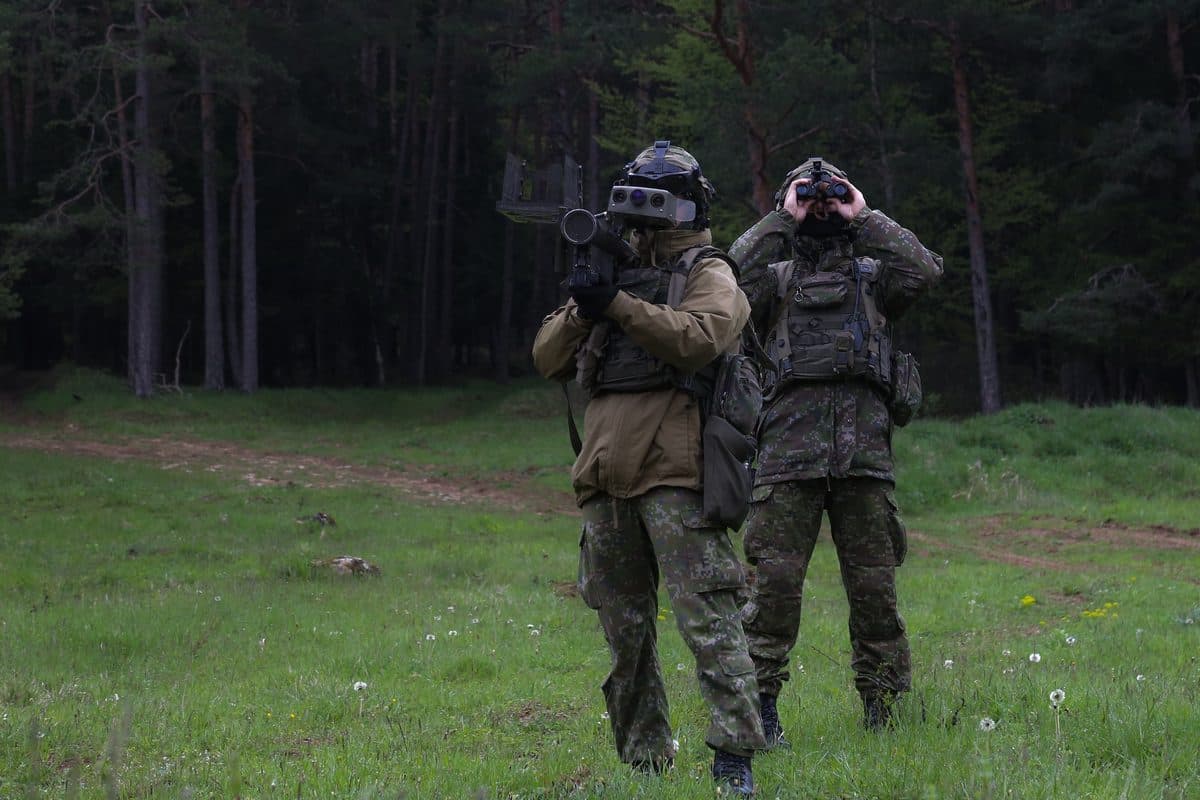
The FIM-92 Stinger helped win the Cold War by turning Afghan mujahideen into a credible anti-aircraft threat. By 2023, the United States almost ran out of them, because Raytheon stopped making them for 13 years, and the first 10 months of Ukraine support burned through the remaining stockpile.
These weapons were built to fight a war that everyone prayed would never happen. The Minuteman III has been on alert since 1970. The Typhoon-class carried enough nuclear warheads to destroy a continent. The Davy Crockett could be fired by three soldiers. Most of them have been waiting for 40 years. Here are 10 Cold War weapons built exclusively for World War III.