

15 Best World War II Books for History Enthusiasts (2026)
15 essential WW2 books covering every theater. Narrative histories, memoirs, and visual references ranked.
daniel-mercer··21 min read

Germany, Italy, and Japan signed the Tripartite Pact in Berlin, formally establishing the Axis military alliance and committing each nation to mutual defense if attacked by a power not currently involved in the European or Sino-Japanese wars, a provision aimed squarely at deterring the United States. The pact linked the European and Asian conflicts into a single global war.
The Continental Congress met for one day in Lancaster, Pennsylvania, after fleeing Philadelphia ahead of the British advance under General William Howe. The brief relocation reflected the precarious logistics of governing during active campaign operations and the Continental Army's failure to hold the capital city.
The Stockton and Darlington Railway in England began operations, becoming the world's first public railroad to use steam locomotives. The railroad revolution that followed transformed warfare by enabling rapid troop movements, supply logistics, and mobilization on a scale previously impossible, capabilities that would prove decisive in the American Civil War and both World Wars.
Canadian and British forces launched the Battle of the Canal du Nord, breaching a critical section of the Hindenburg Line. General Arthur Currie's Canadian Corps executed a complex crossing of the dry canal bed, then fanned out to overwhelm German defenses. The breakthrough was part of the Grand Offensive that was collapsing the German defensive system.
British forces under Major General Sir Charles Harington confronted Turkish nationalist troops at Chanak on the Dardanelles, the closest Britain and the new Turkish Republic came to open war. The resolution of the crisis without fighting demonstrated the limits of interwar British military posture east of Suez and influenced subsequent British Dominions policy.
Germany, Italy, and Japan signed the Tripartite Pact in Berlin, formally creating the Axis alliance. The pact aimed to deter the United States but ultimately ensured America would fight all three powers.
The Messerschmitt Me 262 Schwalbe (Swallow) made its first flight powered solely by jet engines. The world's first operational turbojet fighter, the Me 262 was 100 mph faster than any Allied fighter and could have altered the air war if deployed earlier and in greater numbers. Hitler's insistence on using it as a bomber wasted its potential.
The U.S. Army's 81st Infantry Division secured the island of Angaur in the Palau group after a week of fighting. Unlike nearby Peleliu, where Marines were still engaged in a brutal two-month battle, Angaur was taken relatively quickly and was immediately developed as an airbase supporting the Philippines campaign.
Representatives of eight nations signed the Southeast Asia Collective Defense Treaty in Manila, establishing SEATO as the Asian counterpart to NATO. The alliance shaped U.S. military planning in the region through the Vietnam War and justified subsequent deployments to Thailand, the Philippines, and Taiwan.
Taliban forces captured Kabul, completing their conquest of most of Afghanistan after more than four years of civil war. The regime's provision of sanctuary to Osama bin Laden and al-Qaeda would lead directly to the U.S. invasion of October 2001 and the twenty-year American military presence in Afghanistan.
The FBI publicly identified all nineteen September 11 hijackers and released their photographs. The investigation, the largest in FBI history, had traced the hijackers' movements through flight schools, financial transactions, and immigration records, building the evidentiary case that linked the attacks to al-Qaeda.

American patriot and Founding Father who was the principal organizer of colonial resistance to British rule. His political agitation, including the Sons of Liberty, the Boston Tea Party, and the Committees of Correspondence, helped create the revolutionary movement that led to the American War of Independence.

American comedian who, with husband George Burns, entertained millions of troops through USO shows during World War II. Their comedy routines provided vital morale support to service members deployed across the world's combat theaters.
Wear the Timeline
10 military events occurred on September 27, spanning multiple centuries. Key events include: Tripartite Pact Signed, Axis Alliance Formalized (1940), Allies Breach the Canal du Nord (1918), Taliban Capture Kabul, Strategic Implications (1996).
The most significant military event on September 27 is Tripartite Pact Signed, Axis Alliance Formalized (1940). Germany, Italy, and Japan signed the Tripartite Pact in Berlin, formally establishing the Axis military alliance and committing each nation to mutual defense if attacked by a power not currently involved in the European or Sino-Japanese wars, a provision aimed squarely at deterring the United States. The pact linked the European and Asian conflicts into a single global war.
Notable military figures born on September 27 include Samuel Adams (1722–1803).
Events on September 27 span World War II, the Colonial & Revolutionary era, World War I, the Modern Era, the Interwar Period, the Cold War, covering 10 events across 4 centuries of military history.
Events on September 27 involve 3 branches of the U.S. and allied armed forces, reflecting the global scope of military operations throughout history.
Explore military history from the day you were born.
February 2
1943
February 3
1943
February 4
1945
February 5
1945
June 6
The Allied invasion of Normandy, the largest amphibious assault in history.
December 7
Japan attacks the U.S. Pacific Fleet, bringing America into World War II.
September 11
The deadliest terrorist attack in history transforms U.S. national security.
August 6
The first atomic bomb is dropped on a city, ushering in the nuclear age.
May 8
Nazi Germany surrenders unconditionally, ending World War II in Europe.
November 11
Armistice Day marks the end of World War I and honors all who served.
June 4
The turning point of the Pacific War as the U.S. Navy destroys four Japanese carriers.
July 4
The Declaration of Independence is adopted, sparking the American Revolution.
15 essential WW2 books covering every theater. Narrative histories, memoirs, and visual references ranked.
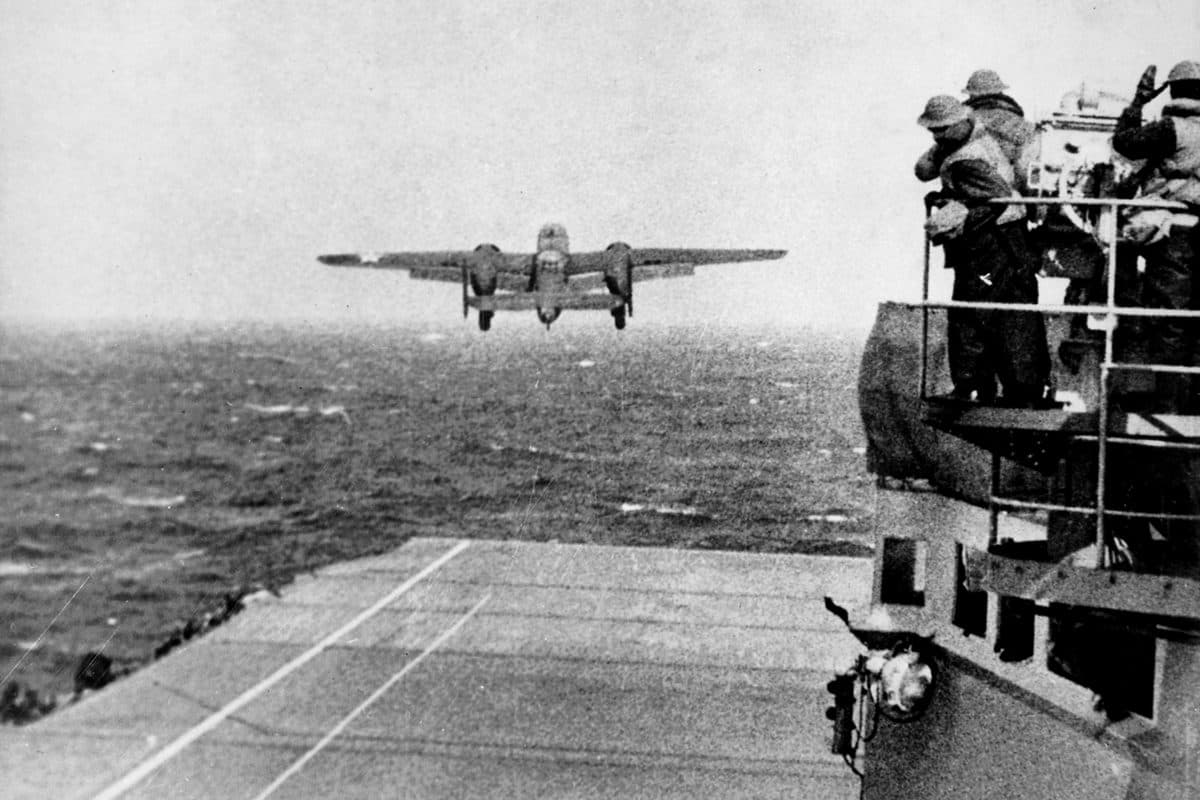
On April 18, 1942, sixteen B-25 Mitchell bombers did something no one thought possible: they launched from the deck of an aircraft carrier, flew 650 miles to Japan, and bombed Tokyo. Every aircraft was lost. The damage was negligible. The consequences changed the war.
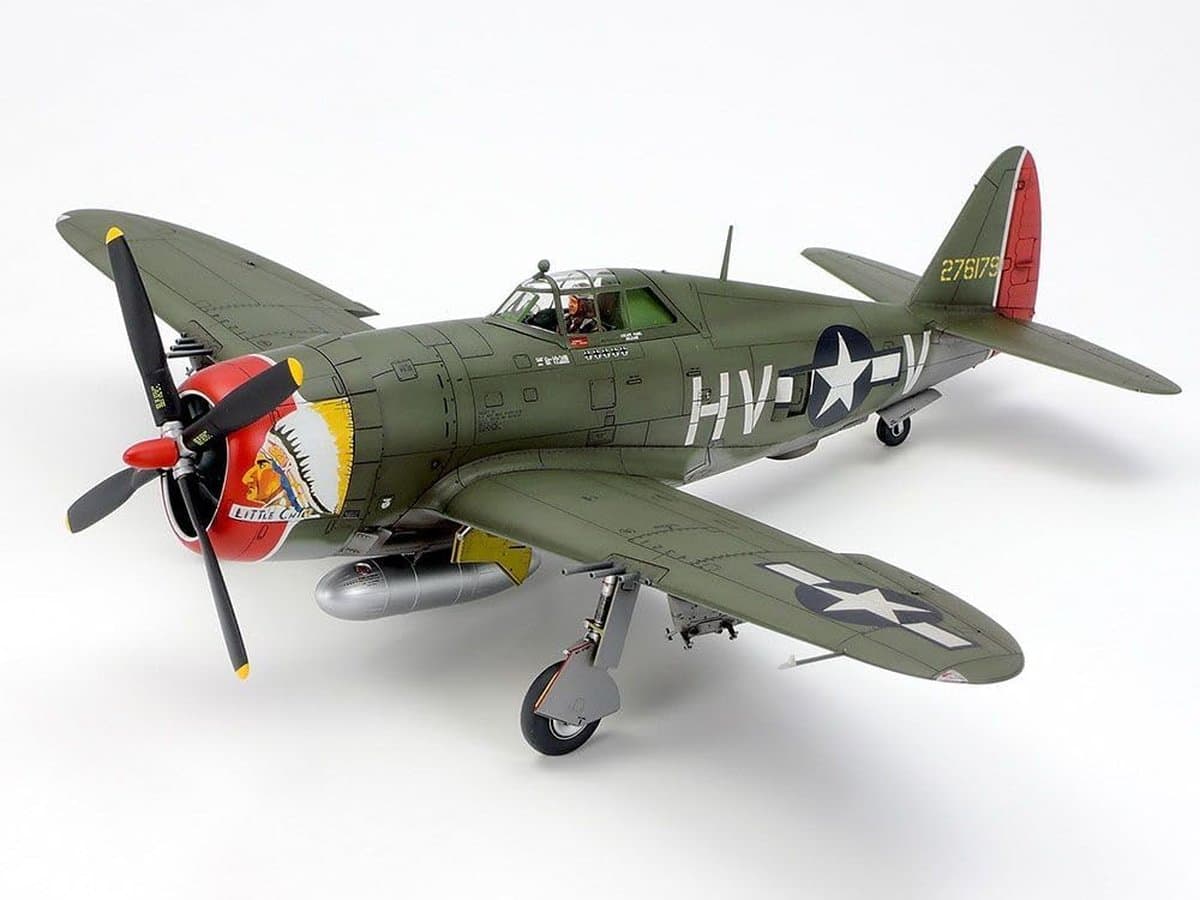
Compare 85+ WW2 scale model kits across aircraft, tanks, and ships. Beginner builds from $9 to museum-grade showpieces at $580. Covers Tamiya, Eduard, HK Models, Trumpeter, and more with honest reviews, trade-offs, and pricing.

On April 7, 1945, the Imperial Japanese Navy sent the largest battleship ever built on a one-way suicide mission to Okinawa. She never arrived. 386 American aircraft found her first, and sank her in under two hours.