

15 Best World War II Books for History Enthusiasts (2026)
15 essential WW2 books covering every theater. Narrative histories, memoirs, and visual references ranked.
daniel-mercer··21 min read

Combined American and French forces under George Washington and Comte de Rochambeau began the Siege of Yorktown, the decisive engagement of the American Revolutionary War. With the French fleet controlling the Chesapeake and 17,000 Allied troops surrounding 8,000 British under Lord Cornwallis, the end of the war was three weeks away.
Duke William of Normandy landed his invasion fleet at Pevensey on the south coast of England three days after King Harold Godwinson's victory at Stamford Bridge. The unopposed landing began the campaign that would end at Hastings on October 14 and transform England's political, linguistic, and military culture.
Combined American and French forces began the Siege of Yorktown, trapping Cornwallis's British army. The siege would end with the decisive British surrender that effectively won the American Revolution.
Belgian, British, and French forces launched the Fifth Battle of Ypres, part of the Grand Offensive that was breaking the German army. The Belgian army, fighting on the last scrap of unoccupied Belgian territory, advanced alongside the British Second Army through the mud and devastation of the Ypres Salient.
U.S. Army Air Service Douglas World Cruisers Chicago and New Orleans landed at Seattle, Washington, completing the first circumnavigation of the globe by aircraft. The 175-day, 27,553-mile flight established American aviation credibility, demonstrated the operational feasibility of long-range air power, and produced engineering lessons that shaped interwar transport and bomber design.
Scottish bacteriologist Alexander Fleming discovered penicillin at St. Mary's Hospital in London when he noticed that a contaminating mold had killed staphylococci growing on a petri dish. The discovery would transform wartime medicine during the Second World War, cutting fatal infection rates for wounded soldiers and enabling surgical advances unthinkable in the pre-antibiotic era.
Germany and the Soviet Union signed the German-Soviet Boundary and Friendship Treaty, formally partitioning Poland between them. The agreement, following the Molotov-Ribbentrop Pact, divided Poland along the Bug River line. The partition condemned millions of Poles to years of brutal occupation by both totalitarian regimes.
German Einsatzgruppen and Wehrmacht forces began the Babi Yar massacre near Kyiv, Ukraine. Over two days, 33,771 Jewish men, women, and children were marched to a ravine and systematically shot, the largest single mass shooting of the Holocaust. The massacre was carried out by Sonderkommando 4a of Einsatzgruppe C, assisted by German police and Ukrainian auxiliary police.
The last organized resistance of the British 1st Airborne Division at Arnhem ended. Of approximately 10,000 men who had been deployed, only 2,163 escaped across the Rhine. The failure at Arnhem meant that Operation Market Garden had not achieved its ultimate objective of crossing the Rhine, prolonging the war into 1945.

French Prime Minister who led France to victory in World War I, earning the nickname "Le Tigre" (The Tiger) for his fierce determination to continue the war until total victory. His relentless energy and refusal to consider compromise drove the French war effort during the darkest days of 1917-1918.

Reichsmarschall
Commander of the Luftwaffe and the highest-ranking Nazi defendant at the Nuremberg trials. A World War I fighter ace, Göring built the Luftwaffe from nothing but failed to deliver air superiority over Britain or protect Germany from Allied bombing. He committed suicide with a cyanide capsule hours before his scheduled execution on October 15, 1946.
Wear the Timeline
10 military events occurred on September 28, spanning multiple centuries. Key events include: Siege of Yorktown Begins (1781), Germany and Soviet Union Partition Poland (1939), Babi Yar Massacre Begins (1941), Battle of Arnhem Ends, "A Bridge Too Far" (1944), William of Normandy Lands at Pevensey (1066).
The most significant military event on September 28 is Siege of Yorktown Begins (1781). Combined American and French forces under George Washington and Comte de Rochambeau began the Siege of Yorktown, the decisive engagement of the American Revolutionary War. With the French fleet controlling the Chesapeake and 17,000 Allied troops surrounding 8,000 British under Lord Cornwallis, the end of the war was three weeks away.
Notable military figures born on September 28 include Georges Clemenceau (1841–1929).
Events on September 28 span the Colonial & Revolutionary era, World War I, World War II, the Interwar Period, the Cold War, covering 10 events across 4 centuries of military history.
Events on September 28 involve 5 branches of the U.S. and allied armed forces, reflecting the global scope of military operations throughout history.
Explore military history from the day you were born.
June 6
The Allied invasion of Normandy, the largest amphibious assault in history.
December 7
Japan attacks the U.S. Pacific Fleet, bringing America into World War II.
September 11
The deadliest terrorist attack in history transforms U.S. national security.
August 6
The first atomic bomb is dropped on a city, ushering in the nuclear age.
May 8
Nazi Germany surrenders unconditionally, ending World War II in Europe.
November 11
Armistice Day marks the end of World War I and honors all who served.
June 4
The turning point of the Pacific War as the U.S. Navy destroys four Japanese carriers.
July 4
The Declaration of Independence is adopted, sparking the American Revolution.
15 essential WW2 books covering every theater. Narrative histories, memoirs, and visual references ranked.
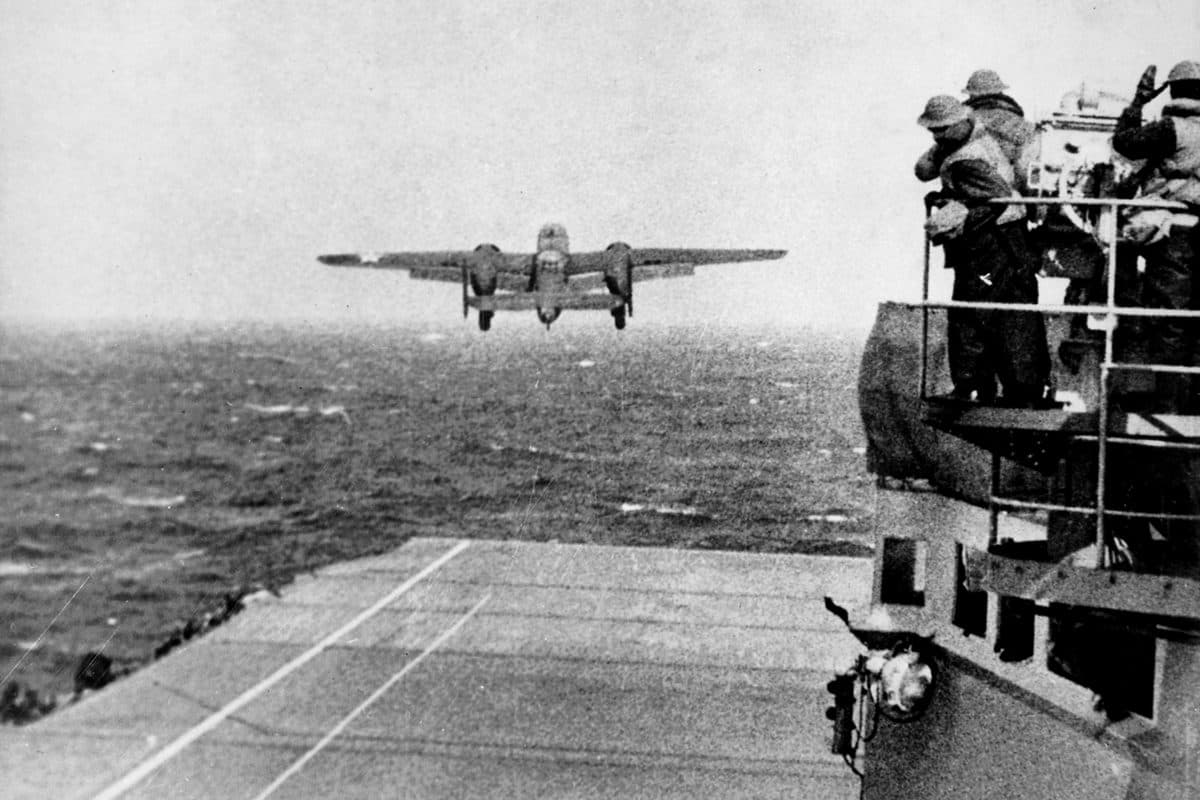
On April 18, 1942, sixteen B-25 Mitchell bombers did something no one thought possible: they launched from the deck of an aircraft carrier, flew 650 miles to Japan, and bombed Tokyo. Every aircraft was lost. The damage was negligible. The consequences changed the war.
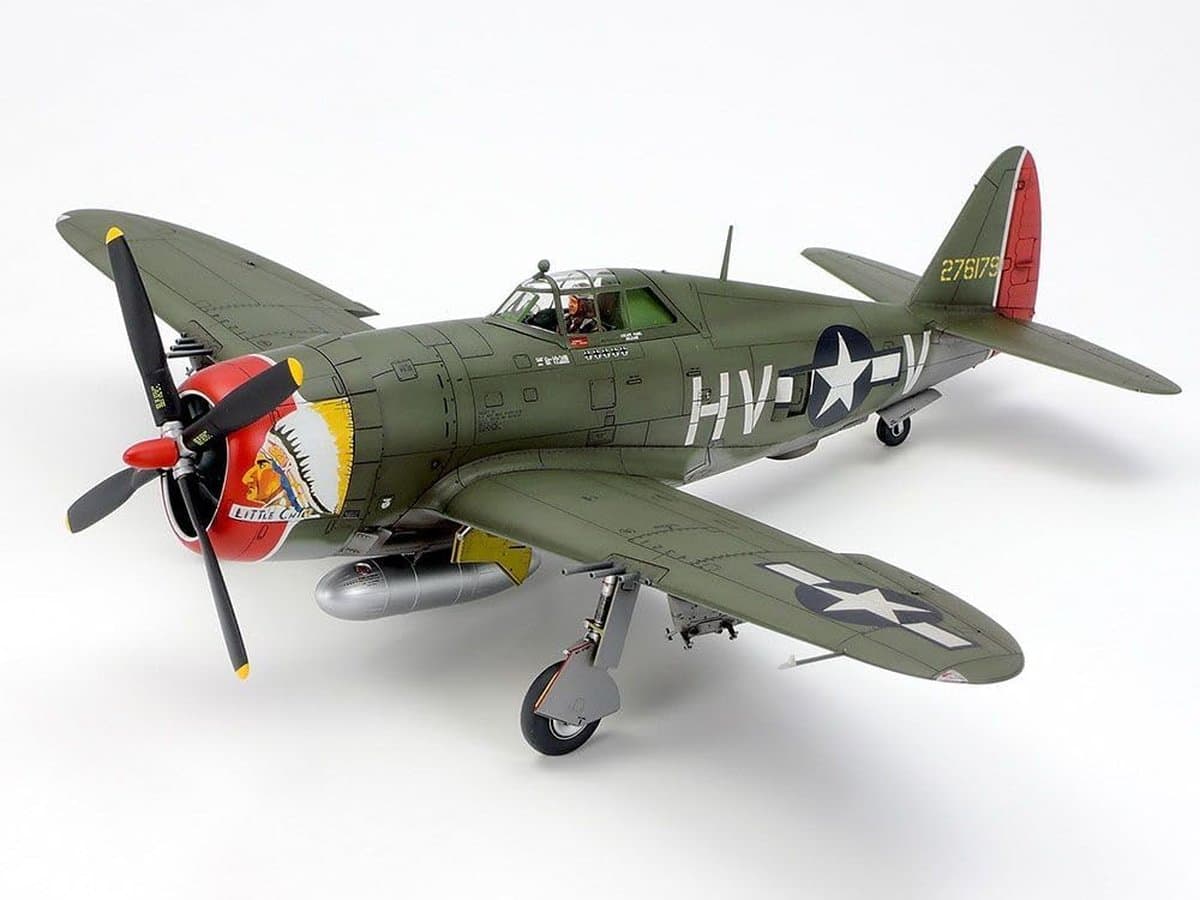
Compare 85+ WW2 scale model kits across aircraft, tanks, and ships. Beginner builds from $9 to museum-grade showpieces at $580. Covers Tamiya, Eduard, HK Models, Trumpeter, and more with honest reviews, trade-offs, and pricing.

On April 7, 1945, the Imperial Japanese Navy sent the largest battleship ever built on a one-way suicide mission to Okinawa. She never arrived. 386 American aircraft found her first, and sank her in under two hours.