


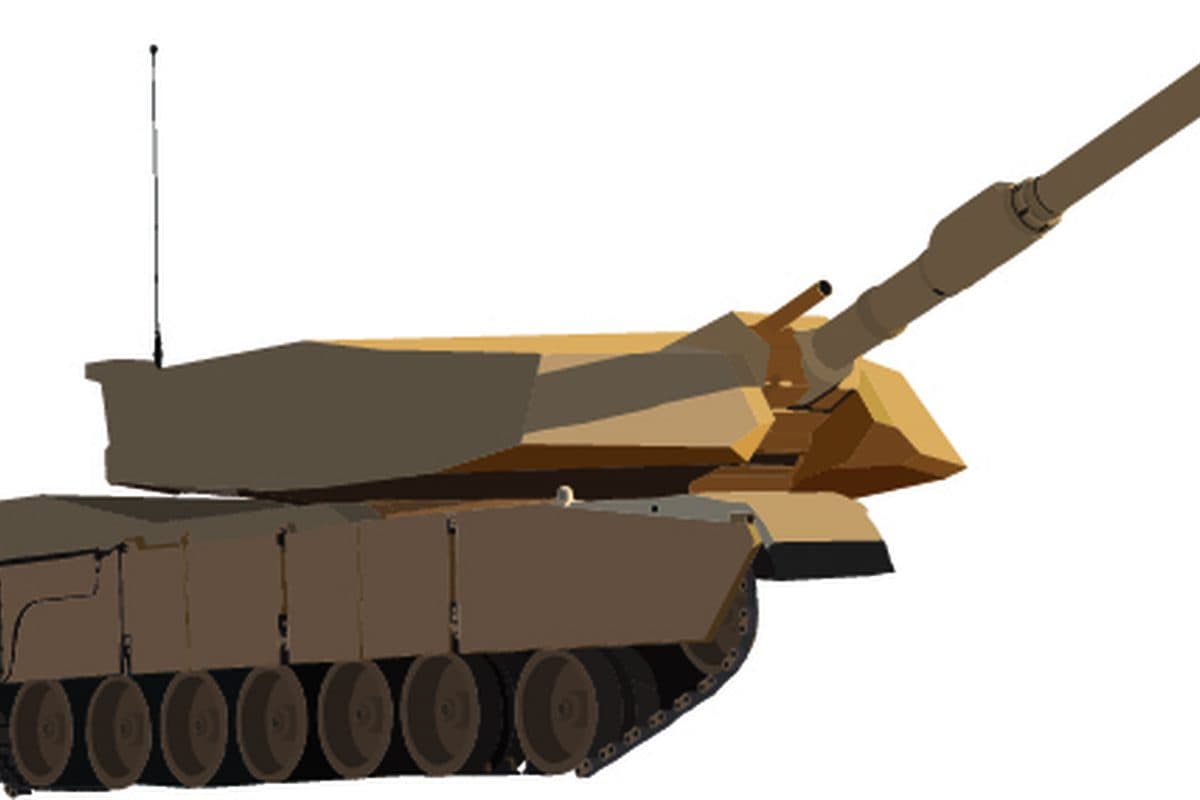
The M1 Abrams Premier Battle Tank
The M1 Abrams is the backbone of American armored warfare. Named after General Creighton Abrams, this 70-ton main battle tank combines heavy firepower, advanced armor, and gas turbine speed.

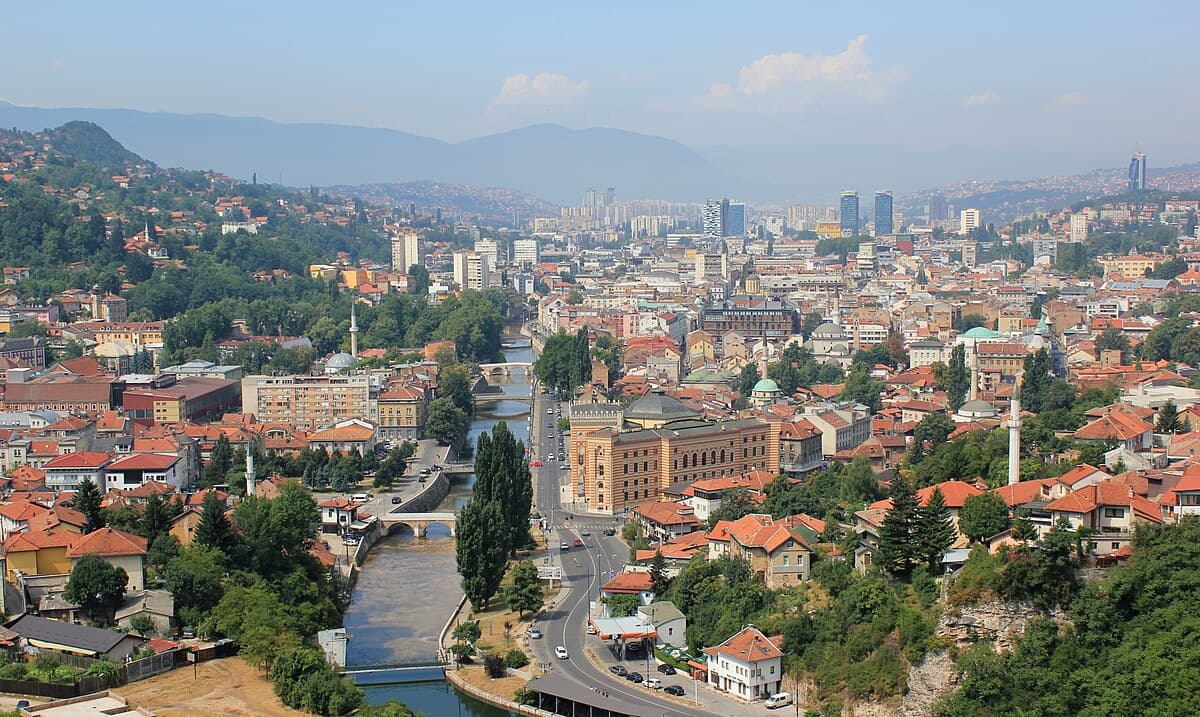
Bosnian Serb forces began the siege of Sarajevo, which would last 1,425 days, the longest siege of a capital city in modern warfare. Snipers opened fire on a peace march of 100,000 demonstrators, killing six, marking the start of a conflict that claimed over 11,500 lives in the city alone.
Argentine and Chilean forces under José de San Martín and Bernardo O'Higgins decisively defeated Spanish royalist forces near Santiago, leaving 2,000 royalists dead and 3,000 captured. The victory ended major Spanish military operations in Chile.
Chile declared war on Bolivia and Peru, beginning the War of the Pacific (1879-1883) over mineral-rich territory in the Atacama Desert. Chile's decisive victories resulted in Bolivia permanently losing its Pacific coastline.
Allied air forces launched Operation FLAX, a systematic campaign to destroy Axis air transports ferrying reinforcements to Tunisia. The resulting "Palm Sunday Massacre" of transport aircraft helped seal the fate of Axis forces in North Africa.
Soviet Foreign Minister Vyacheslav Molotov informed the Japanese ambassador that Moscow would not renew the 1941 Soviet-Japanese Neutrality Pact, signaling the Soviet intention to enter the Pacific War within a year. The declaration freed divisions from the German front to begin the staggering logistical move east toward Manchuria.
Marshal Fyodor Tolbukhin's 3rd Ukrainian Front pushed into the southern suburbs of Vienna, opening the weeklong battle that ended Axis control of the Austrian capital. Soviet mechanized corps and assault brigades used heavy ISU-152 and SU-100 guns to reduce fortified blocks street by street.
Douglas MacArthur, one of America's most decorated and controversial generals, died at Walter Reed Army Medical Center at age 84. His career spanned three wars: World War I, World War II, and Korea.
The last South Vietnamese Army units withdrew from Laos, ending Operation Lam Son 719. The ARVN invasion had aimed to cut the Ho Chi Minh Trail but suffered heavy losses, roughly half of the 17,000 troops committed, along with hundreds of U.S. helicopters supporting the operation.
Libyan intelligence agents bombed the La Belle discotheque in West Berlin, a nightclub popular with American servicemen, killing two U.S. soldiers and a Turkish woman and wounding 229. President Reagan ordered retaliatory airstrikes on Libya ten days later.
President George H.W. Bush ordered the start of Operation Provide Comfort, a combined U.S.-British-French humanitarian operation to deliver relief to roughly 500,000 Kurdish refugees driven into the mountains of northern Iraq. C-130 Hercules transports began airdrops within 48 hours, and coalition fighters established a no-fly zone above the 36th parallel.
Bosnian Serb snipers opened fire on 100,000 peace demonstrators in Sarajevo, beginning the longest siege of a capital city in modern warfare, 1,425 days.
Task Force 1-64 Armor of the U.S. Army's 3rd Infantry Division executed a bold armored reconnaissance raid through Baghdad, proving Iraqi forces could not stop American armor and paving the way for the capital's fall four days later.
Related articleGet daily military history, analysis, and technology delivered to your inbox.
11 military events occurred on April 5, spanning multiple centuries. Key events include: Siege of Sarajevo Begins (1992), General Douglas MacArthur Dies (1964), Soviet Union Denounces the Neutrality Pact with Japan (1945).
The most significant military event on April 5 is Siege of Sarajevo Begins (1992). Bosnian Serb forces began the siege of Sarajevo, which would last 1,425 days, the longest siege of a capital city in modern warfare. Snipers opened fire on a peace march of 100,000 demonstrators, killing six, marking the start of a conflict that claimed over 11,500 lives in the city alone.
Notable military figures born on April 5 include Colin Powell (1937–2021), Nguyen Van Thieu (1923–2001).
Events on April 5 span the Modern Era, the Cold War, the Colonial & Revolutionary era, the Interwar Period, World War II, the Vietnam War, covering 11 events across 3 centuries of military history.
Events on April 5 involve 5 branches of the U.S. and allied armed forces, reflecting the global scope of military operations throughout history.
Explore military history from the day you were born.
June 6
The Allied invasion of Normandy, the largest amphibious assault in history.
December 7
Japan attacks the U.S. Pacific Fleet, bringing America into World War II.
September 11
The deadliest terrorist attack in history transforms U.S. national security.
August 6
The first atomic bomb is dropped on a city, ushering in the nuclear age.
May 8
Nazi Germany surrenders unconditionally, ending World War II in Europe.
November 11
Armistice Day marks the end of World War I and honors all who served.
June 4
The turning point of the Pacific War as the U.S. Navy destroys four Japanese carriers.
July 4
The Declaration of Independence is adopted, sparking the American Revolution.
The M1 Abrams is the backbone of American armored warfare. Named after General Creighton Abrams, this 70-ton main battle tank combines heavy firepower, advanced armor, and gas turbine speed.
The FIM-92 Stinger helped win the Cold War by turning Afghan mujahideen into a credible anti-aircraft threat. By 2023, the United States almost ran out of them, because Raytheon stopped making them for 13 years, and the first 10 months of Ukraine support burned through the remaining stockpile.
Amateurs study tactics. Professionals study logistics. The most quoted military truism is also the most ignored. From WWII's industrial avalanche to Russia's 40-mile traffic jam in Ukraine, every major conflict proves the same lesson, and the U.S. military's just-in-time supply model may not survive a real fight.
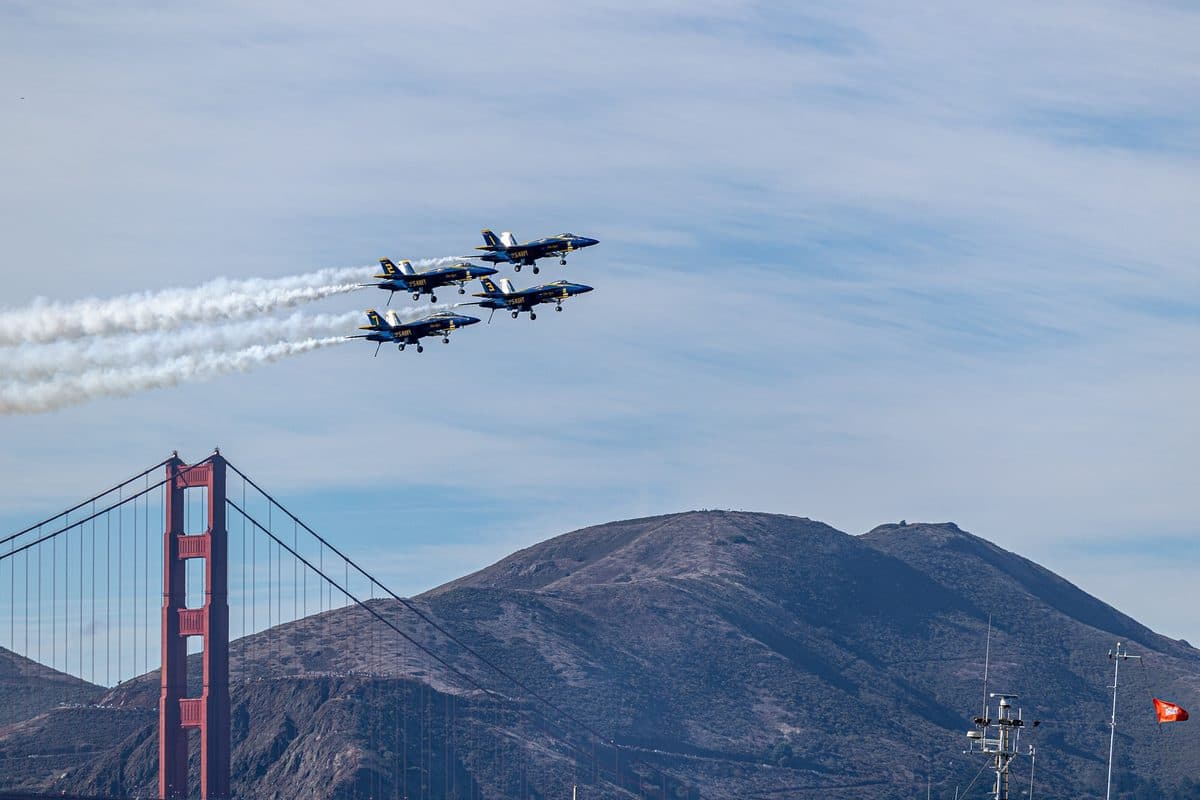
Eighteen inches. At 400 mph. The margin for error is less than the length of your forearm. How the Blue Angels and Thunderbirds train their pilots to fly in formation so tight that one flinch would be catastrophic, and why the military considers air show teams a combat-relevant mission.