

15 Best World War II Books for History Enthusiasts (2026)
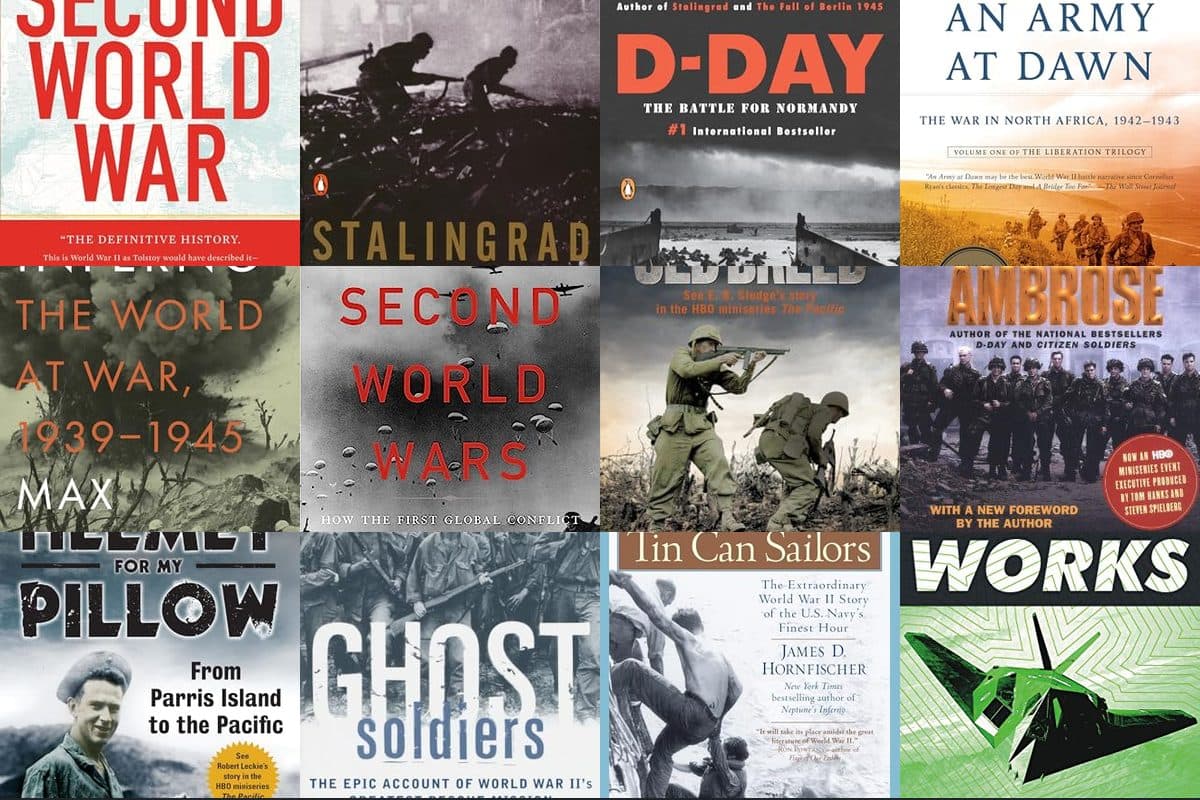
15 essential WW2 books covering every theater. Narrative histories, memoirs, and visual references ranked.
daniel-mercer··21 min read

Elizabeth Tudor became Queen of England upon the death of her half-sister Mary I, beginning a 45-year reign that saw England transformed from a weak, divided kingdom into a major military and naval power. Under Elizabeth, the Royal Navy defeated the Spanish Armada in 1588, English privateers challenged Spanish dominance of the seas, and the foundations of the British Empire were laid.
Elizabeth Tudor became Queen of England, beginning a 45-year reign that transformed England into a major naval power, defeated the Spanish Armada, and laid the foundations of the British Empire.
Napoleon Bonaparte's Army of Italy completed a three-day victory over Austrian forces under Baron Josef Alvinczi at the village of Arcole, consolidating French control of northern Italy. The campaign included the famous bridge action in which Napoleon personally carried a French tricolor forward under fire, an event that became iconic in Napoleonic imagery.
General Burnside's Army of the Potomac arrived at Falmouth, across the Rappahannock from Fredericksburg, Virginia, ahead of Lee's forces. But the pontoon bridges needed to cross the river had not arrived, and the five-day delay allowed Lee to concentrate his army on the heights behind the town, ensuring the disaster that followed on December 13.
The 101-mile Suez Canal opened to commercial and naval traffic, connecting the Mediterranean Sea and the Red Sea and eliminating the 4,300-nautical-mile circumnavigation of Africa required for voyages between Europe and Asia. The canal immediately became one of the most strategically significant waterways on earth, shaping imperial deployment, fleet composition, and naval doctrine for the next 150 years.
At the Second Congress of the Russian Social Democratic Labour Party in London, Vladimir Lenin's faction won a crucial vote, and Lenin christened them "Bolsheviks" (majority). The split between Bolsheviks and Mensheviks would have enormous military consequences, the Bolshevik Revolution, Russian Civil War, and the creation of the Red Army.
South African and British armored forces fought a desperate battle against Rommel's Afrika Korps around Sidi Rezegh airfield southeast of Tobruk during Operation Crusader. The confused armored engagement across open desert destroyed significant portions of the British 7th Armoured Division and the South African 5th Brigade but ultimately exhausted German tank strength and opened the path for the Tobruk relief.
U.S. Marines of the 2nd Marine Division launched an amphibious assault on the heavily fortified Japanese-held atoll of Betio in the Tarawa chain. The 76-hour battle cost over 1,000 Marines killed and 2,000 wounded against a garrison of 4,800 Japanese, of whom only 17 survived. The shocking casualties prompted reforms in amphibious doctrine.
The Soviet Union landed Lunokhod 1, the first successful robotic rover on the Moon, demonstrating remote-controlled vehicle technology with direct military applications. The rover operated for 11 months, traversing over six miles of the lunar surface and returning data that advanced understanding of terrain navigation, knowledge applicable to military robotics.
An AMX-30 tank of the Hellenic Army crashed through the main gate of the National Technical University of Athens at 03:00, ending a three-day student uprising against the Greek military junta. The government crackdown killed at least 24 civilians and set in motion the chain of events that led to the Cyprus crisis and the collapse of the junta eight months later.
U.S. Marines of the 3rd Marine Expeditionary Brigade completed the initial phase of relief operations in the Philippines following Typhoon Haiyan. Working alongside Filipino forces, Marines reopened Tacloban airport and established logistics hubs that enabled aid to reach over 2 million displaced people.

Field Marshal
British field marshal who commanded the Eighth Army to victory at El Alamein and led the 21st Army Group from Normandy to the Baltic. "Monty" was meticulous, cautious, and abrasive, a brilliant trainer of troops and planner of set-piece battles who feuded constantly with American commanders. His Market Garden operation in 1944 was his greatest gamble and failure.

Admiral of the Fleet
Supreme Allied Commander, South East Asia Command during World War II, who oversaw the reconquest of Burma. Later served as the last Viceroy of India, overseeing the partition of British India in 1947, and as First Sea Lord and Chief of Defence Staff. Assassinated by the IRA in 1979 when a bomb detonated on his fishing boat off the coast of Ireland.

Queen of England whose death on this date brought Elizabeth I to the throne. Mary's reign was marked by the disastrous loss of Calais, England's last continental possession, to France in January 1558, and by the execution of nearly 300 Protestants that earned her the epithet "Bloody Mary." Her death ended the Catholic restoration and set England on its path to becoming a Protestant naval power.
Wear the Timeline
10 military events occurred on November 17, spanning multiple centuries. Key events include: Elizabeth I Ascends to the English Throne (1558), Battle of Tarawa Begins (1943), The Suez Canal Opens (1869).
The most significant military event on November 17 is Elizabeth I Ascends to the English Throne (1558). Elizabeth Tudor became Queen of England upon the death of her half-sister Mary I, beginning a 45-year reign that saw England transformed from a weak, divided kingdom into a major military and naval power. Under Elizabeth, the Royal Navy defeated the Spanish Armada in 1588, English privateers challenged Spanish dominance of the seas, and the foundations of the British Empire were laid.
Notable military figures born on November 17 include Bernard Montgomery (1887–1976), Louis Mountbatten (1900–1979).
Events on November 17 span the Colonial & Revolutionary era, World War II, the Civil War, the Interwar Period, the Cold War, the Modern Era, covering 10 events across 5 centuries of military history.
Events on November 17 involve 3 branches of the U.S. and allied armed forces, reflecting the global scope of military operations throughout history.
Explore military history from the day you were born.
June 6
The Allied invasion of Normandy, the largest amphibious assault in history.
December 7
Japan attacks the U.S. Pacific Fleet, bringing America into World War II.
September 11
The deadliest terrorist attack in history transforms U.S. national security.
August 6
The first atomic bomb is dropped on a city, ushering in the nuclear age.
May 8
Nazi Germany surrenders unconditionally, ending World War II in Europe.
November 11
Armistice Day marks the end of World War I and honors all who served.
June 4
The turning point of the Pacific War as the U.S. Navy destroys four Japanese carriers.
July 4
The Declaration of Independence is adopted, sparking the American Revolution.
15 essential WW2 books covering every theater. Narrative histories, memoirs, and visual references ranked.
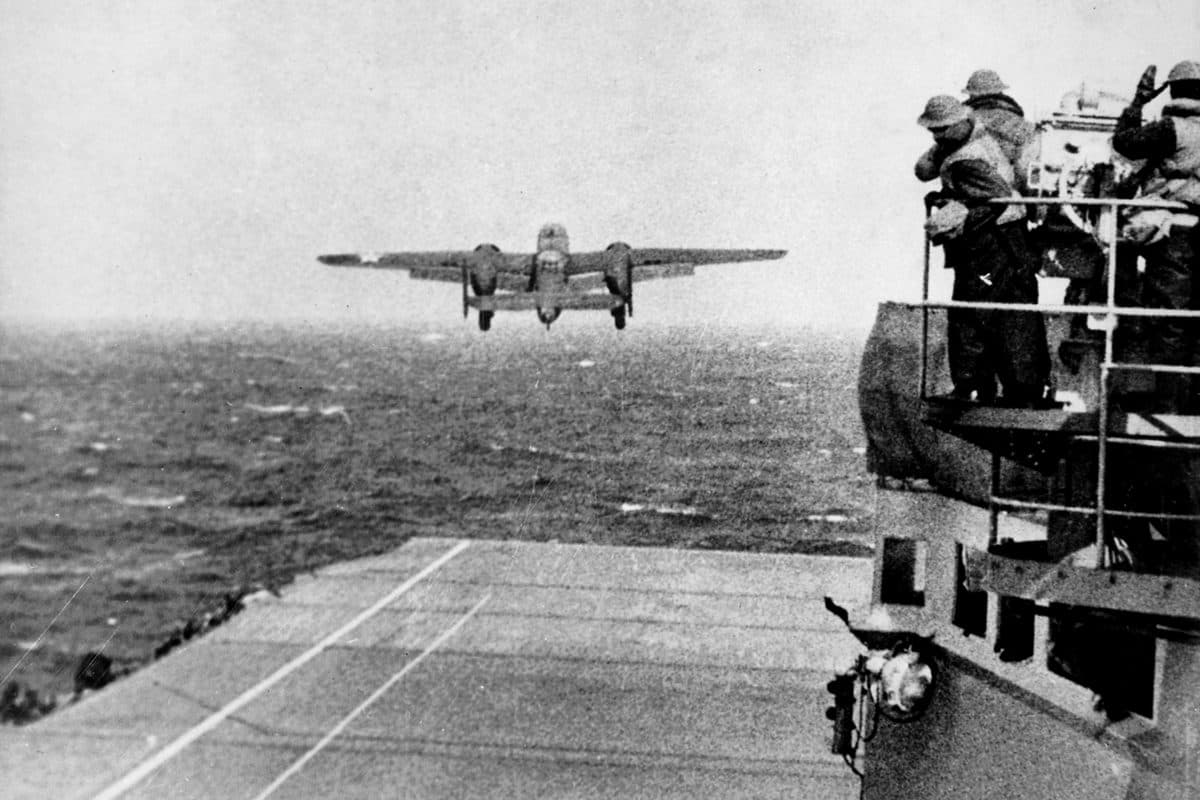
On April 18, 1942, sixteen B-25 Mitchell bombers did something no one thought possible: they launched from the deck of an aircraft carrier, flew 650 miles to Japan, and bombed Tokyo. Every aircraft was lost. The damage was negligible. The consequences changed the war.
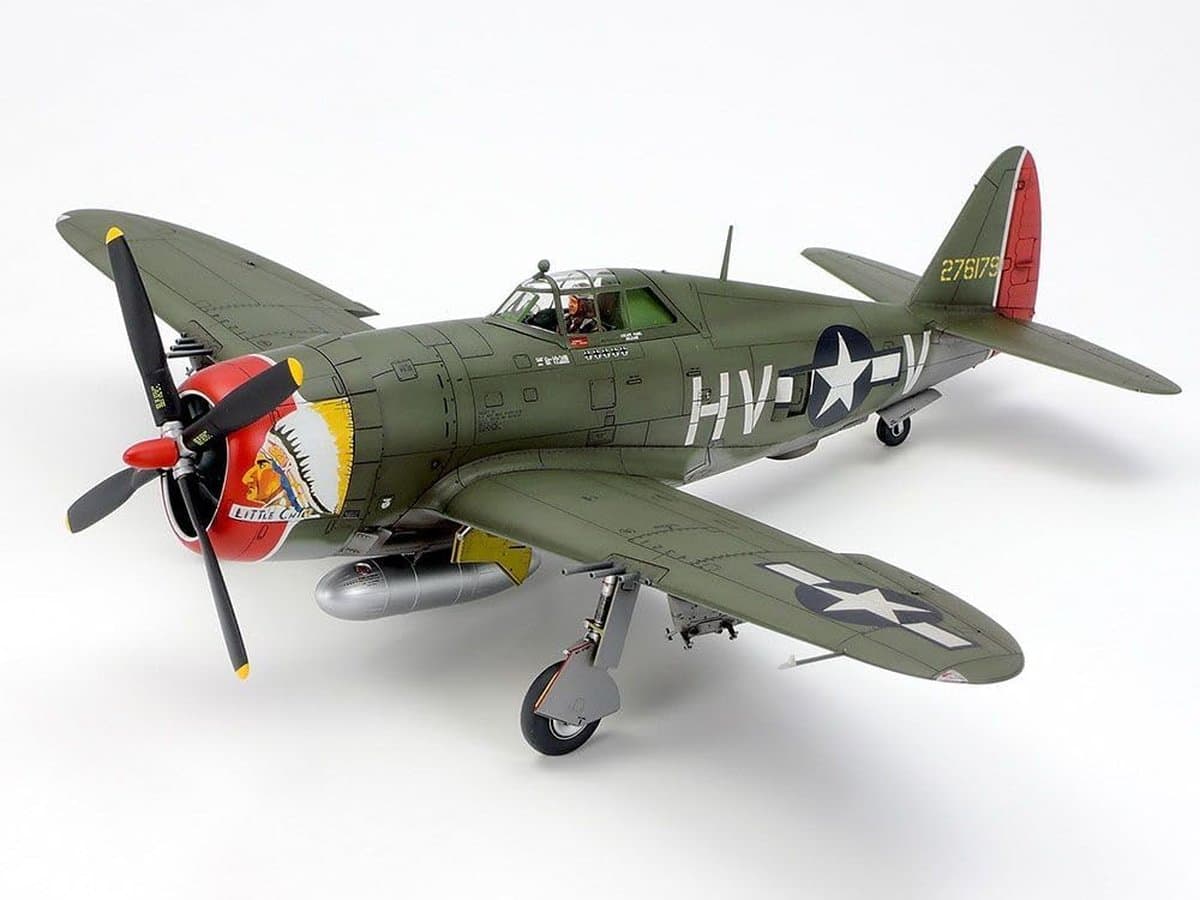
Compare 85+ WW2 scale model kits across aircraft, tanks, and ships. Beginner builds from $9 to museum-grade showpieces at $580. Covers Tamiya, Eduard, HK Models, Trumpeter, and more with honest reviews, trade-offs, and pricing.

On April 7, 1945, the Imperial Japanese Navy sent the largest battleship ever built on a one-way suicide mission to Okinawa. She never arrived. 386 American aircraft found her first, and sank her in under two hours.