

Skip to content
May 1:Operation Neptune Spear: U.S. Navy SEALs Kill Osama bin Laden15yr ago

October 6 in Military History

Share:

This Day in Military History: October 6

Go to Today
Israeli tanks advancing through the Sinai Desert during the counteroffensive in the Yom Kippur War, October 1973
Defining Moment53 years ago

Yom Kippur War, Egypt and Syria Attack Israel

ArmyAir ForceNavy· 1973

On the holiest day of the Jewish calendar, Egyptian and Syrian forces launched a massive coordinated surprise attack against Israel. Egyptian troops stormed across the Suez Canal while Syrian armor poured onto the Golan Heights. The initial Arab successes stunned Israel and the world, triggering the most dangerous Middle East crisis of the Cold War and nearly provoking a nuclear confrontation between the United States and Soviet Union.

10 events, 2 notable births, 1 notable deaths, and 5 military quotes10events2births1deaths5quotes

1600s

1683RevolutionaryArmy343 years ago

Four Quaker and Mennonite settlers in Germantown, Pennsylvania, signed the first formal written protest against slavery in the Americas. While not a military event, the petition foreshadowed the abolitionist movement that would eventually help trigger the Civil War, the bloodiest conflict in American history. The document argued that enslaving Africans violated the Golden Rule and the principles of religious liberty.

1800s

1862Civil WarArmy164 years ago

Confederate General Braxton Bragg paused his invasion of Kentucky to inaugurate a Confederate governor in the state capital of Frankfort, a political ceremony that cost him critical momentum. While Bragg attended the inauguration, Union forces under Don Carlos Buell marched to intercept him, leading to the Battle of Perryville two days later, which ended the Confederate bid to claim Kentucky.

1900s

1918WWIArmy108 years ago

Allied forces broke through the Beaurevoir Line, the last prepared defensive position behind the Hindenburg Line, in the final Hundred Days Offensive of World War I. The breach exposed the German rear areas and made an organized defense of the Western Front virtually impossible. Germany requested an armistice within days.

1927InterwarArmyNavyAAF99 years ago

The Jazz Singer, the first feature-length motion picture with synchronized dialogue, premiered in New York City on October 6, 1927, establishing the sound film technology that would within a decade become central to American military training, public information, and combat documentation.

1943WWIINavy83 years ago

U.S. Navy destroyers intercepted Japanese destroyers evacuating troops from Vella Lavella Island in the Solomon Islands. In a confused nighttime engagement fought largely by radar, both sides lost a destroyer. The Japanese successfully evacuated their garrison, but the battle was part of the broader American campaign to isolate and bypass the major Japanese base at Rabaul.

1945WWIIArmy81 years ago

General George S. Patton Jr. was relieved of command of the US Third Army by Dwight D. Eisenhower following Patton's public statements comparing Nazi Party members to losing political parties in American elections. Reassigned to the paper-shuffling Fifteenth Army, Patton would die two months later of injuries sustained in a car accident near Mannheim. The relief ended one of the most aggressive combat careers in American military history.

1973Cold WarArmyAir ForceNavy53 years agoDefining Moment

On the holiest day of the Jewish calendar, Egyptian and Syrian forces launched a massive coordinated surprise attack against Israel. The war nearly triggered a superpower confrontation and reshaped Middle East geopolitics.

1973Cold WarArmyAir Force53 years ago

Egypt and Syria launched coordinated surprise attacks against Israel on the holiest day of the Jewish calendar, opening the Yom Kippur War. Over 90,000 Egyptian troops crossed the Suez Canal using high-pressure water cannons to breach the 50-foot sand wall of the Bar-Lev Line, while Syrian armor with more than 1,400 tanks assaulted the Golan Heights. The war ended 19 days later with Israel narrowly victorious but profoundly shaken.

1981Cold WarArmy45 years ago

Egyptian President Anwar Sadat was assassinated by Islamic fundamentalist soldiers within his own army during a military parade commemorating the 1973 Yom Kippur War crossing of the Suez Canal. As military vehicles passed the reviewing stand, Lieutenant Khalid Islambouli leapt from a truck and led a team of soldiers who attacked the stand with grenades and automatic weapons, killing Sadat and eleven others. The assassination was motivated by Sadat's 1979 peace treaty with Israel.

1981Cold WarAir Force45 years ago

While the F-117 Nighthawk had made its first flight in 1981 in total secrecy at Groom Lake, the aircraft's existence would not be officially acknowledged by the US Air Force until November 1988. The F-117, the first operational aircraft designed from the outset around radar cross-section reduction, initiated the stealth revolution that reshaped the design of every combat aircraft that followed.

Enjoyed this page? Share it with someone who loves military history.

Share:

Never Miss a Day in Military History

Get daily military history, analysis, and technology delivered to your inbox.

Born on This Day

George Westinghouse

George Westinghouse

b. 1846

American inventor and industrialist who served in the Union Army and Navy during the Civil War before revolutionizing rail transport with his air brake system. His electrical engineering company was crucial to American industrial mobilization in both World Wars, producing engines, turbines, and electronics for the military.

Thor Heyerdahl

Thor Heyerdahl

b. 1914

Norwegian explorer and adventurer who served with the Free Norwegian forces during World War II, trained as a radio operator with the British-Norwegian Independent Company 1 (Kompani Linge), and participated in the liberation of Finnmark. After the war, his Kon-Tiki expedition across the Pacific captured worldwide attention.

Died on This Day

Anwar Sadat

Anwar Sadat

President and Commander-in-Chief

d. 1981
Army

President of Egypt who planned and launched the 1973 Yom Kippur War, restoring Egyptian military honor after the 1967 defeat. His later decision to make peace with Israel earned him the Nobel Peace Prize but cost him his life when he was assassinated by Islamic fundamentalists within his own military.

Military Quotes

Our armed forces have dealt the enemy a severe blow. Our forces are still fighting the enemy and achieving their goals. The Egyptian flag flies over the east bank of the canal.

Anwar Sadat

President of Egypt

Sadat's announcement to the Egyptian people on the first day of the Yom Kippur War., 1973

The situation on the Golan Heights is desperate. We may have to consider the use of extreme measures.

Moshe Dayan

Israeli Minister of Defense

Dayan's reported warning to Prime Minister Golda Meir during the first days of the Yom Kippur War, believed to reference Israel's nuclear arsenal., 1973

No one starts a war, or rather, no one in his senses ought to do so, without first being clear in his mind what he intends to achieve by that war.

Carl von Clausewitz

Prussian military theorist

From "On War." Sadat exemplified this principle, his limited military objectives in 1973 were designed to achieve political results, leading to the Camp David peace.

I have killed the Pharaoh, and I do not fear death.

Khalid Islambouli

Lieutenant, Egyptian Army

Islambouli's declaration after assassinating President Sadat during the military parade., 1981

This is a battle of annihilation.

David Elazar

Chief of Staff, Israel Defense Forces

Elazar's order for the counteroffensive on the Golan Heights that drove Syrian forces back beyond the 1967 lines., 1973

Frequently Asked Questions

What military events happened on October 6?

10 military events occurred on October 6, spanning multiple centuries. Key events include: Yom Kippur War, Egypt and Syria Attack Israel (1973), Assassination of Anwar Sadat (1981), Yom Kippur War Begins (1973).

What is the most significant military event on October 6?

The most significant military event on October 6 is Yom Kippur War, Egypt and Syria Attack Israel (1973). On the holiest day of the Jewish calendar, Egyptian and Syrian forces launched a massive coordinated surprise attack against Israel. Egyptian troops stormed across the Suez Canal while Syrian armor poured onto the Golan Heights. The initial Arab successes stunned Israel and the world, triggering the most dangerous Middle East crisis of the Cold War and nearly provoking a nuclear confrontation between the United States and Soviet Union.

What famous military figures were born on October 6?

Notable military figures born on October 6 include George Westinghouse (1846–1914), Thor Heyerdahl (1914–2002).

What wars are represented in October 6's military timeline?

Events on October 6 span the Cold War, the Colonial & Revolutionary era, World War II, World War I, the Civil War, the Interwar Period, covering 10 events across 3 centuries of military history.

How many military branches are represented on October 6?

Events on October 6 involve 4 branches of the U.S. and allied armed forces, reflecting the global scope of military operations throughout history.

What Happened on Your Birthday?

Explore military history from the day you were born.

Related Days by Era

Explore More Days

Related Articles

Minuteman III ICBM launching from its silo at Vandenberg Air Force Base with a trail of flame and smoke against a dark sky

10 Cold War Weapons That Were Designed for World War III and Never Fired

These weapons were built to fight a war that everyone prayed would never happen. The Minuteman III has been on alert since 1970. The Typhoon-class carried enough nuclear warheads to destroy a continent. The Davy Crockett could be fired by three soldiers. Most of them have been waiting for 40 years. Here are 10 Cold War weapons built exclusively for World War III.

daniel-mercer··13 min read
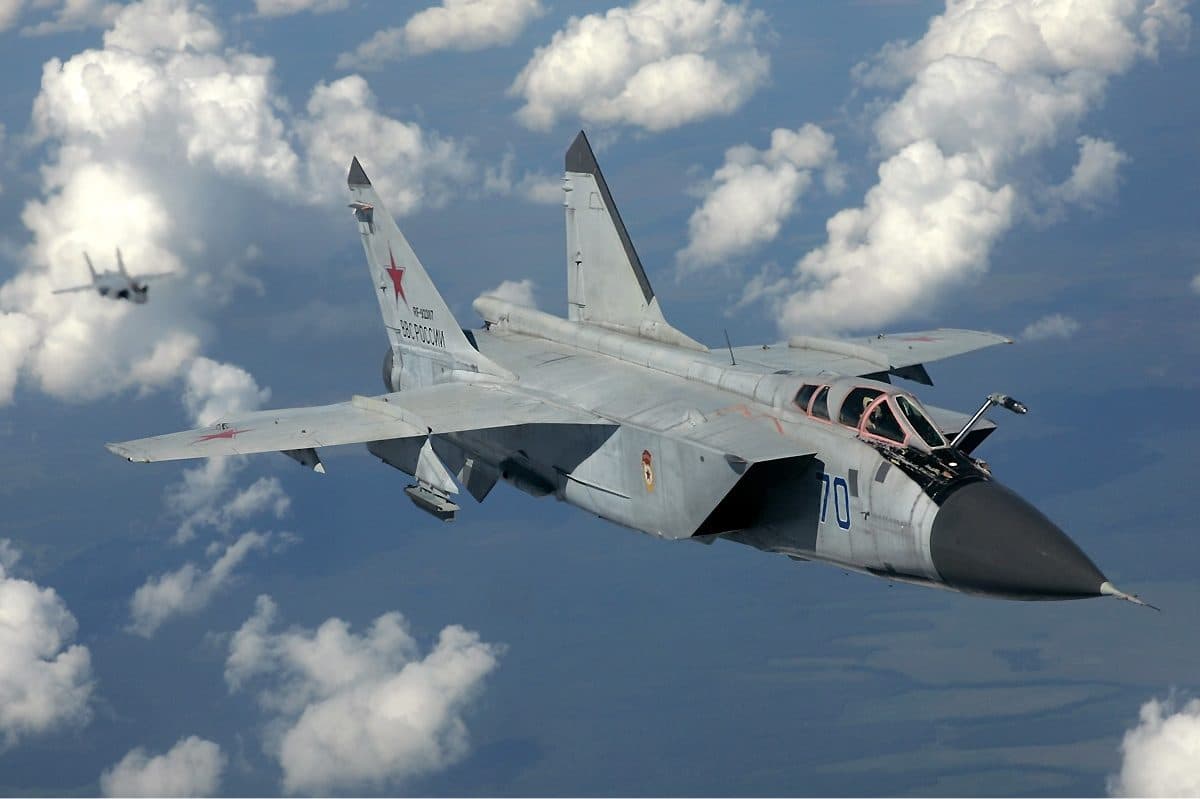
Russian Air Force MiG-31 Foxhound interceptor in flight showing its twin-engine configuration and large airframe

The MiG-31 Foxhound Can Fly Mach 2.83 and Fire Missiles at Targets 200 Miles Away

The MiG-31 was designed to catch the SR-71 Blackbird. It is still the fastest fighter in any air force. The Foxhound's Zaslon phased-array radar, the first ever installed in a fighter, can track 10 targets and engage 4 simultaneously at ranges exceeding 200 miles. Here is why Russia still flies a 1980s interceptor, and why the MiG-31BM carrying a Kinzhal hypersonic missile has changed what the aircraft means to modern warfare.

michael-trent··10 min read