


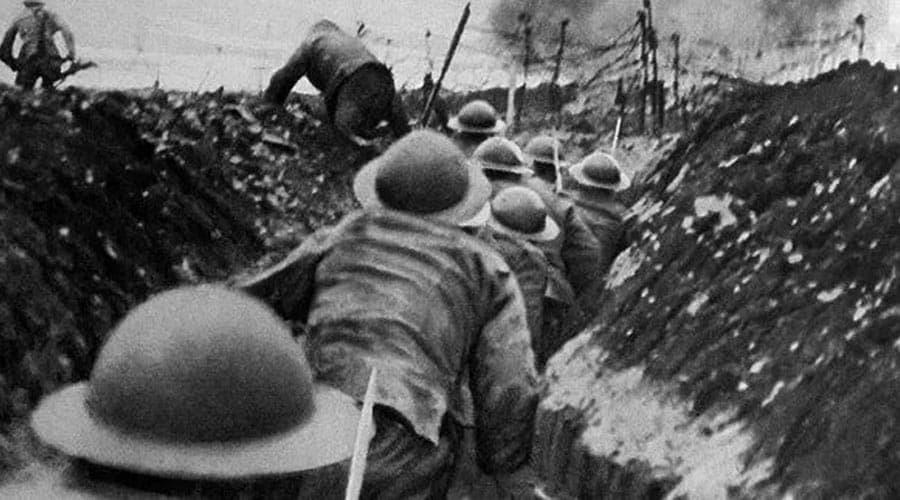
20 Chilling Quotes from the Trenches of World War I
Harrowing first-person accounts from soldiers who endured the mud, gas, and constant shelling of World War I's Western Front.
james-holloway··8 min read

General George Washington led approximately 2,400 Continental soldiers across the ice-choked Delaware River on Christmas night in a desperate gamble to save the American Revolution, resulting in a stunning victory at Trenton that electrified the nation and kept the Continental Army from dissolution.
Pope Leo III crowned Charlemagne as Emperor of the Romans at St. Peter's Basilica in Rome on Christmas Day, creating a military and political entity that would shape European warfare and statecraft for a thousand years.
General George Washington led the Continental Army across the icy Delaware River on Christmas night for a surprise attack on the Hessian garrison at Trenton, a victory that saved the American Revolution.
On Christmas night, General George Washington led 2,400 Continental Army soldiers across the ice-choked Delaware River at McConkey's Ferry, Pennsylvania, in preparation for the surprise attack on the Hessian garrison at Trenton, New Jersey, the following morning. The operation saved the Continental Army from collapse after a catastrophic autumn campaign and restored American morale at a critical moment.
British and German soldiers along the Western Front spontaneously ceased fire, sang carols across no man's land, exchanged gifts, and played football, one of the most remarkable episodes of humanity amid the industrialized slaughter of World War I.
Chilling quotes from the trenchesA German Imperial Navy Zeppelin airship bombed the port of Cuxhaven and the Royal Navy seaplane carriers moored at Great Yarmouth in one of the first strategic bombing raids of the First World War. British seaplanes from HMS Engadine, HMS Riviera, and HMS Empress attempted a counter-strike against the Cuxhaven Zeppelin sheds the same day, pioneering the carrier-based air attack concept that would define naval aviation for the next century.
Hong Kong surrendered to the Japanese on "Black Christmas" after 18 days of fierce resistance, marking Britain's first colonial surrender to Japan and beginning three years and eight months of brutal occupation.
When bigger militaries don't winThe besieged 101st Airborne Division held Bastogne against fierce German attacks on Christmas Day as Patton's Third Army fought to break through, one day before the relief that would turn the Battle of the Bulge.
How the military trains special forcesAstronauts Frank Borman, Jim Lovell, and William Anders entered lunar orbit aboard Apollo 8, becoming the first humans to circle another world. During their ten orbits, they broadcast a Christmas Eve reading of Genesis from lunar orbit watched by an estimated one billion viewers worldwide, and Anders captured the Earthrise photograph that became one of the most reproduced images of the twentieth century.
Soviet President Mikhail Gorbachev resigned and the Soviet flag was lowered over the Kremlin for the last time, formally ending the Cold War and the superpower that had maintained the world's largest nuclear arsenal and conventional military force for seven decades.
Decisions that shaped warfareMikhail Gorbachev announced his resignation as President of the Soviet Union in a televised address from the Kremlin, and the Soviet flag was lowered over the Senate dome for the last time that evening. The dissolution concluded 74 years of Soviet state existence, ended the Cold War, and set in motion the strategic, military, and nuclear-security transformations that shaped the following three decades.

American nurse and humanitarian who served on Civil War battlefields distributing supplies, tending to wounded soldiers, and earning the nickname "Angel of the Battlefield." Barton personally delivered medical care under fire at Antietam, Fredericksburg, and the Wilderness, often arriving before official medical corps. After the war, she led the effort to identify missing soldiers, then founded the American Red Cross in 1881, building the organization that would provide humanitarian relief in every American conflict thereafter.

Lieutenant Colonel
Egyptian military officer and president who launched the 1973 Yom Kippur War, ordering the Egyptian Army's surprise crossing of the Suez Canal in one of the most successful set-piece attacks of the modern era. The crossing shattered the myth of Israeli invincibility and restored Egyptian national pride. Sadat later made the historic journey to Jerusalem in 1977 and signed the Camp David Accords with Israel in 1978, earning the Nobel Peace Prize. He was assassinated by Islamic extremists within his own military during a parade in 1981.

Commander-in-Chief
Romanian communist dictator who ruled for 24 years before being overthrown in the Romanian Revolution of December 1989. As General Secretary of the Romanian Communist Party and Commander-in-Chief of the armed forces, Ceaușescu built one of Eastern Europe's most repressive security states through the Securitate secret police. When the revolution erupted, the army turned against him and he fled Bucharest by helicopter on December 22. Captured and subjected to a summary military tribunal, Ceaușescu and his wife Elena were convicted of genocide and executed by firing squad on Christmas Day 1989.
Wear the Timeline
10 military events occurred on December 25, spanning multiple centuries. Key events include: Washington Crosses the Delaware (1776), Charlemagne Crowned Emperor of the Romans (800), The Christmas Truce (1914), Fall of Hong Kong on "Black Christmas" (1941), Bastogne Holds on Christmas Day (1944).
The most significant military event on December 25 is Washington Crosses the Delaware (1776). General George Washington led approximately 2,400 Continental soldiers across the ice-choked Delaware River on Christmas night in a desperate gamble to save the American Revolution, resulting in a stunning victory at Trenton that electrified the nation and kept the Continental Army from dissolution.
Notable military figures born on December 25 include Clara Barton (1821–1912), Anwar Sadat (1918–1981).
Events on December 25 span the Colonial & Revolutionary era, World War I, World War II, the Cold War, covering 10 events across 3 centuries of military history.
Events on December 25 involve 4 branches of the U.S. and allied armed forces, reflecting the global scope of military operations throughout history.
Explore military history from the day you were born.
June 6
The Allied invasion of Normandy, the largest amphibious assault in history.
December 7
Japan attacks the U.S. Pacific Fleet, bringing America into World War II.
September 11
The deadliest terrorist attack in history transforms U.S. national security.
August 6
The first atomic bomb is dropped on a city, ushering in the nuclear age.
May 8
Nazi Germany surrenders unconditionally, ending World War II in Europe.
November 11
Armistice Day marks the end of World War I and honors all who served.
June 4
The turning point of the Pacific War as the U.S. Navy destroys four Japanese carriers.
July 4
The Declaration of Independence is adopted, sparking the American Revolution.
Harrowing first-person accounts from soldiers who endured the mud, gas, and constant shelling of World War I's Western Front.

Why military size doesn't guarantee victory in modern warfare.
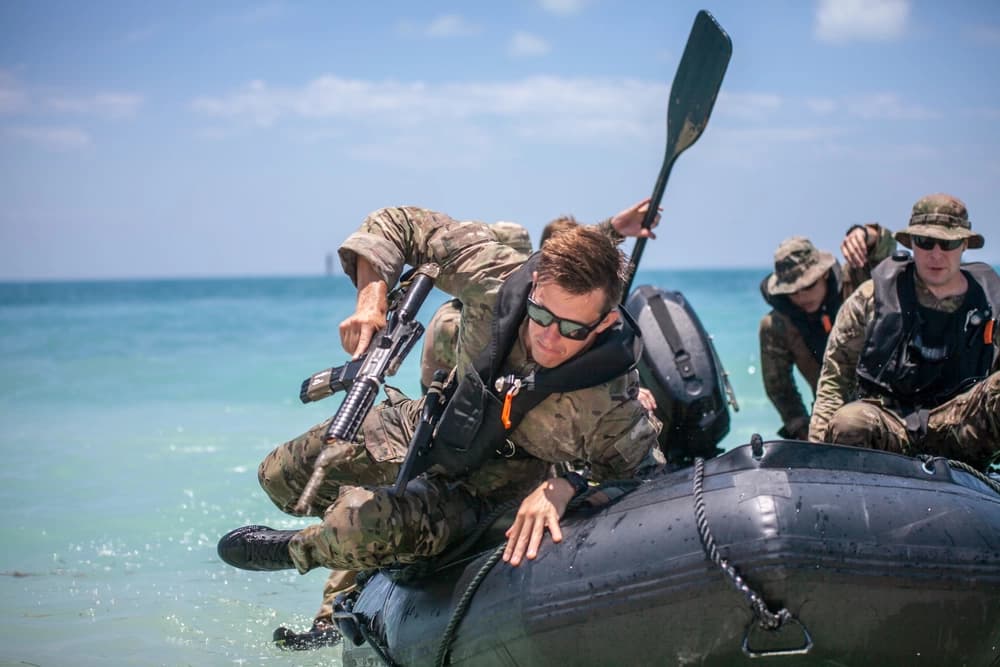
An in-depth look at the selection, qualification, and lifelong training that produces America's most capable special operations units.
Decisions that shaped modern military power across history.