


World World 2 Facts: Did You Know These 29 Interesting Details?
Calvin Graham Was Youngest Decorated US Soldier at 12 Pearl Harbor Visitors Bureau “Green Boys” was a term given to soldiers who…
daniel-mercer··27 min read

President Franklin Roosevelt and Prime Minister Winston Churchill met in Casablanca, Morocco, to plan the next phase of the Allied war effort. The ten-day conference produced the demand for "unconditional surrender" of the Axis powers, agreed on the invasion of Sicily, committed to a strategic bombing campaign against Germany, and prioritized the defeat of the U-boat threat, decisions that shaped the entire course of World War II.
The towns of Hartford, Windsor, and Wethersfield adopted the Fundamental Orders of Connecticut, often considered the first written constitution in the Western tradition. The document established principles of self-governance and militia organization that would influence the U.S. Constitution's provisions for civilian control of the military and the right of states to maintain organized militias.
The Continental Congress ratified the Treaty of Paris, officially ending the American Revolutionary War and recognizing the independence of the United States. The treaty, negotiated by Benjamin Franklin, John Adams, and John Jay, secured American sovereignty over territory from the Atlantic to the Mississippi and from Canada to Florida, an expanse that exceeded what even the most optimistic patriots had dared hope for.
The Continental Congress formally ratified the Treaty of Paris, officially ending the American Revolutionary War and confirming British recognition of American independence. The ratification completed the diplomatic process that secured the new nation's sovereignty and established its boundaries.
Italian nationalist Felice Orsini threw three bombs at Emperor Napoleon III's carriage outside the Paris Opera, killing 8 bystanders and wounding 156 but leaving the Emperor unhurt. The attack, intended to punish Napoleon for not supporting Italian unification, paradoxically pushed the Emperor toward supporting the cause, leading to the Franco-Austrian War of 1859 that gave Italy its independence.
Roosevelt and Churchill met in Casablanca to plan the next phase of the Allied war effort. The conference produced the "unconditional surrender" demand, agreed on the invasion of Sicily, and committed to the strategic bombing of Germany.
World War 2 FactsPresident Roosevelt and Prime Minister Churchill met at Casablanca, Morocco, to plan the next phase of the war against the Axis powers. The ten-day conference produced the strategy for the invasion of Sicily, the combined bomber offensive against Germany, and Roosevelt's dramatic demand for "unconditional surrender."
NBC's Today Show premiered, creating the format for morning television news that would transform how Americans received information about military conflicts. From Korea to Vietnam to the Gulf War, morning television news shaped public perception of war and military operations, making the media battlefield as consequential as the physical one.
A Zuni rocket warhead cooked off on the flight deck of the nuclear-powered aircraft carrier USS Enterprise during launch operations off Hawaii, triggering a chain of nine 500-pound bomb detonations that killed 28 sailors, injured 314, and destroyed 15 aircraft. The disaster drove sweeping changes in ordnance handling, flight-deck firefighting, and aviation safety across the U.S. Navy.
President Nixon announced the halt of all offensive military operations against North Vietnam, following the conclusion of Operation Linebacker II and the resumption of peace negotiations in Paris. The bombing halt, ordered as Henry Kissinger and Le Duc Tho neared agreement, was a crucial confidence-building measure that led to the Paris Peace Accords signed thirteen days later.
B-52 StratofortressPresident Richard Nixon ordered the cessation of all American bombing operations against North Vietnam, ending the devastating Operation Linebacker II campaign that had rained B-52 strikes on Hanoi and Haiphong over the Christmas holidays. The halt cleared the way for the Paris Peace Accords signed on January 27.

Major General
America's most infamous traitor was also one of its most brilliant combat commanders. Arnold led the heroic march to Quebec, won the naval Battle of Valcour Island, and was the battlefield hero of Saratoga, the victory that brought France into the war. His treason in 1780, selling the plans of West Point to the British, made his name synonymous with betrayal.

Nobel Peace Prize-winning physician and missionary who was interned as an enemy alien in French colonial Africa during World War I due to his German-Alsatian citizenship. His later advocacy for nuclear disarmament and his correspondence with Einstein on the moral implications of atomic weapons made him a leading voice against the militarization of nuclear technology.

The legendary actor who served in the U.S. Navy during World War I, where he reportedly received the lip scar that gave him his distinctive appearance. His iconic role in "Casablanca", set in the same city where Roosevelt and Churchill met on this day in 1943, became the defining cinematic expression of American involvement in the war against fascism.
Wear the Timeline
10 military events occurred on January 14, spanning multiple centuries. Key events include: Casablanca Conference Begins (1943), Treaty of Paris Ratified, American Independence Confirmed (1784), Nixon Halts Bombing of North Vietnam (1973), Treaty of Paris Ratified, American Independence Confirmed (1784).
The most significant military event on January 14 is Casablanca Conference Begins (1943). President Franklin Roosevelt and Prime Minister Winston Churchill met in Casablanca, Morocco, to plan the next phase of the Allied war effort. The ten-day conference produced the demand for "unconditional surrender" of the Axis powers, agreed on the invasion of Sicily, committed to a strategic bombing campaign against Germany, and prioritized the defeat of the U-boat threat, decisions that shaped the entire course of World War II.
Notable military figures born on January 14 include Benedict Arnold (1741–1801), Albert Schweitzer (1875–1965).
Events on January 14 span World War II, the Colonial & Revolutionary era, the Interwar Period, the Vietnam War, the Cold War, covering 10 events across 4 centuries of military history.
Events on January 14 involve 5 branches of the U.S. and allied armed forces, reflecting the global scope of military operations throughout history.
Explore military history from the day you were born.
June 6
The Allied invasion of Normandy, the largest amphibious assault in history.
December 7
Japan attacks the U.S. Pacific Fleet, bringing America into World War II.
September 11
The deadliest terrorist attack in history transforms U.S. national security.
August 6
The first atomic bomb is dropped on a city, ushering in the nuclear age.
May 8
Nazi Germany surrenders unconditionally, ending World War II in Europe.
November 11
Armistice Day marks the end of World War I and honors all who served.
June 4
The turning point of the Pacific War as the U.S. Navy destroys four Japanese carriers.
July 4
The Declaration of Independence is adopted, sparking the American Revolution.
Calvin Graham Was Youngest Decorated US Soldier at 12 Pearl Harbor Visitors Bureau “Green Boys” was a term given to soldiers who…
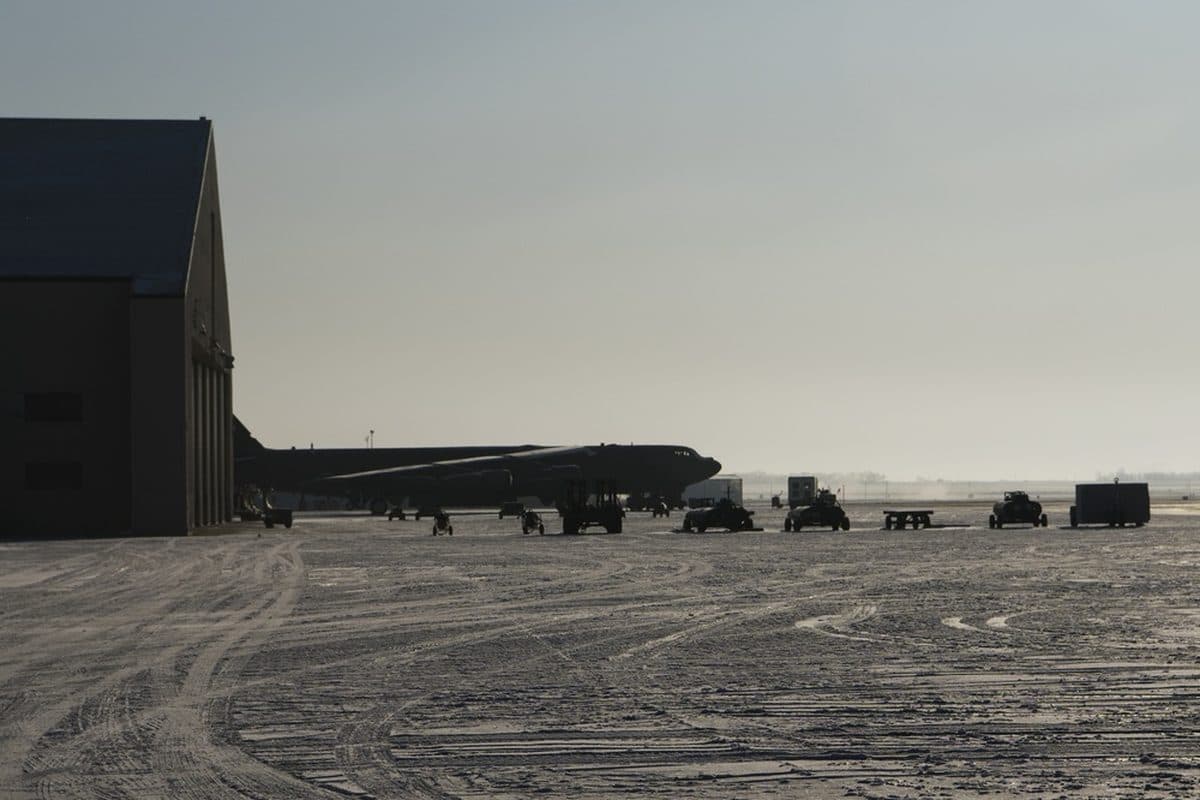
Boeing’s B-52 long-range strategic bomber is not only one of the most iconic symbols of the Cold War; it’s also the longest-serving combat aircraft in any major nation’s arsenal. Since…
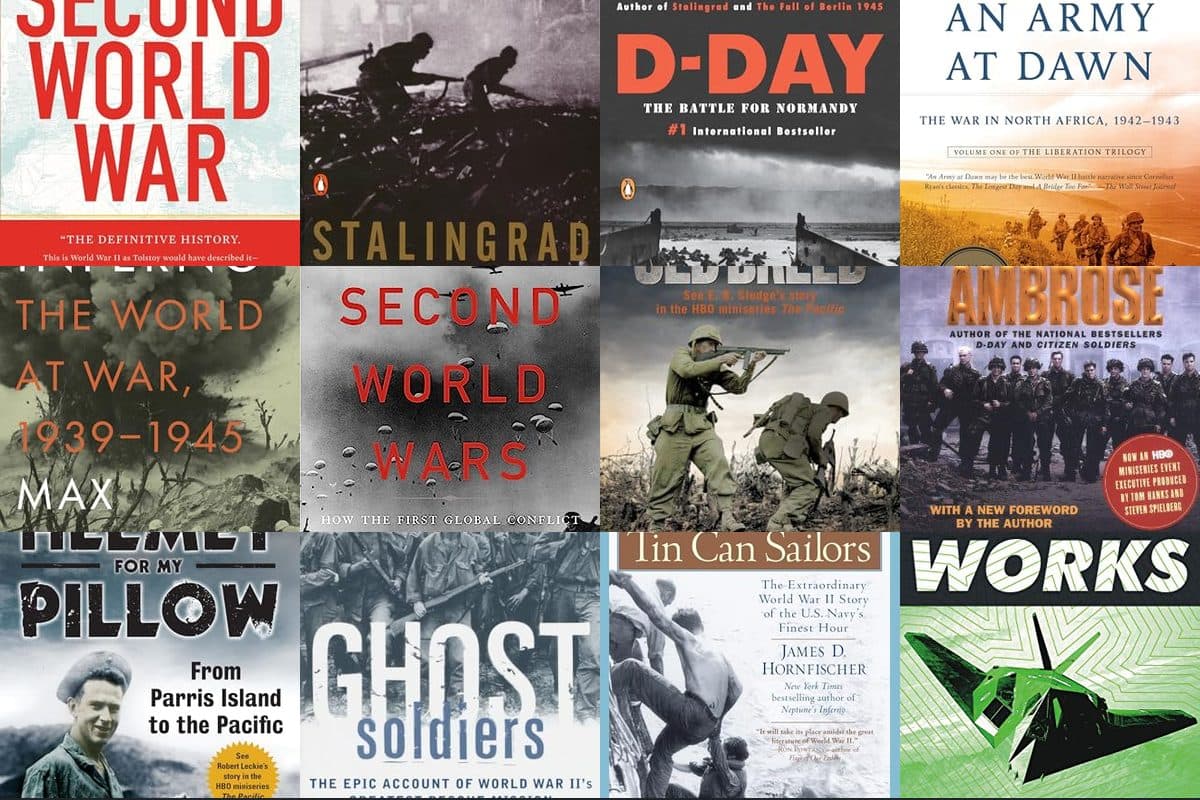
15 essential WW2 books covering every theater. Narrative histories, memoirs, and visual references ranked.
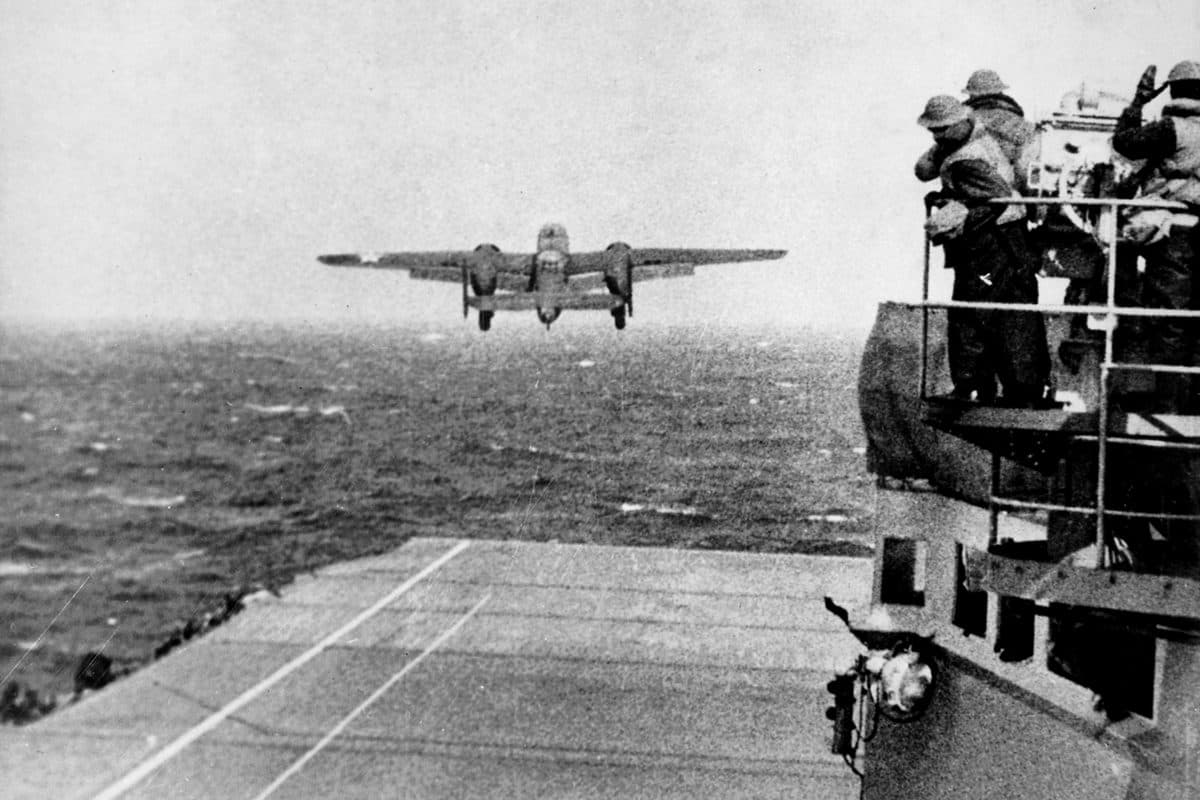
On April 18, 1942, sixteen B-25 Mitchell bombers did something no one thought possible: they launched from the deck of an aircraft carrier, flew 650 miles to Japan, and bombed Tokyo. Every aircraft was lost. The damage was negligible. The consequences changed the war.